The Desert willow Plant Advantage: Maximizing Home and Office Appeal and Wellness
1
This plant flourishes in dry and moderately dry areas, perfect for drought-tolerant landscapes.
2
Desert willow draws in beneficial insects like bees and hummingbirds, strengthening local environments.
3
Its timber finds application in artisan work and building, underscoring its financial worth.
What Are the Ecological Benefits of Desert willow?
Promotes Biodiversity
Desert willow plays a vital role in fostering biodiversity. Its blossoms attract a diverse range of pollinators, including bees, hummingbirds, and butterflies. By cultivating Desert willow, you contribute to the conservation and enrichment of local ecosystems. These pollinators are crucial for the reproductive cycles of many plants, ensuring the surrounding flora remains healthy and vibrant.
Supports Wildlife Habitat
Not only do the flowers draw in pollinators, but the plant itself offers refuge and sustenance for various wildlife. Birds frequently utilize Desert willow trees for nesting, and small mammals find sanctuary within its branches. This transforms your garden or landscape into an inviting home for a wide array of species, fostering a more balanced and flourishing ecosystem.
How Is Desert willow Beneficial for Landscaping?
Drought-Resistant and Low Maintenance
One of the most significant advantages of Desert willow is its ability to withstand drought. It flourishes in arid and semi-arid regions, making it an excellent option for xeriscaping and water-efficient gardens. This plant requires minimal irrigation once established, reducing the demand on water resources and making it a sustainable choice for gardeners.
Aesthetic Appeal
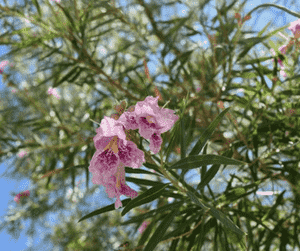
Desert willow is renowned for its attractive, trumpet-shaped blooms that appear in various shades of pink, purple, and white. These flowers bloom profusely during the warmer months, adding a burst of color to any landscape. Its graceful, willow-like foliage enhances its beauty, making it a favorite among landscapers and garden enthusiasts.
What Are the Practical Uses of Desert willow?
Wood and Crafting
The wood of Desert willow is lightweight yet durable, making it suitable for various crafting and construction purposes. Traditionally, it has been employed by indigenous cultures for crafting tools, weapons, and even musical instruments. Today, its wood is still valued for creating small furniture items, crafts, and decorative objects.
Soil Erosion Control
Due to its robust root system, Desert willow is effective in preventing soil erosion. Planting it along slopes and banks helps stabilize the soil, averting erosion and landslides. This is particularly advantageous in areas prone to heavy rainfall or where the soil is loose and susceptible to washing away.
How Does Desert willow Enhance Environmental Sustainability?
Carbon Sequestration
Desert willow contributes to environmental sustainability through carbon sequestration. Like all plants, it absorbs carbon dioxide from the atmosphere and stores it as biomass. This process helps reduce the levels of greenhouse gases, playing a role in mitigating climate change.
Air Quality Improvement
In addition to carbon sequestration, Desert willow enhances air quality by filtering pollutants from the air. Its leaves can trap dust, particulate matter, and other airborne contaminants, making the surrounding environment cleaner and healthier. This is especially beneficial in urban areas where air pollution is a concern.
What Are the Advantages for Gardeners?
Ease of Growth
Desert willow is simple to cultivate and care for, making it an excellent choice for both novice and experienced gardeners. It can thrive in various soil types, including sandy and clay soils, and tolerates high temperatures. Furthermore, its resistance to pests and diseases means it requires less intervention and upkeep.
Versatility in Landscaping Designs
Whether you aim to create a natural-looking garden, a formal landscape, or anything in between, Desert willow integrates seamlessly into various design schemes. Its adaptability allows it to be used as a focal point, a background plant, or even a natural screen or hedge. The possibilities are endless, making Desert willow a versatile and valuable addition to any garden.



