Optimal Fertilizer for Growing Apricot: What You Need to Know
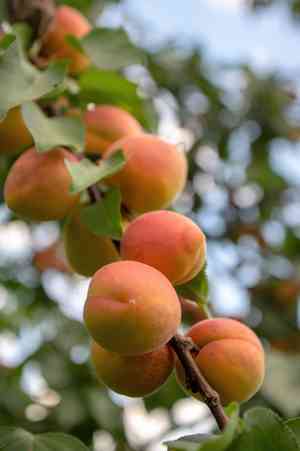
1
Applying fertilizer to your Apricot tree in early spring aids in promoting its development and yield of fruit.
2
Indications of inadequate nutrients in Apricot trees are discolored foliage and insufficient fruit development.
3
Natural fertilizers enhance the well-being of the soil over time through the introduction of vital organic compounds.
Deciphering Apricot Nutritional Requirements
Crucial Nutrients for Apricot Saplings
For prime development, Apricot trees need a variety of vital nutrients. These encompass macronutrients such as nitrogen (N), phosphorus (P), and potassium (K), which underpin the tree's various developmental stages. Nitrogen is essential for foliage and stem growth, phosphorus aids root formation and blooming, and potassium boosts fruit quality and overall tree resilience. Furthermore, micronutrients like iron, manganese, and zinc are indispensable for enzymatic processes and chlorophyll creation.
Indicators of Apricot Nutrient Deficiencies
Spotting nutrient shortfalls early can avert lasting harm to your Apricot tree. Common symptoms include yellowing leaves, stunted development, and poor fruit set. For instance, a lack of nitrogen frequently causes pale, yellowish leaves, while insufficient phosphorus can lead to dark, purplish foliage and weak root systems. Potassium deficiency might result in scorched leaf edges and diminished fruit size. Regular monitoring and prompt action on these signs help sustain your Apricot tree's vigor and output.
Selecting the Appropriate Fertilizer for Apricots
Fertilizer Varieties: Natural vs. Man-made
When choosing fertilizers, you have two main options: natural and synthetic. Natural fertilizers, such as compost, animal waste, and bone meal, release nutrients slowly, enhancing soil health over time. They improve soil structure, water retention, and microbial activity, which are advantageous for Apricot tree growth. Synthetic fertilizers, conversely, provide rapid and precise nutrient delivery. They are usually formulated with a balanced mix of essential nutrients, making them convenient for swiftly correcting deficiencies. However, excessive use can cause nutrient runoff and soil imbalances.
Interpreting Soil Tests and Fertilizer Labels
Prior to applying any fertilizer, it is vital to analyze your soil to ascertain its current nutrient levels and pH. Soil testing kits are readily available and offer insights into your soil's nutrient profile and pH balance. Reading fertilizer labels is equally important; look for the N-P-K ratio, which shows the percentage of nitrogen, phosphorus, and potassium. For Apricot trees, a balanced ratio such as 10-10-10 or 5-10-10 can be effective, depending on the specific requirements revealed by your soil analysis.
Optimal Fertilization Practices for Apricot Trees
When Should Apricot Trees Be Fertilized?
The ideal period to fertilize your Apricot tree is in early spring, just before new growth commences. This timing ensures the tree has the necessary nutrients during its crucial growth and fruiting phases. A subsequent application in early summer can offer extra support, particularly if the tree exhibits signs of nutrient shortage. Avoid fertilizing late in the growing season, as this can stimulate late growth and reduce the tree's winter hardiness.
How to Correctly Administer Fertilizer?
Proper fertilizer application is crucial for its effectiveness. For granular fertilizers, uniformly distribute the product around the tree's drip line, which is the area beneath the branches' outer edge. This technique ensures nutrients reach the root zone where they are most needed. For liquid fertilizers, adhere to the label instructions for dilution and apply directly to the soil surrounding the tree. Water the area thoroughly after fertilizing to help nutrients infiltrate the soil and reach the roots.
Nurturing Soil Health for Apricot Trees
Significance of pH Levels and Drainage
Healthy soil forms the basis for Apricot tree development. Maintaining an optimal pH level between 6.0 and 7.5 is critical for nutrient absorption. If the soil is excessively acidic or alkaline, it can bind nutrients, rendering them unavailable to the tree. Good drainage is also essential, as waterlogged soil can lead to root rot and other health issues. Amend the soil with organic matter like compost to enhance both pH balance and drainage.
Mulching and Enriching with Organic Material
Mulching is an excellent strategy for preserving soil moisture, moderating temperature, and decreasing weed competition around your Apricot tree. Utilize organic mulches such as straw, wood chips, or shredded leaves. Applying a 5-10 cm (2-4 inches) layer of mulch around the tree, keeping it away from the trunk, can significantly benefit the tree's health. Furthermore, incorporating organic matter like compost into the soil enriches it with nutrients and beneficial microbes, further promoting the growth and yield of your Apricot tree.



