Enhancing Your Garden Design with the Rough horsetail Plant: A Landscaping Guide
1
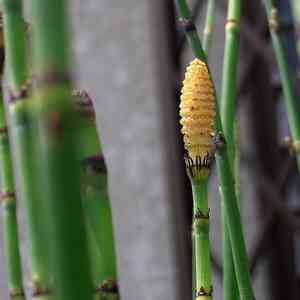
Rough horsetail introduces a distinct upright feature to gardens due to its elevated, narrow form.
2
This species flourishes in moist and partially shaded environments, offering adaptability for diverse garden designs.
3
Consistent upkeep is crucial to control Rough horsetail's vigorous propagation.
Introducing Rough Horsetail in Landscape Design
Discover the aesthetic benefits of Rough Horsetail in garden settings
Incorporating Rough Horsetail into your landscape design provides a distinct visual appeal due to its tall, reed-like stalks and deep green hue. The plant's upright growth offers a striking contrast to the typical horizontal spread of many ground covers and shrubs. It's particularly effective at adding height and structure, whether utilized in borders, as a background element, or in clustered arrangements near water features. Moreover, Rough Horsetail maintains its appearance throughout the year, offering consistent visual interest even in winter when other plants may recede.
Understand Rough Horsetail's native environments to optimize placement
Rough Horsetail naturally thrives in marshlands and alongside riverbanks, indicating its preference for damp, well-drained soil. Grasping this habitat preference can guide you in selecting optimal garden locations. Ideally, Rough Horsetail should be situated in spots that mimic these conditionsâconsider areas around garden ponds, boggy zones, or any water features you possess. This will not only ensure the plant's health and vigor but also effectively utilize spaces that might otherwise be challenging for other plantings.
Optimal Planting Locations for Rough Horsetail
Prime garden spots for Rough Horsetail
Given its affinity for moist conditions, the best places to plant Rough Horsetail include the perimeters of ponds or streams and poorly drained areas that remain consistently damp. In a more structured garden, Rough Horsetail can be especially impactful when used to line pathways or form natural-looking barriers. It is also an excellent choice for rain gardens due to its capacity to flourish in wet environments.
Considering light exposure and soil conditions
Rough Horsetail performs well in both full sun and partial shade, offering flexibility for various garden exposures. However, it is crucial to ensure the soil stays moist. If you plan to plant Rough Horsetail in a drier section of your garden, consider using a water-retentive soil mix or installing a basic irrigation system. Mulching can also aid in preserving soil moisture. Regarding soil pH, Rough Horsetail is quite adaptable but prefers slightly acidic to neutral soils.
Design Concepts with Rough Horsetail
Creating focal points using Rough Horsetail
To establish a focal point in your garden with Rough Horsetail, consider planting it in dense groupings. The tall, uniform stems will attract attention and provide a dramatic vertical element. You can position these clusters at strategic points such as the center of a flower bed, at the end of a path, or as a distinctive accent in a rock garden. This approach works particularly well in modern or minimalist garden designs where the simple, clean lines of Rough Horsetail can truly stand out.
Companion plants that complement Rough Horsetail
Selecting appropriate companion plants for Rough Horsetail can enhance its visual impact and ensure a cohesive garden design. Consider pairing it with broad-leaved plants like hostas or ferns, which will offer a pleasing contrast to its slender, upright stems. Ornamental grasses can also complement Rough Horsetail by introducing a different texture without overshadowing it. For a splash of color, flowering plants such as iris or lobelia can be excellent companions, providing vibrant blooms against the dark green of Rough Horsetail.
Rough Horsetail Landscape Maintenance Tips
Basic care for robust growth
Rough Horsetail requires minimal upkeep once established, making it an appealing choice for gardeners. Consistent watering is vital, especially during dry periods, to maintain the soil moisture levels that Rough Horsetail favors. Regular trimming of dead or damaged stems will help keep the plant looking neat. Fertilizing is generally unnecessary if the soil is reasonably fertile, but a light application of a balanced fertilizer in spring can provide a boost.
Managing the spread of Rough Horsetail
A primary concern with Rough Horsetail is its tendency to spread aggressively if not properly managed. To control its expansion, consider planting Rough Horsetail in containers or utilizing root barriers. Regular monitoring and removal of any unwanted shoots that emerge outside the desired planting area will help keep the plant in check. Another effective strategy is to cut back the stems before they can disperse their spores, thereby preventing new plants from establishing.
Advantages of Incorporating Rough Horsetail into Your Landscape
Environmental benefits of using Rough Horsetail
Including Rough Horsetail in your landscape offers several environmental advantages. Its strong root system is excellent for preventing soil erosion, making it a valuable plant for stabilizing banks and slopes. Additionally, Rough Horsetail can assist in water purification processes due to its ability to absorb nutrients and contaminants from water, making it a good choice for natural filtration systems in ponds or constructed wetlands.
Aesthetic impact of Rough Horsetail
Aesthetically, Rough Horsetail is a versatile plant that can suit various landscape styles, from traditional to contemporary gardens. Its distinctive appearance provides year-round interest and can serve as a striking backdrop to flowering plants or as a standalone feature in minimalist designs. The rhythmic pattern of its stems creates a sense of order and tranquility, contributing to a balanced and serene garden environment.



