How to Propagate River birch?
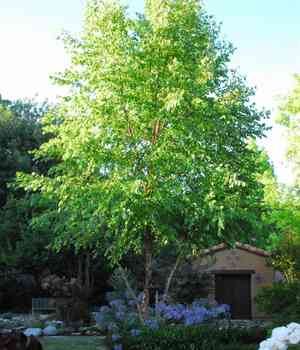
River birch reproduces effectively through hardwood cuttings, air layering, and planting seeds during the fall or winter seasons. While propagation can be challenging, indicators of success include the emergence of roots and the formation of new buds. Recommendations involve maintaining damp soil conditions and managing insect infestations.
Optimal Time for River Birch Propagation
Propagation Method
Cutting
Propagation Period
Autumn,Winter
Tools for River Birch Propagation
Pruning shears
Pruning shears are vital for obtaining healthy river birch cuttings. Their sharp, clean blades ensure precise cuts, minimizing harm to both the parent plant and the cutting, which is crucial for successful rooting. They facilitate angled cuts that enhance the surface area for root development.
Rooting hormone
Rooting hormone encourages root growth in river birch cuttings. It contains auxins that promote the elongation and differentiation of root cells. Dipping the cutting bases into the hormone significantly boosts the chances of successful rooting, which is essential for this species, as it can be challenging to propagate.
Sterilizing agent
A sterilizing agent is necessary to clean pruning shears and other tools before cutting to prevent disease transmission to river birch. A common sterilizing solution is a mixture of one part bleach to nine parts water. Sterility is crucial for ensuring the health of the cutting during the rooting process.
Potting mix
A well-draining potting mix offers the ideal environment for river birch cuttings to develop roots. The mixture should be light enough to allow air to reach new roots but retain sufficient moisture to prevent the cuttings from drying out. This balance is vital for fostering robust root growth.
Propagation tray
Propagation trays are used to hold river birch cuttings in an organized manner while they are rooting. They ensure that cuttings remain upright and properly spaced, reducing the risk of mold or rot. Trays often feature bottom holes, aiding drainage and aeration.
Plastic covering
A clear plastic covering helps maintain high humidity around river birch cuttings, which is beneficial for preventing moisture loss through transpiration. This mini-greenhouse effect also keeps the temperature stable, both critical factors in the successful development of new roots.
Heat mat
A heat mat provides bottom warmth, which can enhance the rooting success rate of river birch. The consistent, gentle heat can accelerate root growth without overheating the cuttings. It is particularly advantageous during cooler times of the year or in colder climates.
Caring for Your Newly Propagated River Birch
Caring for Your Newly Propagated River Birch
Following propagation, gradually introduce young river birch to outdoor conditions if they were started indoors. Water consistently to maintain uniformly moist soil, especially important for river birch due to its preference for damp environments. Provide partial to full sun and shield from strong winds. Mulch can be applied to retain soil moisture and regulate temperature. Fertilizing is generally not needed in the first year, but afterward, a balanced, slow-release fertilizer can be applied in the spring. Pruning is usually minimal, primarily to remove any dead or diseased branches. Monitor for common river birch pests and diseases, treating as necessary.
Common Errors to Avoid When Propagating River Birch
Using unsuitable propagation methods
Attempting to propagate river birch with incorrect techniques, such as leaf cuttings, can lead to failure, as this species is typically propagated via seeds or stem cuttings.
Neglecting the rooting environment
Ignoring the necessity for a moist and well-draining substrate can result in poor root development or rot in river birch cuttings.
Overwatering cuttings
While river birch thrives in moist conditions, excessive watering can cause fungal infections and cutting rot, impeding successful propagation.
Tips For Propagating River Birch
Choose healthy parent plants
Utilize vigorous and disease-free river birch specimens for collecting seeds or cuttings to ensure a strong genetic foundation for the offspring.
Correct cutting technique
Take semi-hardwood stem cuttings from river birch during the active growth phase and make clean, angled cuts to increase the surface area for rooting.
Maintain adequate moisture
Keep the soil consistently moist but not waterlogged to support the rooting of river birch cuttings without causing decay.



