How to Propagate Big quaking grass?
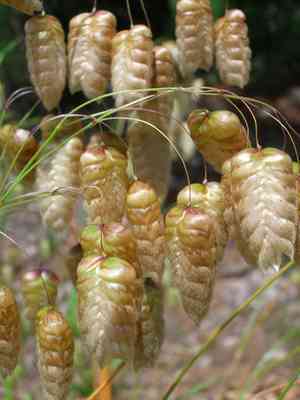
Effective reproduction of big quaking grass is achieved via seeding. To obtain the best outcomes, scatter the seeds directly into soil that drains well, making sure they are not embedded too profoundly. A light covering over the seeds can assist in stabilizing their placement and preserving dampness. Regular irrigation, particularly during the initial phases of sprouting, is vital for successful propagation. A setting that replicates big quaking grass's native environment, featuring ample sunlight and average soil richness, will encourage robust development.
When Is the Optimal Time to Propagate Big Quaking Grass?
Propagation Method
Seeding
Propagation Period
Spring
What Equipment Is Used for Big Quaking Grass Propagation?
Seed trays
Seed trays are vital for initiating big quaking grass from seeds. These containers aid in organizing seeds and maintaining proper spacing, ensuring each seed has ample room to grow without crowding. Using seed trays also simplifies managing the microenvironment around the seeds, such as maintaining consistent moisture and temperature, which are crucial for big quaking grass germination.
Fine vermiculite or perlite
Incorporating fine vermiculite or perlite into the seed tray soil mix enhances aeration and drainage, critical aspects for healthy root development of big quaking grass. These materials help prevent soil compaction, ensuring that the delicate roots of big quaking grass can easily penetrate the soil and access essential nutrients. This promotes healthier growth and increases seed germination rates.
Misting bottle
A misting bottle is essential for gently watering big quaking grass seeds without disturbing them. The fine mist provides even moisture, crucial for seed germination, while avoiding excessive water that could cause seeds to rot. Regular misting helps maintain ideal humidity levels around big quaking grass, improving the chances of successful propagation.
Grow lights (optional)
If propagating big quaking grass indoors or in low-light conditions, grow lights are beneficial. They provide the necessary light spectrum to support the growth and development of big quaking grass during stages when natural sunlight is insufficient. This ensures a steady and healthy growth rate from germination to the seedling stage.
Labeling materials
Labels and markers are important for effectively tracking and organizing the growth progress of big quaking grass. They assist in documenting sowing dates and any specific treatments or conditions provided. This is especially important when propagating multiple varieties or species simultaneously to avoid confusion and to monitor the specific needs of each big quaking grass variant.
How to Propagate Big Quaking Grass?
Propagation Difficulty
Simple
How to Care for Your Newly Propagated Big Quaking Grass?
How to Care for Your Newly Propagated Big Quaking Grass?
Once big quaking grass germinates and seedlings are established, gradually reduce watering to prevent overwatering. Aim for a well-drained soil environment and full sun to partial shade exposure. Protect young plants from strong winds and provide support if needed. As big quaking grass matures, minimal maintenance is required, but monitoring for common pests and diseases is recommended to keep the plants healthy.
Common Errors to Avoid When Propagating Big Quaking Grass
Overwatering
Excessive watering can lead to root rot and fungal infections, significantly reducing the success rate of big quaking grass propagation. The plant's roots require a balance of moisture and air for healthy development.
Planting seeds too deeply
Burying big quaking grass seeds too deep can impede their ability to germinate due to insufficient light exposure and oxygen, making it difficult for seedlings to break through the soil surface.
Using poor soil mix
Employing an unsuitable soil mix that lacks proper drainage or nutrients can negatively impact the overall health of big quaking grass, hindering germination and growth of young plants.
Advice for Propagating Big Quaking Grass
Use a well-draining soil
Utilizing a well-draining soil mix helps prevent moisture-related problems and provides essential support for big quaking grass's root development, crucial for healthy growth and propagation.
Depth consideration
Big quaking grass seeds should be lightly covered with soil, ideally no more than a few millimeters deep. This ensures sufficient access to light and air, vital for successful germination.
Regular but moderate watering
Maintaining a consistent yet moderate watering schedule ensures the soil remains moist but not saturated, supporting optimal growth conditions for big quaking grass seed germination and young plant development.



