How to Propagate Berkeley sedge?
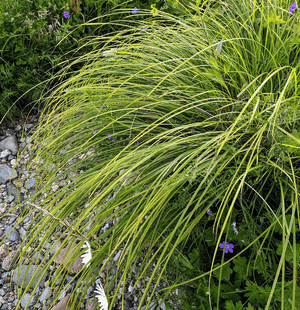
Berkeley sedge is most effectively propagated in Spring and Autumn via division, which is the favored technique. Although moderately challenging, successful propagation is evident through robust new development. Ensure consistent, sufficient hydration for the best outcomes.
Optimal Time for Berkeley Sedge Propagation
Propagation Method
Splitting
Propagation Period
Spring, Autumn
Tools Required for Berkeley Sedge Propagation
Sharp Garden Knife or Pruning Shears
A keen garden knife or pruning shears are vital for making clean cuts through the rhizomes of berkeley sedge during the splitting process. A precise cut minimizes plant tissue damage, lowering the risk of disease and ensuring each divided section starts healthy. The sharpness of these tools is especially beneficial for berkeley sedge, which forms dense clumps needing accurate separation.
Garden Spade or Fork
To effectively divide berkeley sedge's clump, a sturdy garden spade or fork is used to excavate the entire plant from the ground. These implements should have a sharp edge to easily penetrate the soil without excessively disturbing the root system. The spade or fork must be robust enough to handle the weight and structure of the soil-bound roots without bending.
Watering Can or Hose with a Gentle Spray Setting
Following division and replanting, berkeley sedge requires gentle watering to help settle the soil around its roots and lessen transplant shock. A watering can with a fine rose or a hose with a soft spray setting distributes water evenly without disturbing the newly planted divisions. Proper hydration is crucial for berkeley sedge's recovery and establishment in its new location.
Rooting Hormone (Optional)
While not always essential for berkeley sedge, a rooting hormone can stimulate quicker root development in the divided sections. Using rooting hormone can be particularly advantageous in less-than-ideal growing conditions or when divisions are smaller and could benefit from an extra boost for root establishment.
How to Propagate Berkeley Sedge?
Propagation Type
Division
Difficulty Level
Easy
Caring for Your Newly Propagated Berkeley Sedge
Caring for Your Newly Propagated Berkeley Sedge
After propagation, keep the soil around berkeley sedge consistently moist, but not waterlogged, during its initial growing season to aid root establishment. Provide berkeley sedge with adequate shade, as excessive sun can scorch its leaves. Minimize fertilizer use, as berkeley sedge typically thrives in nutrient-poor soils. Perform minimal maintenance, removing only browned or spent foliage to maintain its aesthetic appeal and health.
Common Mistakes to Avoid When Propagating Berkeley Sedge
Overwatering
Saturated soil can lead to root rot in berkeley sedge, hindering root development and potentially killing the plant.
Deep planting
Planting berkeley sedge divisions too deeply can prevent rhizomes from establishing, as they need oxygen and sufficient light exposure for growth.
Ignoring aeration
Failing to provide a well-aerated soil mix can result in poor root health, as berkeley sedge roots require oxygen for proper growth.
Compacted soil
Using overly compacted soil can impede root spread and water drainage, depriving berkeley sedge of essential nutrients and moisture.
Neglecting division size
Making divisions too small can lead to insufficient energy reserves needed for berkeley sedge to establish and thrive.
Tips For Propagating Berkeley Sedge
Soil composition
Preparing a well-draining soil mix with proper aeration will promote healthy root growth in berkeley sedge.
Rhizome segments
Ensuring rhizome segments have at least one or two growth points will increase the success rate of berkeley sedge propagation.
Moisture levels
Maintaining consistent moistureâneither too wet nor too dryâis crucial for berkeley sedge cuttings to develop roots without rotting.
Light exposure
Providing indirect light will encourage berkeley sedge to photosynthesize effectively without scorching delicate new growth.
Planting depth
Planting rhizome segments at the correct depth will aid in the stability and growth of new berkeley sedge shoots.



