How to Propagate Candle larkspur?
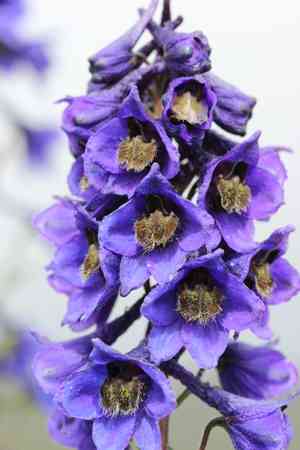
Perfect for spring propagation, candle larkspur is typically multiplied through seeding, presenting a moderate challenge. The appearance of nascent sprouts signifies successful propagation. Provide a substrate with good drainage and steady hydration for peak germination.
When Is the Optimal Time to Propagate Candle Larkspur?
Propagation Method
Seeding
Propagation Period
Spring
What Equipment Is Used for Candle Larkspur Propagation?
Seed trays or flats
Seed trays offer a controlled setting for seed germination. They help maintain consistent moisture and temperature, both crucial for successful candle larkspur seed sprouting. Their shallow design allows for easy monitoring and handling of young plants.
Seed-starting mix
This sterile, soilless medium is free of harmful pathogens that could affect candle larkspur seedlings. It's formulated to retain moisture while allowing excess water to drain, reducing the risk of root rot. Its fine texture also facilitates easy root penetration for young plants.
Peat pots or biodegradable pots
Peat pots or similar biodegradable containers minimize transplant shock, as candle larkspur can be sensitive to root disturbance. The entire pot can be planted directly into the ground, lessening stress on developing roots.
Fine mist spray bottle
A spray bottle for misting seeds provides gentle hydration without dislodging small seeds or eroding the growing medium. It helps maintain high humidity around candle larkspur seeds, which is beneficial for germination.
Plastic dome or cover
A clear plastic cover over the seed tray creates a mini-greenhouse environment, maintaining high humidity and warmth, which aids candle larkspur seed germination. This also helps keep the soil moist, reducing the need for frequent watering.
Heat mat
A heat mat gently warms the soil, encouraging faster germination of candle larkspur seeds. Many species germinate best with bottom heat, and candle larkspur may benefit from a stable soil temperature.
Grow lights
Artificial lighting assists seedlings with photosynthesis when natural light is insufficient. Grow lights provide the correct light spectrum to promote robust and healthy growth of candle larkspur seedlings.
Garden trowel
A trowel is used for transplanting candle larkspur seedlings from trays to pots or into the garden. Its precise shape allows for careful handling of the plants, minimizing root damage.
Pruners or scissors
Clean, sharp pruners or scissors are necessary for thinning out candle larkspur seedlings if they are sown too densely. This ensures the healthiest seedlings have ample space to develop without competing for light and nutrients.
How to Propagate Candle Larkspur?
Propagation Method
Seeding
Difficulty Level
Simple
How to Care for Your Newly Propagated Candle Larkspur?
How to Care for Your Newly Propagated Candle Larkspur?
Caring for candle larkspur after propagation involves ensuring sufficient sunlight, consistent watering, and protection from strong winds. Position candle larkspur in a spot that receives full sun to partial shade and provide a stake for support as they grow tall and can become top-heavy. Water candle larkspur deeply and regularly, allowing the soil to dry slightly between waterings. Apply a balanced, slow-release fertilizer during the growing season, and monitor for pests and diseases. Remove spent flowers to encourage more blooms. In colder climates, apply mulch for winter protection. Prune candle larkspur back after flowering to maintain a neat shape.
Common Errors to Avoid When Propagating Candle Larkspur
Overwatering
Excessive watering can lead to root rot and fungal diseases, which are harmful to candle larkspur's establishment and growth.
Deep planting
Planting seeds or seedlings too deeply can impede germination and seedling establishment, as candle larkspur requires light for optimal sprouting.
Neglecting stratification
Failure to stratify seeds can result in significantly lower germination rates, as candle larkspur seeds often need a cold period to break dormancy.
Poor soil preparation
Using heavy, poorly-draining soil or not amending the planting medium can hinder root growth, as candle larkspur thrives in well-draining and fertile soils.
Ignoring pest control
Neglecting pest management can lead to infestations that may harm or kill young candle larkspur plants.
Careless handling of roots
Rough handling or damaging roots during transplantation can cause transplant shock or even death, as candle larkspur has delicate root systems.
Advice For Propagating Candle Larkspur
Seed surface sowing
Gently press the seeds onto the soil surface without covering them, as candle larkspur seeds require light for optimal germination.
Pre-chilling seeds
Stratify candle larkspur seeds by chilling them in the refrigerator before sowing to improve the chances of successful germination.
Well-draining soil
Prepare a light, well-draining soil mix rich in organic matter to encourage healthy root development for candle larkspur.
Consistent moisture
Keep the soil consistently moist but not waterlogged to support seed germination and growth without causing root rot.
Pest and disease monitoring
Regularly inspect candle larkspur plants for signs of pests and diseases, and treat promptly to ensure healthy growth.
Gentle transplantation
Carefully transplant candle larkspur seedlings to avoid disturbing the roots, and gradually acclimate them to outdoor conditions if started indoors.



