How to Propagate Honey locust?
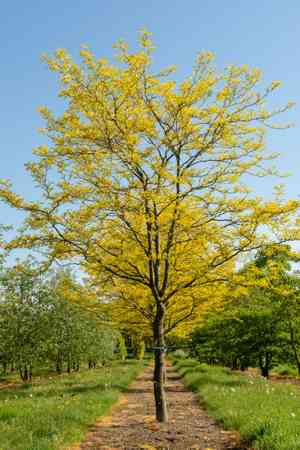
Gleditsia can be multiplied via dormant wood cuttings, aerial layering, and seed planting during the fall and winter periods. The ease of propagation varies with the technique selected; seed planting is the simplest, while layering presents the most challenge. Indicators of successful propagation are the emergence of roots and fresh foliage. For optimal outcomes, it is crucial to maintain consistent soil moisture, apply rooting stimulant to cuttings, and guarantee adequate drainage.
Optimal Time for Honey Locust Propagation
Propagation Method
Cutting
Propagation Period
Autumn,Winter
Tools for Honey Locust Propagation
Pruning Shears
Pruning shears are vital for taking cuttings from honey locust. Sharp, clean shears ensure a precise cut that minimizes damage to the parent plant and the cutting, promoting better healing and root development.
Rooting Hormone
Rooting hormone stimulates root growth on honey locust cuttings. By dipping the cut end into the hormone, it increases the chances of successful rooting, especially since honey locust can have hardwood cuttings which are more challenging to root.
Sterile Potting Mix
A sterile potting mix provides a safe medium for honey locust cuttings to establish roots. It reduces the risk of soil-borne pathogens that could impair cutting development and is light and airy, allowing roots to penetrate easily.
Propagation Tray
Propagation trays facilitate optimal spacing and organization of honey locust cuttings. Their design usually includes drainage holes, preventing waterlogging and promoting a moist environment ideal for root initiation and growth.
Heating Mat
A heating mat can regulate the soil temperature, maintaining warmth that encourages root formation in honey locust cuttings. Temperature control is especially important in cooler climates or seasons to ensure a conducive rooting environment.
Misting Bottle
A misting bottle ensures that honey locust cuttings receive the necessary humidity to prevent the leaves from drying out before roots develop. Fine mist provides moisture without over-saturating the soil.
Plastic Dome or Cover
A plastic dome or cover creates a greenhouse-like environment for honey locust cuttings, trapping moisture and maintaining high humidity, which is crucial for preventing desiccation of the cuttings during the rooting phase.
Caring for Your Newly Propagated Honey Locust
Caring for Your Newly Propagated Honey Locust
Once honey locust cuttings have rooted and new growth is visible, gradually introduce them to outdoor conditions if they were started indoors. Water the young honey locust plants regularly to maintain soil moisture, but avoid overwatering. Fertilize lightly during the growing season, and plant them in their permanent location once they are well-established and hardy enough to survive outdoor conditions.
Common Mistakes to Avoid When Propagating Honey Locust
Ignoring seed treatment
Scarification is often overlooked, but it's crucial for breaking honey locust's hard seed coat for successful germination.
Overwatering
Excessive moisture can cause rot in honey locust's seeds or cuttings, hindering growth and potentially killing young plants.
Planting depth
Seeds planted too deep struggle to germinate, while cuttings planted too shallow may not root properly.
Neglecting pest management
Honey locust is susceptible to pests during propagation. Without proper management, pests can damage or kill young plants.
Tips For Propagating Honey Locust
Appropriate scarification
Nicking honey locust's seeds or soaking them in hot water before sowing helps break seed dormancy and promotes germination.
Moisture control
Maintaining a balance of moisture is key; the soil should be moist but not waterlogged to prevent rot and encourage rooting.
Correct planting depth
Seeds should be sown at the right depth, typically 1-2 inches, while cuttings should be planted firmly to ensure contact with the soil.
Pest monitoring
Regularly inspecting for pests and employing prevention techniques can protect young honey locust plants during critical growth stages.



