How to Propagate Balloon plant?
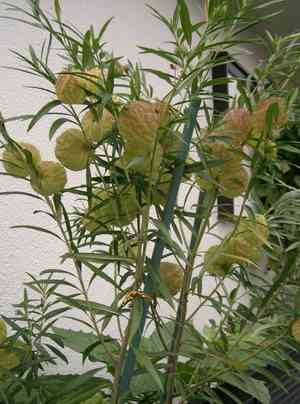
The most effective method for propagating Balloon plant involves planting seeds in the Spring. The appearance of seedlings signifies successful germination, and to foster their best development, it's crucial to sustain suitable humidity and warmth throughout this initial stage.
Optimal Time for Balloon Plant Propagation
Propagation Method
Seeding
Propagation Period
Spring
Tools Required for Balloon Plant Propagation
Seed trays or pots
These containers are vital for initiating balloon plant's seeds indoors. They aid in maintaining a regulated environment for seed sprouting and initial seedling growth. The pot size should be suitable for the expanding root systems of the seedlings.
Sterile seed starting mix
A sterile, well-draining substrate is crucial for balloon plant's seed germination. It prevents damping-off and other soil-borne illnesses while offering essential support and aeration for the developing roots.
Misting bottle or spray nozzle
Consistent moisture is essential for seed germination. A misting bottle or spray nozzle allows for gentle irrigation that will not disturb or dislodge the small seeds of balloon plant.
Plastic dome or cover
A dome or cover helps maintain a moist atmosphere around balloon plant's seed trays, promoting better germination rates. The cover should be removed periodically to prevent mold growth and to acclimatize seedlings to the external environment.
Heating mat
Some cultivators find that a heating mat can accelerate germination by providing a consistent and ideal bottom warmth, especially for balloon plant seeds that benefit from warm soil temperatures.
Grow lights
If propagating balloon plant indoors or in low light conditions, grow lights can supply the necessary spectrum and intensity of light for healthy seedling development, once the seeds have sprouted.
Dibber or pencil
This simple implement is used to create depressions in the seed starting mix for placing balloon plant's seeds at the correct depth, facilitating uniform germination and growth.
Tweezers
Utilizing tweezers to handle the small seeds of balloon plant can prevent damage and allow for precise placement within the sowing medium, which is critical for optimal germination and spacing.
Labeling materials
Properly labeling the seeds with the date of sowing and the species ensures good record-keeping and organization, especially when propagating multiple plants at one time.
How to Propagate Balloon Plant?
Propagation Type
Seeding
Difficulty Level
Easy
Caring for Your Newly Propagated Balloon Plant
How to Care for Your Newly Propagated Balloon Plant?
Once transplanted, balloon plant requires full sun to partial shade and well-draining soil. Water the plant regularly until it's established, reducing frequency as it matures. Balloon plant is drought-tolerant and prefers to be slightly dry between watering. Feed with a balanced liquid fertilizer monthly during the growing season. Protect from strong winds that can damage the large leaves and pods. Limit pruning to remove dead or damaged parts of the plant to maintain its natural shape. Monitor for pests such as aphids, and treat with an appropriate insecticide if necessary. Balloon plant will die back in colder climates but can reseed itself for new plants in the following growing season.
Common Errors to Avoid When Propagating Balloon Plant
Overwatering cuttings
Excessive watering of balloon plant cuttings can lead to root rot and fungal infections. It's crucial for the medium to be moist but not waterlogged, as balloon plant cuttings require oxygenation for roots to develop healthily.
Planting seeds too deeply
Seeds of balloon plant should be sown just below the soil surface as they need light for germination. Planting them too deeply can prevent them from sprouting due to insufficient light and aeration.
Using non-sterile tools or mediums
This can introduce pathogens to balloon plant cuttings or seeds, leading to disease and poor growth. Always use clean and sterile tools and mediums when propagating balloon plant to prevent contamination.
Ignoring pest control
Balloon plant can be susceptible to pests such as aphids. Not being vigilant about pest control from the beginning can result in infestations that hamper the propagation process.
Neglecting humidity levels
For balloon plant cuttings, high humidity is important to prevent them from drying out before they establish roots. Ignoring the need for a humid environment can result in desiccation and propagation failure.
Tips For Propagating Balloon Plant
Proper cutting selection
Choose healthy, non-flowering stems for cuttings to ensure that balloon plant's energy is directed towards root development instead of flower production.
Adequate light exposure
Provide seeds and cuttings of balloon plant with plenty of indirect sunlight. Proper lighting is crucial for germination and the growth of new cuttings.
Moderate watering
Water balloon plant cuttings and seeds moderately to keep the soil consistently moist but not waterlogged, which encourages healthy root development.
Use rooting hormone
Dipping the base of balloon plant cuttings in rooting hormone can accelerate root formation and improve the chances of successful propagation.
Ensure well-draining soil
Use a well-draining soil mixture for balloon plant to prevent excess water retention and reduce the risk of rot and fungal diseases.



