How to Propagate Peach-leaf holly?
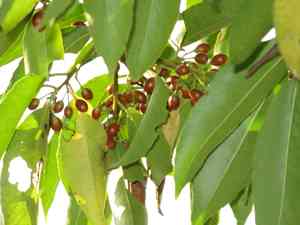
Peach-leaf holly thrives in luminous, diffused illumination and soil that drains effectively, and is frequently multiplied via cuttings. Softwood cuttings are preferred due to their elevated success rates and more rapid rooting. Employ a keen, sanitized implement to obtain a 4-6 inch segment from a robust parent specimen, making certain at least two leaf nodes are included. Submerge the severed tip in rooting compound and embed it into a container filled with a blend of peat and perlite. Steady hydration and warmth facilitate root formation, but vigilance is necessary to prevent oversaturated conditions that could induce decay.
What Is the Best Time To Propagate Peach-leaf Holly?
Propagation Type
Cutting
Propagation Season
Autumn,Winter
What Tools Are Used in Peach-leaf Holly Propagation?
Sharp Pruning Shear
Crucial for making clean, precise cuts when preparing peach-leaf holly cuttings. A keen blade minimizes damage to the parent plant and encourages robust root development in the new growth.
Rooting Hormone Powder or Gel
Aids in quicker and more dependable root formation on peach-leaf holly stems. Rooting hormones boost propagation success by promoting faster establishment, vital during the delicate initial stages of root growth.
Sterile Potting Mix
Offers a secure, controlled environment for new peach-leaf holly cuttings, free from disease-causing agents. A well-draining, nutrient-rich substrate effectively supports the initial growth phase.
Moisture Retaining Covers (e.g., Plastic Domes or Bags)
Maintains high humidity around peach-leaf holly cuttings, essential for preventing water loss from leaves and stems before the root system is established. These covers also create a mini-greenhouse effect, enhancing rooting success.
Heating Mat
Encourages optimal root development temperatures for peach-leaf holly cuttings, especially in cooler climates or during seasons with lower ambient temperatures. A consistent, suitable temperature beneath the propagating medium can significantly improve rooting efficiency and speed.
How to Propagate Peach-leaf Holly?
Propagation Type
Moderately Difficult
How to Care for Your Newly Propagated Peach-leaf Holly?
How to Care for Your Newly Propagated Peach-leaf Holly?
Once the peach-leaf holly has developed a strong root system, gradually introduce it to less humid conditions over several days before moving it to a larger pot or directly into the garden. An area with partial to full sunlight and well-draining soil is ideal. Consistent watering is vital for young plants, but avoid overwatering to prevent root rot. An annual application of balanced fertilizer can stimulate healthy growth and berry production.
Common Mistakes to Avoid When Propagating Peach-leaf Holly
Overwatering cuttings
Soaking the soil can lead to root rot in peach-leaf holly cuttings. Excessive moisture reduces oxygen availability, which is crucial for root development, potentially causing the young roots to decay.
Ignoring soil composition
Using an unsuitable soil mix can impede root development in peach-leaf holly. A balance of good drainage and nutrient retention is important to support the cuttings during root formation.
Neglecting humidity control
Insufficient humidity can cause peach-leaf holly cuttings to dry out too quickly, leading to wilting before roots establish. Conversely, too much humidity can encourage mold and disease.
Planting cuttings too deep
Inserting peach-leaf holly cuttings excessively deep into the soil may reduce oxygen access and promote rot rather than healthy root growth.
Cutting tool contamination
Using unsterilized tools can introduce pathogens to peach-leaf holly cuttings, potentially resulting in disease and poor propagation success.
Tips For Propagating Peach-leaf Holly
Proper cutting technique
Make clean, angled cuts just below a node for peach-leaf holly propagation. This increases the surface area for root generation and helps the cutting absorb more water.
Adequate soil preparation
Prepare a well-draining yet moisture-retentive soil mix for peach-leaf holly, such as a blend of peat, perlite, and organic compost, to support healthy root growth.
Humidity balance
Maintain a balanced humidity level for peach-leaf holly cuttings. Cover them with a plastic dome or place them in a propagator to retain moisture while allowing airflow.
Appropriate cutting depth
Place peach-leaf holly cuttings so that the basal end is just beneath the soil surface. This prevents deep burying that could compromise oxygen supply and root development.
Sterilize propagation tools
Before cutting peach-leaf holly for propagation, disinfect tools with a suitable sterilizing agent to reduce the risk of transferring pathogens.



