How to Propagate Summer snowflake?
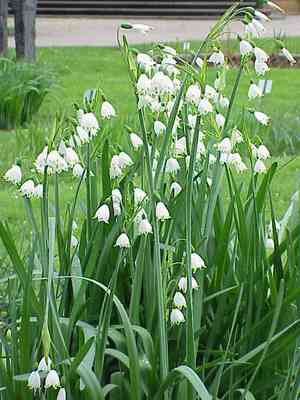
The summer snowflake typically reproduces via tubers during the spring season. This propagation method is quite straightforward, with indicators of success being the emergence of fresh shoots and robust root structures. Proper planting depth for the tubers is crucial for their best development.
What Is the Best Time To Propagate Summer Snowflake?
Propagation Type
Utilize The Tubers
Propagation Season
Spring
What Tools Are Used in Summer Snowflake Propagation?
Garden gloves
Hand protection during summer snowflake handling prevents potential skin irritation or allergic reactions, as gardeners often encounter soil and plant matter that may cause adverse responses.
Sharp, clean gardening shears or scissors
These are crucial for making precise cuts to the summer snowflake foliage before bulb separation. A sharp, sterile cut prevents disease introduction and promotes faster healing.
Trowel or a specialized bulb planter
These implements aid in carefully digging around the summer snowflake without harming the bulbs. They are used for gently lifting bulbs from the soil, which is vital for protecting underground structures.
Bulb basket or mesh bags
After summer snowflake bulbs are removed, these containers provide essential air circulation for curing, thereby reducing the chance of rot or fungal diseases during storage.
Perlite or vermiculite
For bulb storage, these additives offer excellent moisture regulation, supporting the health of summer snowflake bulbs by preventing excessive dampness, which could lead to decay.
Potting mix
When potting summer snowflake, a well-draining, fertile potting mix encourages root development and plant health as it establishes after propagation. The mix should suit bulbous plants' needs.
Plant labels and a marker
Essential for tracking summer snowflake throughout various propagation stages. Accurate labeling helps monitor growth phases and care schedule timings.
Watering can with a fine rose
A gentle water flow is critical for initial watering after planting summer snowflake bulbs. A fine rose prevents soil erosion around new plantings, ensuring the correct amount of water reaches the bulb.
Mycorrhizal fungi
This can be used when replanting bulbs to enhance root development and foster a healthier soil environment. It is particularly beneficial for boosting summer snowflake's growth vigor.
How to Propagate Summer Snowflake?
Propagation Type
Utilize The Tubers
Difficulty Level
Easy
How to Care for Your Newly Propagated Summer Snowflake?
How to Care for Your Newly Propagated Summer Snowflake?
Once summer snowflake bulbs are successfully propagated and planted, they require minimal upkeep. Water them regularly to maintain moist but not waterlogged soil, and ensure they receive full sun to partial shade for optimal growth. As they are cold-hardy, summer snowflake can withstand winter temperatures without much additional care. Fertilization is typically not needed, but a balanced slow-release fertilizer can be applied in the spring. Remove spent flowers to encourage more blooms, and divide bulbs every few years to maintain vigor and for further propagation if desired.
Common Mistakes to Avoid When Propagating Summer Snowflake
Overwatering
Excessive watering can cause root rot in summer snowflake, a condition where the plant's roots begin to decompose. This is especially problematic for summer snowflake, as they prefer well-drained soil, and too much moisture can be detrimental to their well-being.
Planting too deeply
Planting summer snowflake bulbs too deep can hinder their ability to sprout and reach the surface. Given that summer snowflake requires proper depth to thrive, incorrect planting may result in poor growth or failure to emerge.
Overcrowding bulbs
Placing summer snowflake bulbs too close together can lead to competition for nutrients, space, and light. This error can reduce blooming potential and overall plant vitality as the bulbs struggle to develop fully.
Ignoring soil quality
Using poor or unsuitable soil for summer snowflake without amending it can result in suboptimal growing conditions. Summer snowflake thrives in rich, well-draining soil, and neglecting this need can limit the plant's growth and flowering capacity.
Inadequate separation
Failing to properly separate offsets from the parent bulb can damage both. Bulbs must be carefully divided to ensure successful propagation of summer snowflake.
Neglecting aftercare
After planting the bulbs, some gardeners overlook post-planting care, such as providing sufficient water and protection from extreme weather, which is crucial for summer snowflake bulbs to establish themselves.
Tips For Propagating Summer Snowflake
Correct depth
For summer snowflake, bulbs should be planted at the appropriate depth, typically two to three times the bulb's height. This ensures developing plants have ample space to root and emerge successfully.
Adequate spacing
Ensuring sufficient space between summer snowflake bulbs is critical. Proper spacing allows for adequate air circulation, sunlight, and nutrient absorption, all necessary for the plant's health and display.
Soil enrichment
Amending the soil with organic matter like compost can greatly benefit summer snowflake. This practice enriches the soil, improves its structure, and facilitates better drainage, which is vital for bulb health.
Gentle separation
When dividing bulbs for propagation, do so carefully to avoid damaging summer snowflake bulbs. Gentle separation encourages healthy growth of both offsets and parent bulbs.
Water wisely
Water summer snowflake bulbs after planting to stimulate growth, but prevent waterlogging by ensuring good soil drainage and reducing watering as bulbs enter dormancy.
Mulching
Applying mulch around summer snowflake can help maintain soil moisture levels, suppress weeds, and regulate soil temperature, all contributing to more successful propagation.



