How to Propagate Japanese honeysuckle?
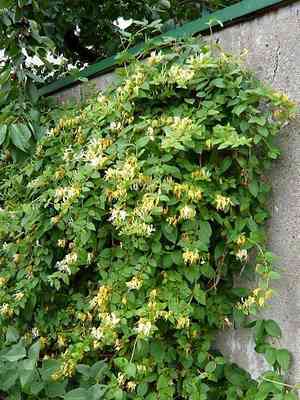
Lonicera japonica flourishes when multiplied via separation, preferably in the Spring or Autumn seasons. While not challenging to propagate, the emergence of new shoots within weeks signifies success. Robust root structures ought to be carefully divided for the best outcomes.
Optimal Period for Japanese Honeysuckle Propagation
Propagation Method
Division
Propagation Season
Spring, Autumn
Tools Required for Japanese Honeysuckle Propagation
Garden Spade or Trowel
A garden spade or trowel is vital for carefully excavating around the root ball of japanese honeysuckle during division, minimizing root trauma. This instrument enables precise work and helps separate roots without excessive disruption, aiding successful propagation.
Pruning Shears
Pruning shears are utilized to trim any dead or superfluous growth prior to dividing japanese honeysuckle. Clean cuts help deter disease and enhance the plant's overall health, ensuring the newly propagated japanese honeysuckle has the best possible start.
Garden Fork
A garden fork is invaluable for loosening the soil surrounding japanese honeysuckle to facilitate easier plant removal. Its tines are gentler on roots than a spade's edge, reducing the risk of accidentally severing important root structures during division.
Rooting Hormone
While not always essential, a rooting hormone can stimulate faster root development on newly separated japanese honeysuckle divisions. It promotes robust root formation, which is crucial for the successful establishment of a new plant.
Watering Can or Hose with Gentle Spray
Proper watering is crucial post-division. A watering can or a hose with a gentle spray nozzle is used to water the new japanese honeysuckle divisions, providing a soft flow that won't disturb newly planted sections or wash away soil.
Labels or Markers
Labels or markers are important for identifying different japanese honeysuckle divisions once planted, especially if various propagation experiments are underway. Tracking divisions helps monitor growth and success rates.
How to Propagate Japanese Honeysuckle?
Propagation Type
Division
Difficulty Level
Easy
Caring for Your Newly Propagated Japanese Honeysuckle
Caring for Your Newly Propagated Japanese Honeysuckle
Following propagation, japanese honeysuckle demands minimal upkeep. Water the plant regularly, keeping the soil consistently moist but allowing it to dry out slightly between waterings. Japanese honeysuckle thrives in full sun to partial shade and can be pruned to maintain its form and size or to remove any dead or diseased growth. Fertilize lightly in spring with a balanced, slow-release fertilizer. Monitor for pests and diseases, treating as needed. As japanese honeysuckle is a vigorous grower, ensure to manage its spread to prevent it from becoming invasive in your area.
Common Errors to Avoid When Propagating Japanese Honeysuckle
Over-watering cuttings
Excessive moisture can lead to the decay of japanese honeysuckle's cuttings. This error creates an environment favorable for fungal growth, which can harm or destroy the cutting before it can root.
Using old woody stems
Attempting to propagate japanese honeysuckle with older, woody stems is less effective than using younger, green stems. Woody stems may have reduced vigor and a lower capacity for root development, leading to unsuccessful propagation.
Neglecting to remove leaves from cutting base
Failing to remove leaves from the lower part of the cutting can cause rot when submerged in soil or water, potentially leading to fungal infections that can compromise japanese honeysuckle's health.
Insufficient preparation of cutting site
Not ensuring a suitable planting site or container with appropriate soil mix and drainage can lead to rooting failure for japanese honeysuckle. Proper soil structure and aeration are vital for cuttings to develop healthy roots.
Ignoring pests and diseases
Overlooking pests or diseases on the parent plant or cuttings before propagation may spread the infestation to new plants. It is crucial to begin with healthy, disease-free material when propagating japanese honeysuckle.
Tips For Propagating Japanese Honeysuckle
Semi-hardwood cuttings
Utilize semi-hardwood cuttings from japanese honeysuckle for propagation, as they possess an ideal balance of flexibility and maturity, enhancing rooting potential.
Appropriate moisture balance
Maintain a balanced moisture level when rooting japanese honeysuckle's cuttings. Soil should be moist but not waterlogged to prevent rot, allowing for healthy root development.
Use of rooting hormone
Applying a rooting hormone to japanese honeysuckle's cuttings can stimulate root growth and improve the chances of successful propagation.
Bottom heat
Providing bottom heat can aid the root development of japanese honeysuckle by maintaining a consistent and optimal rooting temperature, which encourages faster growth.
Maintaining high humidity
Keep the cutting environment high in humidity to prevent japanese honeysuckle's cuttings from drying out. Using a plastic cover or misting system can help maintain these conditions until the cuttings are well-rooted.



