How to Propagate Purple loosestrife?
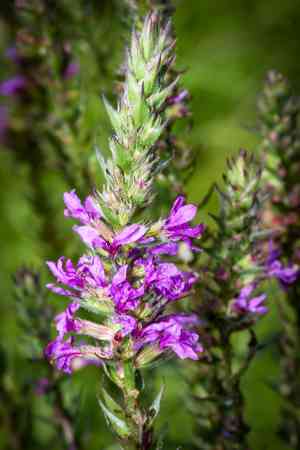
Lythrum salicaria reproduces most effectively in springtime by planting seeds. Its reproduction process is quite straightforward, indicated by the emergence of new shoots and robust development. Provide a damp, adequately drained setting for the most favorable propagation outcomes.
Optimal Time for Purple Loosestrife Propagation
Propagation Method
Seeding
Propagation Period
Spring
Tools for Purple Loosestrife Propagation
Seed trays or pots
These vessels offer a controlled setting for seed germination. They guarantee that purple loosestrife seeds have ample room to sprout and develop without competition, simplifying the initial propagation stages.
Sterile seed-starting mix
This substrate is free of disease-causing agents that could harm delicate purple loosestrife seedlings. It also typically possesses the correct texture and nutrient balance to support the plant's germination and initial development.
Spray bottle or misting system
Utilizing a spray bottle or mister enables gentle irrigation that will not disturb or dislodge purple loosestrife seeds. This aids in maintaining consistent moisture levels, which are crucial for seed germination.
Plastic dome or humidity cover
Covers assist in retaining moisture and creating a greenhouse-like atmosphere, which boosts the germination rate for purple loosestrife. They also help stabilize temperature, important for seed development.
Grow lights
If propagating purple loosestrife indoors or in low-light conditions, grow lights supply the essential light spectrum for seedlings to photosynthesize and develop robustly.
Heating mat
A heating mat can be positioned beneath seed trays to keep the soil at an ideal temperature for purple loosestrife germination, particularly in cooler environments.
Tweezers or dibber
These instruments are used to precisely handle and place purple loosestrife seeds in the soil without causing damage. A dibber can create small holes in the soil to position seeds at the correct depth.
Labeling stakes or markers
These are vital for tracking the various growth stages and specific needs of purple loosestrife throughout the propagation process. They also help prevent confusion if propagating multiple species.
How to Propagate Purple Loosestrife?
Propagation Type
Sowing
Difficulty Level
Easy
Caring for Your Newly Propagated Purple Loosestrife
Caring for Your Newly Propagated Purple Loosestrife
Purple loosestrife typically grows into a tall, sturdy plant, thus requiring ample space. They prefer full sun to partial shade and thrive in moist, fertile soils. After transplanting, water them regularly to establish roots and apply mulch to retain soil moisture. Due to their invasive nature in some regions, it's essential to manage purple loosestrife's growth and spread, and to remove spent flower spikes to prevent unwanted self-seeding. Monitor for pests and diseases, but generally purple loosestrife is resilient and needs minimal care once established. If necessary, in late winter or early spring, you can cut back dead stems to ground level to encourage new growth.
Common Errors to Avoid When Propagating Purple Loosestrife
Overwatering
Providing too much water can lead to root rot in purple loosestrife, which is harmful as the plant prefers moist but well-drained conditions. Excessive moisture can suffocate the roots, reducing oxygen supply and leading to fungal infections.
Overcrowding
Planting purple loosestrife seeds or seedlings too close together can impede their growth due to competition for light, nutrients, and space. This can result in weaker plants that are more susceptible to diseases and pests.
Ignoring ph levels
Neglecting the soil's pH can be a significant oversight since purple loosestrife thrives in a neutral to slightly acidic pH. Planting in unsuitable pH conditions can prevent purple loosestrife from absorbing necessary nutrients, affecting its growth and flowering.
Tips For Propagating Purple Loosestrife
Soil preparation
Ensure that the soil for purple loosestrife is rich in organic matter and has adequate drainage. Preparing the soil with compost or aged manure can provide the necessary nutrients for healthy growth.
Controlled spreading
Purple loosestrife is known for its invasive behavior. Use root barriers or plant in containers to control its spread and prevent it from overtaking other flora in the garden.
Correct moisture levels
Maintain consistent moisture levels for purple loosestrife without allowing the soil to become waterlogged. Using a mulch can help retain soil moisture and suppress weeds that could compete with purple loosestrife for resources.



