How to Propagate Red mulberry?
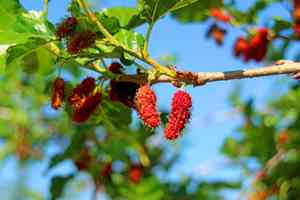
Red mulberry flourishes when multiplied via grafting and layering methods in the winter and spring periods. It presents a moderate challenge for propagation; observe the emergence of new shoots as an indicator of successful establishment. Ensure adequate moisture conditions to facilitate superior root development.
Optimal Period for Red Mulberry Propagation
Propagation Method
Grafting
Propagation Season
Spring,Winter
Tools Utilized in Red Mulberry Propagation
Grafting Knife
An grafting knife is vital for making precise incisions on the scion and rootstock of red mulberry. Clean cuts are essential for successful grafting, ensuring close contact between the vascular cambiums of both parts to encourage healing and fusion.
Grafting Tape
This item is employed to secure the grafted components, offering support and protection to the wound as it mends. The tape's flexibility and adhesion are particularly advantageous for red mulberry, as it necessitates a snug fit to maintain cambium contact.
Rooting Hormone
Applying rooting hormone to the cut end of a scion can boost the likelihood of successful grafting by stimulating root growth, which is especially crucial for red mulberry where grafting might involve rootstock that calluses slowly.
Pruning Shears
These are used to trim red mulberry to the desired form and remove any excess or unwanted growth. This aids in maintaining a clean grafting site, which is critical for the grafting success of red mulberry.
Disinfectant
A disinfectant, such as alcohol or bleach solution, is used to sanitize the grafting tools. This prevents the spread of diseases, which is especially important for red mulberry because it can be vulnerable to fungal and bacterial infections.
Budding Strips or Rubber Bands
These are used to secure the graft union for specific types of grafts in red mulberry. They provide an alternative to grafting tape, offering the necessary pressure and security for the graft while allowing for some movement and development.
Wax or Grafting Sealant
Following grafting, the cut surfaces require protection from pathogens and dehydration. A sealant helps to cover the cut area, ensuring that the exposed tissue of red mulberry does not dry out, which is particularly vital for its sensitive cambium.
How to Nurture Your Newly Propagated Red Mulberry?
How to Nurture Your Newly Propagated Red Mulberry?
After propagation, it's crucial to gradually introduce red mulberry to its new surroundings. Start by providing sufficient water, ensuring the soil around red mulberry remains consistently moist but not waterlogged. Initially, shield the young red mulberry from direct sunlight, offering partial shade until it exhibits signs of robust growth. As red mulberry matures, transition it to full sunlight where it can flourish. Regularly check for pests and diseases and fertilize annually with a balanced slow-release fertilizer. Prune dead or overcrowded branches to foster a strong, healthy canopy.
Common Errors to Avoid When Propagating Red Mulberry
Excessive watering of cuttings
Overwatering red mulberry cuttings can lead to root rot, impeding root development and potentially killing the propagation material.
Neglecting hygiene
Failing to use clean, sterilized tools may introduce pathogens to red mulberry cuttings, hindering successful rooting or growth.
Ignoring soil medium requirements
Utilizing the wrong soil medium can prevent the proper aeration and drainage that red mulberry's roots need to establish.
Overlooking hardening off process
Neglecting the hardening off process after rooting can shock red mulberry cuttings, causing them to wilt or die when exposed to the outdoor environment.
Incorrect cutting size
Cuttings that are too large or too small might not root correctly or at all, impacting the overall success rate of red mulberry propagation.
Advice For Propagating Red Mulberry
Appropriate cutting selection
Choose semi-hardwood cuttings from red mulberry that are approximately 6-8 inches long for optimal rooting potential.
Correct soil medium
Utilize a well-draining, sterile potting mix or sand-perlite mixture that retains adequate moisture without becoming waterlogged to encourage red mulberry root development.
Consistent moisture level
Keep the soil consistently moist but not waterlogged to support red mulberry cuttings, ensuring sufficient hydration for root formation without causing rot.
Strategic partial shading
Provide partial shade to maintain a cooler root zone temperature and reduce water stress on red mulberry cuttings, which helps improve rooting outcomes.
Moderate humidity control
Maintain moderate humidity around red mulberry cuttings using a transparent cover, allowing for a conducive microclimate that supports healthy growth without promoting mold or mildew.



