How to Propagate Wild daffodil?
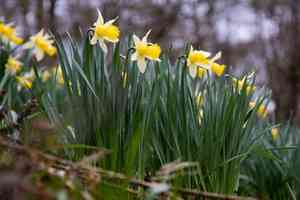
Wild daffodil can be multiplied via its bulbs in the springtime. This is a fairly straightforward procedure; the emergence of new shoots and roots indicates successful multiplication. Guarantee appropriate hydration and sufficient light exposure throughout the propagation phase.
Optimal Time for Wild Daffodil Propagation?
Propagation Method
Utilize The Tubers
Propagation Period
Spring
Tools Required for Wild Daffodil Propagation?
Trowel
A trowel is crucial for excavating and lifting wild daffodil's tubers from the earth. Its slender blade enables precise work without significantly disturbing nearby plants or harming the tubers.
Potting Bench
A clean potting bench offers a sanitized surface for handling wild daffodil's tubers, minimizing the risk of contamination and disease spread during the propagation process.
Sterilized Containers
Employing sterilized containers guarantees a pathogen-free environment for wild daffodil's tubers to develop roots and shoots prior to transplanting. Containers should have sufficient drainage to prevent waterlogging.
Labeling Tags
Labeling tags are vital for documenting details such as the harvest date and the specific wild daffodil variety to maintain accurate identification throughout propagation and growth.
Garden Fork
A garden fork assists in gently loosening the soil around wild daffodil without cutting through the tubers, facilitating their removal without causing injury.
Sharp Knife
A sharp, sterilized knife is necessary if wild daffodil's tubers require division. A clean cut ensures minimal damage to the tubers and reduces the likelihood of fungal infections at the cut site.
Watering Can with Fine Rose
This tool delivers a gentle water flow to keep the soil moist around wild daffodil's new tubers, encouraging growth without washing away soil or causing erosion that could expose developing roots.
Hormone Rooting Powder
Dipping the cut surfaces of wild daffodil's tubers into hormone rooting powder can stimulate root development and enhance propagation success rates.
Perlite or Vermiculite
Incorporating perlite or vermiculite into the potting mix can improve drainage and aeration, which is essential for the successful root development of wild daffodil's tubers.
How to Propagate Wild Daffodil?
Propagation Method
Utilize The Tubers
Difficulty Level
Simple
Post-Propagation Care for Wild Daffodil?
Post-Propagation Care for Wild Daffodil?
After propagation, wild daffodil needs minimal upkeep. Water only during extended dry periods, as wild daffodil is quite drought-tolerant. In winter, shield wild daffodil from excessive moisture, which can lead to bulb rot. Fertilize with a balanced slow-release product in early spring as foliage emerges. Remove spent flowers to redirect energy to the bulb for future growth, but allow foliage to yellow and die back naturally, as this is when the plant stores energy for the next blooming season. Divide and replant tubers every 3-4 years to prevent overcrowding and maintain plant vigor.
Common Errors to Avoid When Propagating Wild Daffodil
Overwatering
Excessive watering can cause root rot in wild daffodil, which thrives in well-drained soil. Too much moisture around the bulbs can lead to their decay.
Deep planting
Planting wild daffodil bulbs too deep can impede sprouting due to the excessive soil weight above, making it difficult for shoots to emerge.
Crowding bulbs
Placing wild daffodil bulbs too close together can restrict space for root expansion and reduce nutrient access, hindering growth.
Ignoring pests
Neglecting the presence of pests like bulb mites may result in bulb damage and reduced vigor of wild daffodil.
Rough handling
Handling wild daffodil bulbs carelessly can cause physical harm to the outer scales, making them vulnerable to diseases and inhibiting growth.
Tips for Propagating Wild Daffodil
Bulb division
Practice gentle bulb division as a propagation technique for wild daffodil to encourage healthy clumps to form without harming the parent bulb.
Soil condition
Ensure that wild daffodil is planted in well-draining soil with added organic matter to promote robust growth and bulb development.
Adequate spacing
Space wild daffodil bulbs appropriately to ensure each bulb has sufficient room for root development and nutrient access, optimizing plant health.
Pest monitoring
Regularly inspect wild daffodil for signs of pests and treat promptly to prevent bulb damage and ensure successful propagation.
Proper storage
Store wild daffodil bulbs in a cool, dry location before planting to prevent premature sprouting or potential fungal infections.



