How to Propagate Common reed?
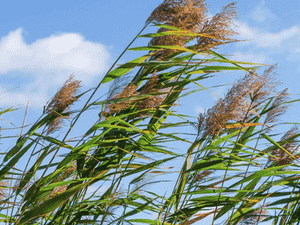
The most suitable periods for multiplying common reed are during the spring and fall, with separation being the favored technique. Reproduction is typically straightforward, and successful establishment is evidenced by the emergence of fresh sprouts and root formation. Guarantee appropriate hydration and light exposure for peak outcomes.
Optimal Time for Common Reed Propagation
Propagation Method
Division
Propagation Period
Spring, Autumn
Tools for Common Reed Propagation
Sharp spade or garden knife
A keen spade or garden knife is vital for separating the root structure of common reed. It's used to carefully cut through the dense rhizomes and roots to divide the plant into smaller parts without excessive harm. Sharpness ensures a clean cut, aiding faster healing and reducing infection risk.
Water hose with mist setting
Gentle irrigation is essential for common reed immediately following division to guarantee sufficient hydration. A water hose with a mist setting provides soft, even water coverage that helps settle the soil around the roots and lessens transplant shock, crucial for the recovery and growth of new divisions.
Gardening gloves
Handling common reed can be harsh on skin due to its sometimes coarse texture, and gloves will guard against cuts or irritation. Wearing gloves also provides a better grip when dividing and managing the plant, especially when wet.
Trowel or bulb planter
Common reed's young divisions can be replanted using a trowel or bulb planter. This tool enables propagators to dig appropriately sized holes for the plant's new sections. Correct depth and spacing are important to give each division ample room to establish itself without overcrowding.
Rooting hormone (optional)
While not mandatory for common reed, which possesses a robust root system, a rooting hormone can be applied to cut rhizome surfaces to stimulate root development and enhance survival rates. It's especially useful if divisions are smaller or if propagation occurs in suboptimal conditions.
How to Propagate Common Reed?
Propagation Type
Division
Difficulty Level
Easy
Caring for Newly Propagated Common Reed
Caring for Newly Propagated Common Reed
To care for common reed after propagation, maintain consistently moist soil conditions as common reed is a water-loving plant. This often means planting near water bodies or in wetland areas. Monitor for signs of stress in the newly planted divisions, such as wilting or yellowing leaves. Fertilize young common reed lightly to encourage growth, but avoid over-fertilization which can lead to weak and leggy plants. Prune dead or excess growth during the dormant season to maintain vigor and shape as well as control the spread. Pay attention to invasive tendencies as common reed can become dominant in certain regions.
Common Mistakes to Avoid When Propagating Common Reed
Overwatering
Since common reed thrives in wet conditions, a common error is assuming it needs constant saturation. Excessive watering can lead to root rot, which is detrimental to the plant's health and can impede successful propagation.
Ignoring proper space
Underestimating the size and spread of common reed can result in overcrowding as it grows. This mistake can hinder proper air circulation and nutrient availability, leading to poor health and reduced propagation success.
Neglecting container size
Choosing a container that is too small can restrict the root growth of common reed, preventing it from establishing a healthy root system necessary for successful propagation.
Poor cutting selection
Using old or diseased cuttings for propagation of common reed is a critical error. It results in a low success rate because unhealthy cuttings struggle to establish new growth.
Tips For Propagating Common Reed
Moist environment
Maintaining a consistently moist (but not waterlogged) environment will promote the root development of common reed. Ensure that the substrate is damp to the touch, mimicking the natural conditions common reed prefers.
Spacious planting
Allow ample room when planting common reed to accommodate its growth habit. This will enable the expanding rhizome system to develop without competition, enhancing the chances of successful propagation.
Adequate container size
Selecting a large container when propagating common reed from cuttings ensures enough room for the extensive root system to develop, which is necessary for the plant's stability and growth.
Healthy cuttings
Always use vigorous and disease-free cuttings to propagate common reed. The cuttings should be taken from a healthy part of the parent plant to increase the likelihood of successful propagation.



