How to Propagate Oriental arborvitae?
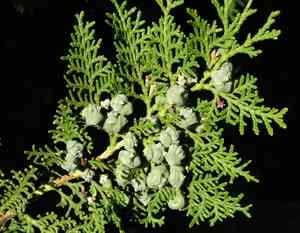
Thuja orientalis flourishes when reproduced in the fall and winter seasons through methods such as layering, cuttings, or seed sowing. The propagation process presents a moderate challenge, and the emergence of new roots or shoots signifies successful establishment. Guarantee ideal soil and hydration levels to enhance the likelihood of success.
What Is the Best Time To Propagate Oriental Arborvitae?
Propagation Type
Cutting
Propagation Season
Autumn,Winter
What Tools Are Used in Oriental Arborvitae Propagation?
Sterilized Pruning Shears
Pruning shears are vital for obtaining cuttings from oriental arborvitae. Sterilized shears prevent disease transmission and ensure a clean cut, promoting better healing and rooting.
Rooting Hormone
A rooting hormone encourages root development when applied to the base of oriental arborvitae cuttings. This hormone boosts the likelihood of successful root formation and can speed up the process.
Propagation Tray
Propagation trays offer a controlled environment for oriental arborvitae cuttings to root. These trays help maintain consistent moisture levels and temperature, which are crucial for root development in cuttings.
Perlite or Vermiculite
These materials are used to enhance the aeration and drainage of the propagation medium, which is necessary for the delicate rooting process of oriental arborvitae. Mixed with soil or peat, they help provide the right texture for cuttings to establish roots.
Plastic Dome or Cover
Placing a plastic cover over the propagation tray creates a greenhouse-like environment with high humidity that helps oriental arborvitae cuttings retain moisture and encourages rooting without water loss through transpiration.
Heating Mat
A heating mat gently warms the propagation medium, helping to stimulate root growth in oriental arborvitae cuttings. Consistent warmth is especially beneficial for rooting success in cooler environments.
Sharp Knife
A sharp knife might be used to take smaller or more precise cuttings from oriental arborvitae, ensuring minimal damage to the parent plant and the cutting, which aids in a faster healing process.
Misting Bottle
A misting bottle is used to maintain humidity around oriental arborvitae cuttings without overwatering, which is essential to prevent rot or fungal growth during the early stages of propagation.
How to Care for Your Newly Propagated Oriental Arborvitae?
How to Care for Your Newly Propagated Oriental Arborvitae?
Once the oriental arborvitae cutting has established a solid root system, which you can observe by the growth of new foliage, gradually acclimate it to less humid conditions by removing the plastic cover over the course of a week. Transplant it into a larger pot or directly into the garden, in a well-draining soil with a location that receives full sun to partial shade. Water the young oriental arborvitae routinely until it is well-established, and apply a balanced, slow-release fertilizer each spring to promote healthy growth. Protect young plants from extreme weather conditions, such as frost or intense heat, during their first growing season.
Common Mistakes to Avoid When Propagating Oriental Arborvitae
Overwatering
This can lead to root rot or fungal diseases, which are damaging to 's health and can severely hinder root development during propagation.
Using old seeds
Old or improperly stored seeds may have low germination rates, leading to unsuccessful propagation of .
Ignoring pre-treatment
Seeds of require stratification (cold treatment) before sowing to break dormancy. Not doing so can result in poor germination.
Cutting too short cuttings
Cuttings that are too short may not have enough energy reserves or nodes to successfully establish new roots and shoots for 's propagation.
Neglecting soil quality
Poor soil conditions or incorrect soil types may fail to support 's root growth and development during propagation.
Tips For Propagating Oriental Arborvitae
Correct seed stratification
Proper stratification mimicking winter conditions can increase the germination rate of 's seeds by breaking seed dormancy.
Optimal cutting length
Selecting cuttings that are about 4-6 inches in length with several nodes will improve the chances of successful rooting and growth in .
Rooting hormone for cuttings
Dipping the cut end of cuttings into rooting hormone can enhance root formation and support the healthy development of .
Adequate watering regimen
Maintaining consistent moisture while not overwatering is crucial for 's cuttings to establish roots without rotting.
Appropriate soil medium
Using a well-draining soil mix or starting medium such as peat or perlite can facilitate root growth and aeration for .



