How to Prune Paper birch?
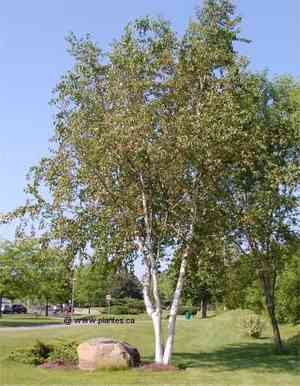
Distinguished by its prominent white bark and three-sided foliage, the paper birch illuminates environments throughout North America. To preserve its vitality and structure, execute foundational pruning in late winter or early spring, while the tree is inactive. This period prevents significant sap leakage and encourages robust development. Eliminate deceased, injured, or intersecting branches, and reduce crowded sections to enhance light exposure and airflow, which are crucial for the paper birch's endurance and visual appeal. Trimming also lessens the likelihood of disease transmission by facilitating faster wound healing.
Advantages of Trimming Paper Birch
Advantages of Trimming Paper Birch
Trimming paper birch promotes robust development and preserves its desired form. Regular cutting eliminates dead material, stimulates fresh growth, and helps maintain a compact, appealing shape. Pruning is crucial for the plant's health and visual appeal.
Optimal Time for Pruning Paper Birch
Optimal Time for Pruning Paper Birch
The best times for pruning paper birch are late winter and early spring, as these periods coincide with the plant's dormant state. During dormancy, paper birch exhibits reduced or halted active growth, which lessens the stress caused by pruning. Trimming before the spring growth surge allows wounds to mend faster and decreases the likelihood of sap leakage, to which paper birch is susceptible. Furthermore, pruning while the plant is still dormant helps prevent the spread of pests and diseases that are less active in colder months. These seasons also offer the benefit of paper birch's leafless structure, providing a clearer view of branches for more accurate and efficient cuts.
Tools Required for Pruning Paper Birch
Hand Pruners
For young or smaller branches of paper birch, hand pruners are essential. They provide precision and are perfect for making clean cuts, vital for the tree's well-being. Opt for bypass pruners over anvil types to avoid crushing the tree's delicate bark.
Loppers
When dealing with slightly larger branches that hand pruners cannot manage, loppers are useful. Their extended handles offer leverage to cut branches up to 1 and a half inches in diameter, while still ensuring the clean cut needed for paper birch's health.
Pruning Saw
For mature paper birch with branches exceeding 1 and a half inches in diameter, a sharp pruning saw is necessary. It enables clean removal of sizable limbs without tearing the bark, thereby preventing disease and encouraging more effective healing.
Pole Pruner
For high and inaccessible branches of paper birch, a pole pruner is recommended. This tool helps maintain the tree without requiring climbing and ensures safety during pruning tasks.
How to Prune Paper Birch
Remove Dead Limbs
Identify and remove any dead limbs from paper birch using clean, sharp pruning shears or a saw. Make cuts just outside the branch collar without damaging the surrounding bark.
Cut Diseased Wood
Cut away any diseased wood to prevent the spread of infection. Disinfect your tools between cuts to avoid contaminating healthy parts of paper birch.
Eliminate Suckers
Locate and cut suckers, which are shoots growing from the base or roots of paper birch. Remove them close to the point of origin to discourage regrowth.
Thin Crown
Thin the crown if necessary by selectively pruning interior branches to improve air circulation and light penetration through paper birch's canopy.
Maintain Shape
Maintain the natural shape of paper birch by making additional selective cuts to long, wayward branches, ensuring the cuts are made at a lateral branch or bud to encourage proper regrowth.
Common Pruning Errors with Paper Birch
Incorrect Cut Placement
Making pruning cuts either too close or too far from the trunk can harm the bark and wood of paper birch, hindering its natural healing process and making it vulnerable to disease and pest infestation.
Excessive Pruning
Removing too much foliage at once can stress paper birch, leading to a weak structure and reduced vigor. Typically, no more than 25% of the crown should be removed in a single season.
Flush Cuts
Making flush cuts against the trunk removes the branch collar, an area rich in protective cells, which could impede proper wound closure and invite pathogens.
Stub Cuts
Leaving too large a stub when cutting branches does not promote healing and can lead to decay, which may then spread to other parts of paper birch.
Pruning Without Reason
Pruning paper birch without a clear purpose, such as to remove dead or diseased wood, to improve structure, or to maintain size, can lead to unnecessary stress and damage to the tree.
General Pruning Advice for Paper Birch
Sharp Tools
Use sharp, clean pruning tools to make precise cuts that heal quickly, minimizing stress and the risk of disease infection for paper birch.
Targeted Pruning
Focus on removing dead, diseased, or damaged branches, which helps maintain the health and aesthetics of paper birch without over-pruning.
Three-Cut Method
Implement the three-cut method for removing larger branches to avoid tearing the bark, which involves making a notch cut on the underside of the branch, an overhand cut farther out, and a final cut near the branch collar.
Correct Cut Angle
Make cuts at a slight angle, above a bud or branching point, to allow water to run off and to encourage proper healing and new growth direction for paper birch.
Follow Natural Form
When shaping paper birch, follow its natural silhouette to retain its distinctive form, avoid topping, and promote a stable structure.
Branch Collar Preservation
Respect the branch collar during pruning cuts to permit paper birch to heal effectively and prevent decay from entering the trunk.



