How to Prune Chinaberry tree?
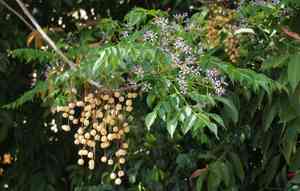
Originating from Asia and Australia, the chinaberry tree is a deciduous species characterized by aromatic purple flowers and yellow berries. To achieve peak development, perform pruning in late winter or early spring, prior to the emergence of new foliage. Concentrate on excising deceased or ailing limbs, reducing density in congested zones, and sculpting for robust structure. Trimming boosts the chinaberry tree's vitality, improves air movement, and preserves an attractive appearance. Refrain from over-pruning to avert undue strain on the tree.
What Are the Benefits of Pruning Chinaberry Tree?
What Are the Benefits of Pruning Chinaberry Tree?
Trimming chinaberry tree promotes robust new development and maintains its desired form. Timely cutting back manages size and fosters a more appealing, healthier tree, reducing disease risk.
What Is the Best Time for Pruning Chinaberry Tree?
What Is the Best Time for Pruning Chinaberry Tree?
Pruning in late winter ensures chinaberry tree can recover quickly as it enters the spring growing season. This minimizes stress and allows the plant to seal pruning wounds before new growth starts. It's also easier to see the tree's structure without leaves. Trimming in early spring, just before the growth period begins, encourages healthy new development and helps maintain the tree's desired shape. It also prevents the loss of the current year's flowers and fruits, as chinaberry tree typically blooms in late spring and bears fruit in the fall.
What Tools Do I Need to Prune Chinaberry Tree?
Hand Pruners
Perfect for trimming small branches and twigs on chinaberry tree, enabling precise cuts to shape the tree or remove unwanted growth.
Lopping Shears
Suitable for cutting through thicker branches, typically up to 1.5 inches in diameter, which chinaberry tree may develop as it matures.
Pruning Saw
Essential for removing larger limbs from chinaberry tree. A saw with a curved blade can be particularly effective for cutting through branches over 1.5 inches thick.
Pole Pruner
Useful for reaching higher branches on mature specimens of chinaberry tree without the need for a ladder, enhancing safety and convenience.
Hedge Shears
Relevant for shaping and controlling the growth of chinaberry tree, particularly if it is being maintained as a hedge or in a formal garden setting.
Pruning Gloves
Offer hand protection when pruning chinaberry tree, as it can have rough bark and potentially harmful insects among its branches.
Safety Glasses
A must to protect eyes from flying debris when cutting branches from chinaberry tree, ensuring the gardener's safety.
How to Prune Chinaberry Tree
Step1: Timing Pruning for Dormancy
Determine the optimal time to prune chinaberry tree, which is typically late winter or early spring before new growth begins. Ensure the tree is dormant to minimize stress and reduce the risk of disease entering through the cuts.
Step2: Sterilize Pruning Equipment
Clean and sanitize pruning tools by wiping them with a solution of 1 part bleach to 9 parts water to prevent the spread of disease.
Step3: Remove Dead Branches
Begin by removing any dead wood. Identify dead branches by checking for a lack of buds or a brittle texture. Make your cuts just above the point where there is live, healthy wood, usually recognizable by healthy buds. Angle your cuts downwards to allow water to run off and reduce the chance of disease.
Step4: Prune Diseased Limbs
Examine chinaberry tree for diseased limbs. Look for signs of infection or fungus, such as unusual color, growths, or a sticky substance. Cut well below the affected area, at least several inches into healthy wood, and dispose of the diseased material far from the tree.
Step5: Trim Weak Branches
Identify weak branches on chinaberry tree that may be prone to breaking, which could include those with narrow crotch angles or that cross and rub against each other. Prune these branches back to their point of origin or to a strong lateral branch capable of assuming the role of the removed branch.
Step6: Shape Canopy and Thin
After removing the dead, diseased, and weak branches, assess the overall shape of chinaberry tree. If necessary, lightly thin out the canopy to increase light penetration and air circulation through the tree. Make selective cuts to remove some of the inner branches.
Step7: Clean Cuts at Proper Angle
Make all pruning cuts cleanly and at a 45-degree angle to encourage proper healing. Avoid leaving stubs as they can be entry points for pests and diseases.
Step8: Dispose of Pruned Material
Dispose of all removed material by burning or discarding it in a way that prevents it from becoming a source of infection for other plants.
Step9: Post-Pruning Tool Care
Finish by cleaning and sterilizing the tools again to ensure they are ready for the next use and to eliminate any pathogens that could be transferred to other plants.
Post-Pruning Care for Chinaberry Tree
Post-Pruning Care for Chinaberry Tree
Immediately after pruning chinaberry tree, apply a wound sealant to large cuts to prevent disease. Position chinaberry tree to receive adequate but not excessive sunlight, maintaining humid conditions without waterlogging. A balanced, slow-release fertilizer should bolster recovery; avoid overfeeding. Regularly inspect chinaberry tree for wilt or unusual marks, indicative of stress or infection. If symptoms appear, promptly treat with appropriate fungicide or pest control methods. Consistent care ensures a swift return to robust health.
Common Pruning Mistakes with Chinaberry Tree
Excessive Canopy Removal
Removing too much of the canopy at once, which can stress chinaberry tree and lead to poor growth or disease susceptibility.
Unsterilized Pruning Tools
Pruning without sterilizing the tools, thus risking the spread of diseases to chinaberry tree.
Ignoring Diseased or Damaged Wood
Failing to remove diseased or damaged wood, which can hamper chinaberry tree's overall health and prevent healing from pruning cuts.
Leaving Stubs After Pruning
Pruning in a way that leaves stubs, which can lead to decay and provide entry points for pests and diseases.
Lack of Shaping and Structural Training
Neglecting to shape chinaberry tree over time, resulting in a weak tree structure prone to damage from wind or weight of the limbs.
Common Pruning Tips for Chinaberry Tree
Use Clean, Sharp Pruning Tools
Use clean, sharp tools to make precise cuts, which help chinaberry tree heal faster and reduce the risk of disease.
Prune with Natural Shape in Mind
Follow the natural shape of chinaberry tree when pruning to maintain its structural integrity and aesthetic form.
Remove Dead or Crossing Branches
Identify and remove any dead, diseased, or crossing branches to improve air circulation and sunlight exposure, benefiting chinaberry tree's overall health.
Angle Cuts for Proper Water Runoff
Make all cuts at a slight angle and just above a bud or branching point, to promote proper water runoff and new growth in a desirable direction.
Monitor for Pests and Diseases Regularly
Regularly inspect chinaberry tree for signs of pests or diseases, addressing any issues promptly to avoid more severe problems post-pruning.
Moderate Canopy Thinning for Health
Thinning the canopy moderately can help light and air reach the inner branches, improving chinaberry tree's vigour.



