How to Prune Mexican petunia?
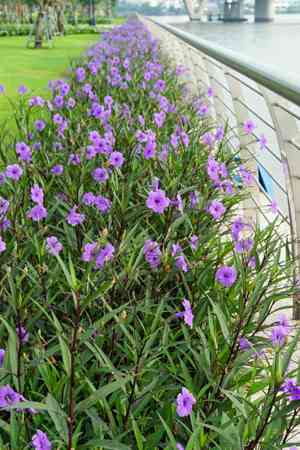
A robust perennial featuring tubular blossoms and vivid leaves, Ruellia simplex thrives with consistent trimming to preserve its form and stimulate flowering. Snip off faded flowers and stalks from early spring until late autumn to foster fresh development. To revitalize the plant, reduce its size by one-third following the initial bloom period. This practice not only encourages growth but also manages its spreading nature, guaranteeing a compact, controllable presentation.
Advantages of Trimming Mexican Petunia
Advantages of Trimming Mexican Petunia
Trimming mexican petunia promotes robust development and maintains its form, ensuring a dense, visually appealing structure and strong vitality.
Optimal Period for Pruning Mexican Petunia
Optimal Period for Pruning Mexican Petunia
Cutting mexican petunia in early spring stimulates a strong growth response as the plant enters its active phase, enhancing its health and look. Throughout summer, consistent pruning can manage its size and shape, encouraging more blooms. Pruning in late fall is good for removing faded flowers and seed pods, preventing unwanted self-seeding and preparing the plant for winter. It's vital to avoid winter pruning when mexican petunia is less active, allowing it to conserve energy for the growing season.
Tools Required for Pruning Mexican Petunia
Hand Pruners
Perfect for making accurate cuts on the thinner stems of mexican petunia and for removing spent blooms. Choose bypass pruners for clean cuts that encourage healthy regrowth.
Pruning Shears
Handheld shears are suitable for shaping mexican petunia and managing its spread, especially since mexican petunia can become invasive. Shears are effective for trimming back to the desired size or form.
Pruning Saw
For mature mexican petunia with thicker branches that hand pruners cannot manage, a pruning saw can quickly cut without harming the plant's overall structure.
Gloves
Protective gloves are essential when pruning mexican petunia to prevent scrapes or skin irritation, ensuring a safe gardening experience.
Pruning Loppers
If mexican petunia has branches too thick for hand pruners but too thin for a saw, loppers provide the extra reach and leverage needed.
How to Prune Mexican Petunia
Step1: Assessing Pruning Needs
Evaluate mexican petunia for pruning requirements, focusing on identifying old blooms, withered branches, and damaged areas. This helps maintain the plant's health and appearance by encouraging new growth and flowering.
Step2: Preparing Pruning Tools
Use clean, sharp pruning shears to ensure precise cuts and prevent disease transmission. Sanitize the blades with alcohol before and after each pruning session.
Step3: Deadheading Spent Blooms
Remove old flowers by cutting them back to the base of the flower stem. This process, known as deadheading, encourages mexican petunia to produce new blooms.
Step4: Trimming Withered Branches
Trim any withered branches back to a point of healthy growth or to the nearest main stem. Make cuts at a 45-degree angle, approximately 1/4 inch above a leaf node, to promote healing and new growth.
Step5: Removing Damaged Tissue
Cut away any damaged or diseased sections of mexican petunia, removing the affected parts well into the healthy tissue to ensure all compromised material is eliminated.
Step6: Shaping the Plant
After removing unwanted parts, shape mexican petunia, if necessary, to maintain an attractive form. However, avoid excessive pruning, which can stress mexican petunia and negatively impact its vigor.
Step7: Disposing of Pruned Material
Promptly dispose of all removed plant material, especially if it shows signs of disease or pests, to prevent further contamination in the garden area.
Step8: Post-Pruning Hydration
Water mexican petunia deeply after pruning to reduce stress and provide the hydration it needs to recover and generate new growth efficiently.
Step9: Monitoring and Adjusting Post-Pruning Care
Monitor mexican petunia for signs of new growth or any issues after pruning. Adjust care as needed, paying attention to watering, sunlight, and fertilization to support healthy development.
Aftercare for Mexican Petunia Following Pruning
Aftercare for Mexican Petunia Following Pruning
After pruning mexican petunia, promptly water the plant to help alleviate pruning stress. Maintain a bright, indirect light environment and keep humidity levels consistent, avoiding extreme temperature fluctuations. Apply a balanced, slow-release fertilizer to replenish nutrients and support mexican petunia's recovery and regrowth. Monitor new growth for discoloration or wilting, which may indicate stress or infection. If such signs appear, adjust care as needed and consider applying a fungicide or insecticide according to manufacturer's instructions.
Common Pruning Errors with Mexican Petunia
Excessive Pruning Causes Stress and Inhibits Growth
Over-pruning, which involves removing too much of mexican petunia's foliage at once, can stress the plant and hinder its growth.
Unsanitized Tools Spread Disease
Pruning without sterilizing tools can spread disease to mexican petunia and negatively impact its overall health.
Random Snipping Affects Form and Flowering
Randomly cutting without understanding mexican petunia's growth pattern can lead to undesirable shapes and affect its ability to flower.
Neglecting Dead Stems Attracts Pests and Disease
Ignoring dead or diseased stems can create a pathway for pests and diseases, potentially harming mexican petunia.
Improper Cuts on Old Wood Reduce Vitality
Cutting into the old wood of mexican petunia, where new growth does not readily emerge, can negatively impact the plantâs vigor.
General Pruning Advice for Mexican Petunia
Sharp, Clean Cuts for Rapid Healing
Use sharp, clean pruning shears to make precise cuts that will heal quickly, preventing damage to mexican petunia.
Thin Out Crowded Stems to Prevent Disease
Focus on thinning out crowded stems to improve air circulation, which helps prevent disease in mexican petunia.
Trim Tips for Denser Growth and More Blooms
Trim back the tips of stems, which encourages bushier growth and more blooms on mexican petunia.
Deadhead Spent Flowers to Encourage Continuous Blooming
Regularly remove spent flowers to promote continuous blooming and to prevent mexican petunia from self-sowing excessively if seed spread is a concern.
Cut Above Nodes for Targeted New Growth
Always cut just above a leaf node or a branching point to stimulate mexican petunia to produce new growth where desired.



