How to Prune Black willow?
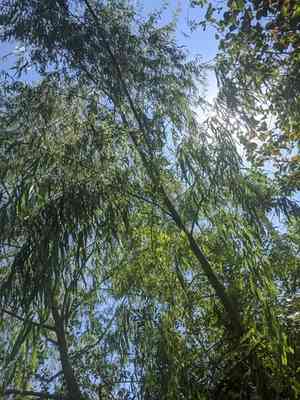
This shedding tree is recognized for its rapid development and widespread root network, flourishing in proximity to water sources. For Salix nigra, perform pruning in late winter or early spring prior to foliage emergence to foster robust architecture and avert ailments. Eliminate deceased, ailing, or intersecting branches, and thin out congested sections to lessen wind impact. Restrict crown reduction to alleviate strain and preserve its inherent shape, favoring younger, more energetic branches. Trimming Salix nigra boosts vitality and can diminish potential harm from severe weather events given its preferred habitat.
Advantages of Trimming Black Willow
Advantages of Trimming Black Willow
Trimming black willow encourages robust development and maintains its desired form. Precise cuts enhance sun exposure and air circulation, crucial elements for the strong vitality of black willow.
Optimal Period for Pruning Black Willow
Optimal Period for Pruning Black Willow
Pruning black willow in late winter or early spring is ideal as the plant remains dormant, minimizing stress and helping prevent disease spread. This timing allows wounds to heal quickly with new spring growth. Additionally, black willow's structure is more visible without leaves, enabling more effective pruning. Trimming before the growing season avoids disrupting its natural cycle, including flowering and fruiting periods later in spring and summer.
Essential Tools for Pruning Black Willow
Bypass Pruners
Perfect for making clean cuts on smaller black willow branches, reducing tissue damage.
Lopping Shears
Designed for cutting thicker black willow branches too large for hand pruners, ensuring efficient, accurate cuts.
Pruning Saw
Crucial for removing larger black willow limbs that loppers can't handle, allowing clean cuts without tearing.
Pole Pruner
Enables safe pruning of higher black willow branches without a ladder, improving safety and reach.
Hedge Shears
Useful for shaping and managing black willow's growth when a hedge-like form is desired.
Hand Gloves
Protect the gardener's hands from scratches and cuts when handling black willow, which may have rough bark and branches.
Safety Glasses
Prevent eye injuries from flying debris during black willow branch cutting, ensuring gardener safety.
How to Prune Black Willow
Eliminate Damaged Wood
Identify and remove any dead, broken, or diseased black willow branches. Use sharp, sterilized pruning tools for clean cuts to prevent further plant injury.
Thin Out Overgrown Shoots
Thin overgrown shoots to improve light penetration and air circulation within black willow's canopy. Remove or cut back some new growth, focusing on crossing or rubbing shoots.
Shorten Lower Branches
Prune lower black willow branches that interfere with desired spaces or paths, or show signs of weakness. Trim these branches back to the collar at their base, being careful not to harm the main trunk.
Shape The Canopy
Shape black willow's canopy to maintain its natural look. Remove selected branches to create a balanced structure, avoiding excessive removal from one side.
Clean Up
Clear all debris generated during pruning. Safely dispose of removed branches to prevent the spread of any potential pests or diseases.
Common Pruning Errors with Black Willow
Ignoring Deadwood
Failing to regularly remove dead or diseased branches can lead to a decline in black willow's overall health.
Over-Pruning
Removing too much foliage at once can stress black willow, making it susceptible to pests and diseases.
Topping
Cutting the top of black willow can result in weak, fast-growing sprouts that may compromise the treeâs structure and health.
Improper Cuts
Making cuts too close or too far from the branch collar can hinder black willow's proper healing and may lead to decay.
Not Sterilizing Tools
Failing to sterilize pruning tools before use can spread diseases between plants.
Pruning During Active Growth
Pruning black willow during its active growth can deplete energy and reduce its vigor.
General Pruning Advice for Black Willow
Selective Thinning
Prune strategically to thin crowded areas, allowing light and air to penetrate and reduce disease likelihood in black willow.
Cutting Technique
Make cuts at a 45-degree angle just above a bud or branch, facing away from black willow's center to promote healthy outward growth.
Branch Collar
Respect the branch collar by cutting just outside it without leaving a stub, to support rapid healing in black willow.
Maintenance Pruning
Regularly prune to remove dead or weakened limbs, which helps maintain black willow's vigor and structural integrity.
Tool Care
Regularly sharpen and sterilize pruning tools to ensure clean cuts that heal quickly in black willow.
Water Sprouts And Suckers
Remove water sprouts and suckers as they can drain energy from black willow's main structure.



