Boost Growth: How and When to Repot Your African bush daisy Plant
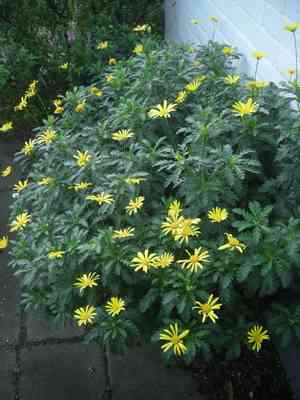
1
The best times to transplant African bush daisy are during Spring and Winter.
2
Confirm the new container is at least 2.5 cm (1 inch) wider across than its previous one.
3
Refrain from excessive watering post-repotting to avert root decay.
Reasons to Replant Your African Bush Daisy
Understanding root development and container limitations
As your African bush daisy matures, its root system will begin to exceed the boundaries of its current container. Eventually, the roots can become tightly packed and encircle themselves, a condition known as being pot-bound. This hinders their capacity to absorb water and nutrients effectively. Replanting guarantees that the roots have ample room to expand and flourish, leading to a healthier plant overall.
Indicators that your African bush daisy requires replanting
Several signs suggest your African bush daisy might need replanting: If you observe roots emerging from the drainage openings, sluggish or stunted development despite proper care, or the soil in the pot drying out much quicker than usual, these all point to a need for replanting. Another clear sign is when the plant becomes top-heavy and begins to easily topple over.
Advantages of replanting for plant vitality
Replanting offers numerous benefits, including enhanced root health and improved nutrient uptake. It also allows you to refresh the growing medium, which may have become depleted or compacted over time. By providing your African bush daisy with fresh, nutrient-rich soil and more space to grow, you foster an environment where it can continue to thrive and produce its beautiful, daisy-like blooms.
What You'll Need for Replanting Your African Bush Daisy
Choosing the appropriate soil mixture
For replanting your African bush daisy, it's essential to select a well-draining soil blend. A mix specifically formulated for flowering plants or one containing a combination of garden soil, peat moss, and perlite works well. This ensures that excess water can easily drain away, preventing waterlogging and root decay.
Selecting a suitable pot size
When choosing a new container, opt for one that is approximately 2.5 cm to 5 cm (1 to 2 inches) larger in diameter than the current pot. This provides your plant with sufficient room to grow without overwhelming it with too much new soil, which can retain excess moisture and lead to root rot. Ensure the pot has adequate drainage holes to facilitate proper water flow.
Essential tools for replanting
Successful replanting requires the correct implements. You'll need a small garden trowel for scooping soil, pruning shears for trimming any damaged roots, and gloves to protect your hands. Additionally, having a watering can and a drainage tray on hand will be useful for watering and containing any excess water, respectively.
How to Replant Your African Bush Daisy
Step-by-step replanting procedure
Begin by lightly watering your African bush daisy a day before replanting to make the soil easier to manage. Carefully remove the plant from its current pot by holding it at the base and gently tilting it out. If it's stuck, you can tap the sides of the pot or use a knife to loosen the soil. Place the plant into the new pot, adding soil around the sides and gently patting it down. Ensure the plant is at the same soil level as it was in the old pot.
Handling the roots with care
Examine the roots and trim any that are dead, damaged, or excessively long using pruning shears. If the roots are tightly coiled, gently untangle them to encourage outward growth. Be careful not to harm the healthy roots in the process. Handling the roots delicately minimizes stress to the plant, helping it to adapt more quickly to its new home.
Placement and positioning in the new container
Position your African bush daisy centrally in its new pot, ensuring it stands upright and is well-supported. Fill in the gaps around the roots with your chosen soil mix, gently pressing it down to eliminate air pockets. Once the plant is securely in place, water it lightly to help settle the soil around the roots.
Aftercare for Your Replanted African Bush Daisy
Appropriate watering practices post-replanting
After replanting, it's important not to overwater your African bush daisy. Water it just enough to keep the soil moist but not saturated. Over the next few weeks, monitor the soil moisture and water thoroughly only when the top 2-3 cm (1 inch) of soil feels dry to the touch. This helps prevent the risk of root rot and encourages healthy root establishment.
Light and location considerations
Place your African bush daisy in a spot where it can receive bright, indirect sunlight. Avoid direct sun exposure initially, as the plant can be more sensitive after replanting. A location near a north or east-facing window typically provides the right balance of light and shade. Gradually introduce more direct sunlight as the plant acclimates to its new pot.
When to begin fertilizing after replanting
Refrain from fertilizing your African bush daisy for at least 4-6 weeks after replanting. This gives the plant time to adjust to its new surroundings and prevents the stress of nutrient overload. After this period, you can resume a regular fertilizing schedule with a balanced, water-soluble fertilizer to support continued growth and flowering.



