Optimal Soil for Growing Common turmeric: What You Need to Know
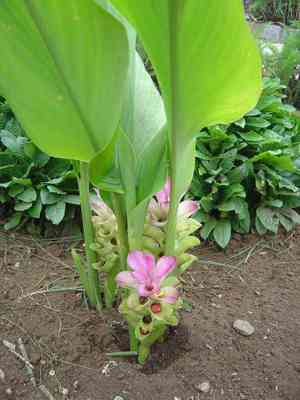
1
Common turmeric flourishes in soil that drains effectively, preventing water accumulation that can cause root decay.
2
Adding organic materials such as compost not only enhances soil composition but also boosts nutrient access for Common turmeric.
3
Consistent soil analysis is essential for sustaining the optimal pH and nutrient equilibrium necessary for robust Common turmeric plants.
Optimal Ground Mixture for Common Turmeric
Ground Type
For peak development, Common turmeric thrives in loamy or sandy-loam ground types. These provide a balanced mix of sand, silt, and clay particles, ensuring good water drainage while retaining sufficient moisture and nutrients. Heavy clay grounds are not ideal as they may hold too much water, potentially causing root rot.
Ground Texture
The perfect ground texture for Common turmeric is loose and crumbly. This allows roots to easily penetrate and access nutrients and water. Assess your ground's texture by taking a handful and squeezing it. If it crumbles readily and doesn't form a firm ball, it's just right. Avoid grounds that are too dense or have a high clay content.
Ground pH Requirements
Common turmeric flourishes in ground with a pH range of 6.5 to 7.5. This slightly acidic to neutral pH range offers the best conditions for nutrient availability and root vitality. You can check your ground's pH using a home testing kit or by submitting a sample to a local agricultural extension service.
Nutrient Demands of Common Turmeric
Primary Nutrients
Common turmeric needs essential primary nutrients including nitrogen (N), phosphorus (P), and potassium (K). Nitrogen promotes foliage growth, phosphorus is crucial for root development and blooming, while potassium aids in overall plant health and stress resilience. Use a balanced fertilizer with equal parts of N, P, and K, or a slightly higher phosphorus ratio to encourage strong root growth.
Trace Elements
Trace elements such as iron, manganese, and zinc are also important for the healthy growth of Common turmeric. These minor elements support various biological functions, from chlorophyll production to enzyme activity. Incorporating well-rotted compost or a trace element-rich fertilizer can help maintain adequate levels for your plants.
Significance of Organic Material
Organic material like compost, decomposed leaf litter, or well-rotted manure is vital for enriching the ground. It improves ground structure, boosts nutrient content, and enhances water retention capabilities. Regularly adding organic material can create a sustainable growing environment for Common turmeric, leading to healthier plants and better yields.
Enhancing Ground for Common Turmeric
Utilizing Compost
Mixing compost into your ground is one of the most effective ways to improve its quality. Compost enriches the ground with essential nutrients, boosts microbial activity, and improves moisture retention. To prepare your ground for Common turmeric, blend 3-4 inches (7-10 cm) of compost into the top 12 inches (30 cm) of ground. This creates a nutrient-rich medium that supports vigorous plant growth.
Ground Amendments
If your ground isn't naturally suitable for Common turmeric, consider using ground amendments to adjust its structure and composition. Adding sand or perlite can improve drainage in clay-heavy grounds, while peat moss or coconut coir enhances moisture retention in sandy grounds. Apply amendments based on your ground's needs to create the ideal growing conditions.
Appropriate Mulching
Mulching your Common turmeric plants helps maintain ground moisture, suppress weeds, and regulate temperature. Use organic mulches like straw, shredded leaves, or grass clippings. Apply a 2-3 inch (5-7 cm) layer around the base of your plants, ensuring the mulch doesn't directly touch the stems to prevent rot.
Frequency of Ground Testing for Common Turmeric
Testing for pH Levels
Regularly testing your ground's pH is crucial for maintaining optimal growing conditions for Common turmeric. Use a home testing kit or professional ground test to monitor pH levels. If the pH falls outside the 6.5 to 7.5 range, adjust it accordingly using lime to raise pH or sulfur to lower it.
Testing for Nutrient Content
In addition to pH, it's essential to test your ground for nutrient content. A comprehensive ground test will provide information on the levels of key primary and trace nutrients. Use this information to tailor your fertilization regime, ensuring your Common turmeric receives balanced nutrition throughout the growing season.
Frequency of Ground Testing
For Common turmeric, aim to test your ground at least once per growing season. Early spring is an ideal time for a thorough test before planting. If you're making significant adjustments to pH or nutrient levels, a follow-up test mid-season can help track progress and make any necessary amendments.
Typical Ground-Related Problems for Common Turmeric
Identifying Poor Ground Drainage
Poor ground drainage can severely affect Common turmeric growth, leading to waterlogged roots and eventual plant decline. Signs include yellowing leaves and stunted growth. Improve drainage by incorporating sand or perlite, ensuring raised beds, or planting in mounds to elevate the root zone above the surrounding ground.
Addressing Ground Compaction
Ground compaction restricts root growth and reduces oxygen availability in the root zone. Address compaction by regularly aerating your ground, using garden forks or mechanical aerators to create air channels. Adding organic material like compost can also help break up compacted ground.
Dealing with Ground Erosion
Ground erosion can deplete the nutrients and organic material needed for Common turmeric. Prevent erosion by using mulch, planting cover crops, and building terraces on slopes. Contour planting can also help redirect runoff and reduce ground loss.



