Optimal Soil for Growing Eastern red cedar: What You Need to Know
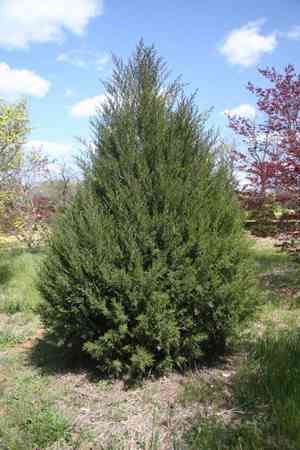
1
Eastern red cedar thrives in soil that is somewhat acidic to neutral, with a pH range of 6.5 to 7.5.
2
Young Eastern red cedar trees require steady moisture, yet mature ones can endure dry spells.
3
To avoid root rot in Eastern red cedar, well-draining, sandy loam or loamy soil types are best.
Optimal Soil Type for Eastern Red Cedar
Drainage Requirements
A critical factor for thriving Eastern red cedar trees is ensuring adequate drainage. These trees flourish in well-drained soil, as they are prone to root rot if waterlogged. To assess drainage, excavate a hole approximately 30 centimeters (12 inches) deep and fill it with water. If the water dissipates within 24 hours, the soil is considered well-draining. For denser clay soils, incorporating sand or organic material can significantly enhance drainage.
Soil Texture
Eastern red cedar trees prefer soil with a loose, loamy consistency, which supports superior root development and aeration. Sandy loam or loamy soil is ideal, offering a good balance of moisture retention and drainage. If your soil is excessively sandy, it might drain too rapidly, causing roots to dry out. Conversely, heavy clay soils retain too much moisture, risking root diseases. Enriching the soil with compost or well-decomposed manure can improve its texture and nutrient content.
Soil pH Levels
Eastern red cedar trees grow best in slightly acidic to neutral soil, with a pH range of 6.5 to 7.5. Testing your soil's pH can help determine if adjustments are necessary. Soil test kits are readily available at gardening centers. If the soil pH is too low (excessively acidic), adding lime can help elevate it. Conversely, if it is too high (overly alkaline), sulfur or peat moss can help reduce the pH to the desired range.
Preparing Soil for Eastern Red Cedar Planting
Assessing Soil Quality
Prior to planting Eastern red cedar trees, it's crucial to evaluate the soil quality to confirm it meets the necessary conditions. Soil analysis can reveal nutrient levels, pH, and composition, providing insights into required amendments. Collect soil samples from various locations in your garden and submit them to a soil testing laboratory or utilize a home testing kit for precise results.
Amending the Soil
Based on the soil test outcomes, you might need to modify the soil to create an optimal environment for your Eastern red cedar. Common amendments include adding compost to enhance texture and organic matter, applying lime to increase pH, or incorporating sulfur to decrease pH. Integrating well-rotted manure can also boost soil fertility and structure.
Mulching Recommendations
Applying mulch around the base of your Eastern red cedar trees can help retain soil moisture, suppress weed growth, and regulate soil temperature. Use organic mulches such as wood chips, bark, or straw, and apply a layer approximately 5-8 centimeters (2-3 inches) thick, keeping it a few centimeters away from the trunk to prevent rot. Mulch also gradually decomposes, returning valuable nutrients to the soil.
Eastern Red Cedar Fertilization Frequency
Fertilizer Types
When fertilizing Eastern red cedar, select a balanced fertilizer with equal proportions of nitrogen, phosphorus, and potassium, such as a 10-10-10 formulation. Slow-release fertilizers are ideal as they deliver nutrients gradually, minimizing the risk of over-fertilization. Organic options like compost or well-decomposed manure can also supply essential nutrients while improving soil structure.
Application Schedule
Fertilize your Eastern red cedar trees in early spring, just before the active growing season commences. Young trees benefit from annual fertilization, while mature trees may only require fertilizing every other year or when soil tests indicate nutrient deficiencies. Apply fertilizer uniformly around the root zone, avoiding direct contact with the trunk to prevent damage.
Resolving Common Soil Issues
Compaction
Soil compaction can hinder root growth and diminish water and nutrient absorption for Eastern red cedar trees. To alleviate compaction, aerate the soil around your trees using a garden fork or aerator. Incorporating organic matter like compost can also improve soil structure and porosity, fostering healthier root systems.
Poor Drainage
Inadequate drainage is a frequent problem that can lead to root rot in Eastern red cedar trees. To enhance drainage, consider establishing raised beds or mounds to elevate the root system. Amending the soil with sand, perlite, or organic matter can also improve drainage characteristics. Ensure the planting area is not in a low-lying spot where water tends to accumulate.
Nutrient Deficiencies
Nutrient deficiencies can manifest in Eastern red cedar trees through symptoms such as yellowing leaves, stunted development, or sparse foliage. Conduct a soil test to pinpoint specific deficiencies and apply the appropriate fertilizer or amendments. For instance, a nitrogen deficiency can be corrected with a nitrogen-rich fertilizer, while micronutrient deficiencies may necessitate specific supplements like iron or magnesium.



