Optimal Soil for Growing Watermelon peperomia: What You Need to Know
1
Properly draining soil prevents root decay, allowing Watermelon peperomia to flourish.
2
Maintain pH levels between 6.5 and 7.5 for best development.
3
Periodically assess soil dampness to prevent excessive watering.
What Soil Conditions Does Watermelon Peperomia Need?
Optimal Soil Blend
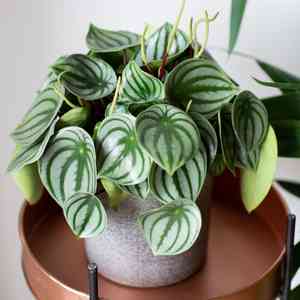
The Watermelon peperomia, recognized for its distinctive leaf pattern resembling a watermelon rind, flourishes in light, well-draining soil. This soil type imitates the plant's native tropical environment, preventing water from collecting around the roots. Utilize a mixture containing peat moss, perlite, and orchid bark. These elements aid in retaining appropriate moisture while allowing surplus water to drain efficiently.
pH Levels
For peak development, the Watermelon peperomia prefers a slightly acidic to neutral soil pH range of 6.5 to 7.5. This pH range guarantees that vital nutrients are accessible to the plant. You can check the soil pH using a home testing kit or submit a sample to your local garden center for analysis. Adjusting the pH can be achieved by adding lime to raise it or sulfur to lower it.
Drainage Requirements
Adequate drainage is essential for the Watermelon peperomia to avoid root rot. Confirm your pot has drainage holes and consider placing a layer of gravel or small stones at the pot's base before adding the soil mix. This arrangement allows excess water to escape, keeping the roots healthy and oxygenated.
How to Prepare Soil for Watermelon Peperomia
Key Soil Components
Crafting the perfect soil blend for your Watermelon peperomia involves a few crucial ingredients. Begin with a high-quality peat moss base to provide organic matter and moisture retention. Next, incorporate perlite or pumice to enhance aeration and drainage. Finally, add orchid bark to mimic the plant's natural epiphytic setting, giving the roots space to breathe.
Mixing the Soil
Creating your soil mixture is straightforward. Combine 50% peat moss, 25% perlite, and 25% orchid bark. Mix thoroughly to ensure an even distribution of all components. This blend offers a balanced environment for your Watermelon peperomia, supporting both moisture retention and drainage.
Maintaining Watermelon Peperomia Soil Health
Monitoring Soil Moisture
Keeping track of soil moisture levels is crucial. The soil should remain consistently moist but not waterlogged. Use your finger to check the top 2.5 cm (1 inch) of soil; if it feels dry, it's time to water. However, be careful not to overwater, as this can lead to root rot.
Preventing Soil Compaction
To prevent soil compaction, regularly aerate the soil by gently loosening it with a fork or your fingers. Compacted soil can hinder root growth and limit water and nutrient absorption. Additionally, adding perlite to your soil mix can help maintain its structure over time.
Fertilizing the Soil
While Watermelon peperomia isn't a heavy feeder, occasional fertilization helps maintain its vibrant foliage. Use a balanced, water-soluble fertilizer diluted to half strength. Fertilize once a month during the active growth period (spring and summer) and reduce frequency in the dormant months (fall and winter).
Best Practices for Potting and Repotting Watermelon Peperomia
Choosing the Right Pot
Select a pot that is appropriately sized for your Watermelon peperomia. A pot that is too large can hold too much moisture, leading to root rot, while a pot that is too small can restrict root development. Ensure the pot has adequate drainage holes to prevent water from pooling at the bottom.
When and How to Repot
Repotting is typically needed every 2-3 years or when the plant outgrows its current container. Signs that it's time to repot include roots emerging through the drainage holes or the plant becoming root-bound. To repot, gently remove the plant from its current pot, shake off excess soil, and place it in a new pot with fresh soil mix. Water thoroughly after repotting to settle the soil around the roots.
Common Soil Problems and Solutions for Watermelon Peperomia
Identifying Soil Issues
Common soil problems for Watermelon peperomia include inadequate drainage, compacted soil, and nutrient deficiencies. Yellowing leaves can indicate overwatering or poor drainage, while stunted growth may suggest compacted soil or a lack of nutrients.
Remedies for Poor Soil Conditions
Address poor soil conditions by first identifying the underlying cause. For drainage issues, ensure proper pot drainage and consider adding more perlite to the soil mix. For compacted soil, gently aerate it and consider repotting if necessary. If your plant shows nutrient deficiencies, a balanced fertilizer can replenish essential nutrients.



