How Much Sunlight Do Black willow Need?
1
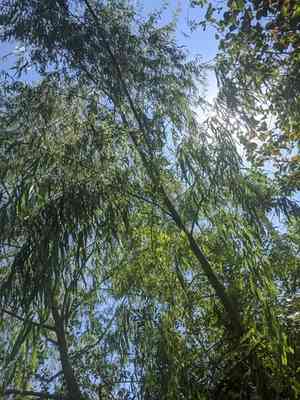
Black willow flourishes with over six hours of direct sun each day.
2
Although Black willow favors full sun, it can endure some partial shade.
3
Its growth can be improved by planting it close to water bodies such as rivers and streams.
Optimal Light Conditions for Black Willow
Full Sun Exposure
The Black willow thrives best when exposed to direct sunlight. This means it should ideally receive a minimum of 6 hours of unfiltered sun daily. Sunlight is vital for photosynthesis, enabling the plant to generate the energy and nutrients necessary for vigorous development. In regions with extended, bright days, the Black willow can grow quickly, displaying healthy foliage and robust branch formation.
Partial Shade Tolerance
While full sun is ideal, the Black willow can also adapt to areas with partial shade. Partial shade implies the plant will get direct sunlight for approximately 3-6 hours daily, spending the rest of the time in shadow. Under these conditions, the tree might exhibit slower growth but can still remain healthy and functional. This adaptability makes the Black willow versatile for various landscapes, including urban environments where structures may cast shade.
Prime Planting Spots for the Black Willow
Near Water Sources
Positioning the Black willow close to water bodies like rivers, streams, or ponds is highly advantageous. These locations not only supply the moisture the tree flourishes on but also ensure consistently damp soil, supporting continuous growth. Water sources help maintain steady hydration, which is critical for preventing disease and ensuring the plant's well-being, especially during hot summer months.
Open Fields and Meadows
Expansive fields and meadows are excellent sites for planting the Black willow. These areas typically receive ample sunlight throughout the day, providing the full sun exposure this willow variety requires for optimal development. Additionally, open spaces promote better air circulation around the plant, reducing the risk of fungal infections that can occur in more crowded planting conditions.
Sunlight's Impact on Growth and Health
Photosynthesis and Energy Production
Sunlight powers the photosynthesis process in the Black willow, where light energy transforms into chemical energy, producing sugars that fuel the plant's growth. Full sun conditions enhance photosynthesis, leading to increased energy production and, consequently, more vigorous growth. Without sufficient sunlight, the tree cannot produce enough sustenance, resulting in stunted development and weaker overall health.
Leaf and Branch Development
The health and growth of the Black willow's leaves and branches are directly influenced by the amount of sunlight received. Full sun encourages the development of lush, green foliage and strong branches, which are essential for the tree's aesthetic appeal and structural integrity. Conversely, inadequate sunlight can lead to sparse leaves, weak branches, and a general decline in the tree's physical appearance.
Signs of Insufficient Sunlight
If a Black willow isn't receiving enough sunlight, you'll observe several indicators of stress. These include yellowing leaves, slower growth rates, and weaker branch structures. The tree may also become more vulnerable to pests and diseases. If you notice these symptoms, consider moving the tree to a sunnier location or pruning nearby plants that might be casting too much shade.
Seasonal Light Considerations for Black Willow
Summer Sunlight
During the summer, the Black willow can fully utilize long days and abundant sunlight. Ensure the tree has access to full sun, especially during peak daylight hours. This season is when the tree will grow most rapidly, so it's crucial to maintain adequate watering, as the combination of intense sunlight and dry conditions can stress the plant.
Winter Sunlight
In winter, the Black willow enters a dormant period, requiring less sunlight. However, positioning the tree in a spot that still receives some light is beneficial to prevent any potential stress when the plant reactivates in spring. Winter sunlight, though less intense, helps sustain the tree's basic metabolic processes.
Adaptation to Various Climates
Tropical Climates
In tropical climates, where sunlight is plentiful year-round, the Black willow can flourish provided there's an adequate water supply. The consistent high levels of sunlight promote continuous growth, but it's vital to monitor water levels to prevent the soil from drying out too quickly.
Temperate Climates
In temperate climates, the Black willow experiences distinct seasonal changes in sunlight. During spring and summer, the tree should be placed in full sun. In fall and winter, while it doesn't require as much light, ensuring some exposure to sunlight will aid in its overall health and preparation for the next growing season.
Arid Climates
Arid climates present a challenge due to intense sunlight and lower moisture levels. While the Black willow can tolerate full sun, ensuring sufficient water supply is paramount. Mulching around the base helps retain moisture and protect the root system from excessive sun exposure.



