Ideal Temperature for Japanese skimmia
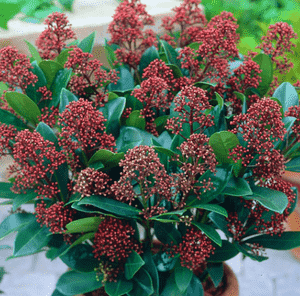
Images of Japanese skimmia
Signs of Cold Stress in Japanese skimmia
Symptoms
Japanese skimmia tolerates cold well, but winter temperatures should stay above 32℉. If temperatures fall below this, while winter changes might not be obvious, branches can become brittle and dry in spring, with no new growth appearing.
Solutions
During spring, remove any dead branches that haven't produced new foliage.
Signs of Heat Stress in Japanese skimmia
Symptoms
Japanese skimmia does not handle high temperatures well. When temperatures go above 70℉, it might shed many leaves, and in extreme cases, the whole plant could wilt and perish.
Solutions
Cut off any parts that are scorched and dried out. Relocate the plant to a spot offering protection from the midday and afternoon sun, or use a shade cloth for cover. Water the plant in the morning and evening to keep its soil damp.



