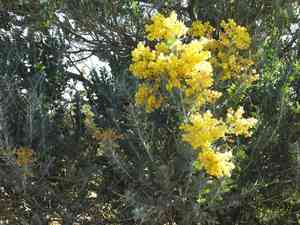
The Hidden Danger in Your Home? Unmasking the Toxicity of the Pearl acacia Plant.
1
The foliage of pearl acacia holds hydrogen cyanide, a powerful substance that interferes with cellular respiration.
2
Consuming pearl acacia leaves may lead to seizures and unconsciousness in serious instances.
3
Pets like dogs and cats that eat pearl acacia leaves require prompt veterinary attention because of signs such as labored breathing.
Is Pearl acacia toxic to humans?
Pearl acacia exhibits a moderate degree of toxicity to people, mainly from eating its foliage. The leaves hold hydrogen cyanide, a powerful substance that can interfere with cellular respiration. When consumed, pearl acacia leaves can cause symptoms like trouble breathing, lightheadedness, headaches, and sickness. In serious instances, seizures and unconsciousness might happen. It's vital for individuals to refrain from eating pearl acacia leaves to avoid these negative health impacts. The danger of poisoning is especially pertinent for groups who might encounter the plant and accidentally eat the leaves.
Is Pearl acacia toxic to cat?
Pearl acacia presents a moderate danger of toxicity to felines. Should a cat consume the leaves, which are the plant's harmful component, it could be exposed to hydrogen cyanide. After ingestion, the cat might show signs such as labored breathing, enlarged pupils, or rapid pantingâindicators of widespread distress. It is crucial to supervise cats near pearl acacia to prevent unintended consumption. If poisoning is suspected, prompt veterinary attention is necessary to safeguard the cat's health and recovery.
Is Pearl acacia toxic to dog?
Pearl acacia is categorized as moderately toxic to canines. Dogs might be poisoned by this plant if they consume it unintentionally. The main toxic part of pearl acacia is its leaf, which contains harmful compounds that can lead to poisoning. Dogs that ingest parts of pearl acacia may display symptoms such as throwing up, loose stools, sluggishness, or breathing difficulties. If a dog has consumed pearl acacia, it is critical for pet owners to get immediate veterinary help to ensure the best possible result for their animal.



