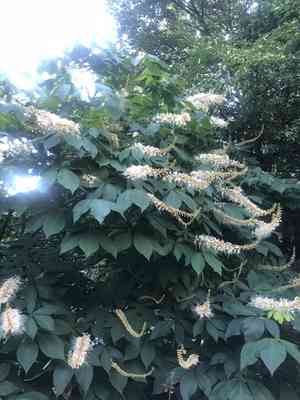
The Hidden Danger in Your Home? Unmasking the Toxicity of the Bottlebrush buckeye Plant.
1
Every component of the bottlebrush buckeye contains harmful glycosides and saponins, leading to serious sickness if ingested.
2
The bottlebrush buckeye accumulates heavy metals and pesticides from the earth, increasing the plant's toxicity.
3
The roasted seeds of bottlebrush buckeye might be consumed by mistake, resulting in human intoxication.
Is Bottlebrush buckeye toxic to humans?
All components of the bottlebrush buckeye contain harmful glycosides and saponins, leading to severe human illness. Furthermore, the tree absorbs substances like lead and pesticides from the surrounding soil, partially purifying it but also increasing its own toxicity. Ingesting significant quantities of this plant can result in impaired coordination, muscle spasms, agitation, melancholy, digestive issues, abdominal pain, emesis, loose stools, feebleness, paralysis, and potentially, unconsciousness. The nuts are occasionally mistakenly consumed by humans after roasting, representing a primary cause of human poisoning. Another common scenario involves young children and others prone to mouthing non-food items; they must be kept away from this plant.
Is Bottlebrush buckeye toxic to cat?
Bottlebrush buckeye presents a low toxicity hazard to felines. While every part of the plant is poisonous, substantial exposure usually happens when a cat consumes a large amount of the plant. If a cat ingests any portion of bottlebrush buckeye, signs of physical distress might appear, necessitating immediate veterinary care. Since even minor toxins can significantly affect a cat's well-being, it's crucial to prevent access to bottlebrush buckeye and seek prompt treatment at a veterinary clinic if ingestion occurs.
Is Bottlebrush buckeye toxic to dog?
Bottlebrush buckeye carries a low toxicity risk for canines. Although the plant isn't highly poisonous, consuming large amounts can lead to intoxication. Dogs might be drawn to and chew on different parts of the plant, as all sections are considered toxic. Symptoms of poisoning from bottlebrush buckeye can include digestive upset, such as throwing up and loose stools, sluggishness, or more serious indicators depending on the quantity consumed. If you suspect your dog has eaten bottlebrush buckeye, it is vital to seek immediate veterinary attention to ensure appropriate treatment and management of any potential poisoning.



