The Hidden Danger in Your Home? Unmasking the Toxicity of the Bleeding Heart Plant.
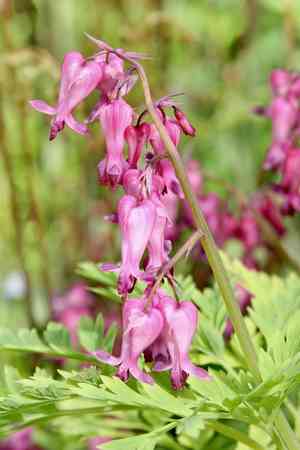
1
Bleeding Heart sap can lead to significant skin discomfort upon contact, which typically subsides quickly.
2
Bleeding Heart poses a serious health risk to felines and canines, necessitating prompt veterinary attention if consumed.
3
The foliage of Bleeding Heart holds the greatest amount of mildly toxic isoquinoline alkaloids.
Is Bleeding Heart toxic to humans?
The Bleeding Heart is a poisonous plant that can lead to minor to moderate toxicity if consumed in significant amounts, and also mild to severe skin irritation upon direct contact. Its harmful effects on humans are generally minimal, only manifesting with substantial intake. Every part of the plant is considered mildly toxic due to its isoquinoline alkaloid content, with the leaves containing the highest concentrations. Symptoms of internal poisoning include nausea, loose stools, seizures, impaired balance, labored breathing, tremors, unsteady gait, and feebleness. Skin irritation results from contact with the plant's sap and typically subsides quickly.
Is Bleeding Heart toxic to cat?
Bleeding Heart is a poisonous plant species for felines. Should cats consume any portion of the Bleeding Heart, they might experience physical distress or indications of sickness, as all components of the plant carry potential hazards. Cats might inadvertently ingest foliage, blossoms, or stalks, leading to a poisoning incident. Immediate veterinary care at an animal hospital is vital for any suspected Bleeding Heart consumption to lessen the poisoning's effects and guarantee the cat's health.
Is Bleeding Heart toxic to dog?
Bleeding Heart is a poisonous plant for canines, presenting a considerable danger if consumed. Dogs might unintentionally ingest parts of this plant, resulting in poisoning. The entire plant is detrimental, meaning any ingested part could cause negative health consequences. Signs of poisoning may encompass, but are not limited to, emesis, loose stools, excessive salivation, sluggishness, and stomach discomfort. It is essential for dog guardians to supervise their pets closely and restrict access to Bleeding Heart. In cases of suspected ingestion, prompt veterinary attention is critical to ensure the most favorable outcome for the affected dog.



