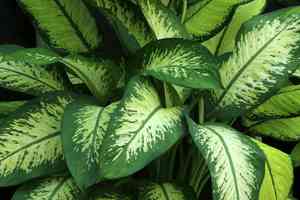
The Hidden Danger in Your Home? Unmasking the Toxicity of the Dieffenbachia Plant.
1
Consuming dieffenbachia may lead to swollen lips and tongue, excessive salivation, inability to speak, and impaired respiration.
2
When handling dieffenbachia, use gloves because direct contact can result in an uncomfortable skin rash or eye discomfort.
3
Dieffenbachia poses a moderate toxicity risk to animals and people, possibly leading to serious symptoms that necessitate professional medical care for pets.
Is Dieffenbachia poisonous to humans?
Dieffenbachia can provoke adverse responses if either consumed or contacted. Symptoms vary from mild to severe and can be perilous if respiratory passages become obstructed. The presence of calcium oxalate in this plant gives its leaves and sap harmful characteristics. If consumed, it may lead to symptoms like lip and tongue inflammation, excessive salivation, temporary speech impairment, and labored breathing; upon contact, it can result in an uncomfortable skin rash or eye irritation. As these plants are frequently kept indoors for ornamentation, exercise caution when they are near young children. Always use gloves when handling this species.
Is Dieffenbachia harmful to cats?
Dieffenbachia (Dieffenbachia seguine) poses a moderate toxicity risk to animal companions. Masticating any portion of the plant will release calcium oxalate crystals that irritate the mouth, causing discomfort and swelling, and consumption might induce emesis. Occasionally, the airway will also swell, making it hard for the feline to respire. In such instances, professional veterinary care might be required.
Is Dieffenbachia detrimental to dogs?
Every component of the dieffenbachia plant is moderately poisonous to canines if ingested. Manifestations include a burning sensation and swelling of the lips, tongue, and throat due to the sap's sharp crystals embedding themselves in the tissues. Trouble swallowing, stomach upset, regurgitation, and loose stools might also occur; a visit to the veterinarian might be essential if these signs worsen, as they can sometimes be life-threatening. Even external contact with the sap can trigger dermal irritation.



