How Often Should You Water Your Rough horsetail?
1
Rough horsetail flourishes in continuously damp soil, requiring a balance of frequent watering and avoiding excessive saturation.
2
Rough horsetail generally needs watering twice weekly, though environmental factors may necessitate adjustments.
3
Prevent your Rough horsetail from becoming entirely parched, as this can impede its development and well-being.
Deciphering the Hydration Needs of Rough horsetail
What distinguishes Rough horsetail's thirst?
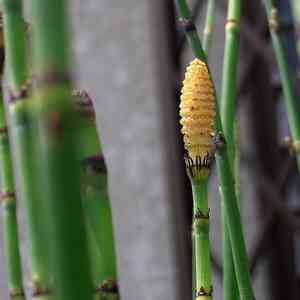
The Rough horsetail, recognized by its reed-like form and jointed stalks, possesses distinct hydration requirements compared to other flora. Hailing from marshlands and river edges, it strongly prefers consistently damp soil. This plant's native environment makes it exceptionally well-suited to areas with abundant water. Unlike other plants that might suffer from root decay in prolonged wet conditions, the Rough horsetail flourishes, as its root system is adapted to excessive moisture.
Environmental influence on watering your Rough horsetail
Environmental elements significantly impact the timing and quantity of hydration your Rough horsetail requires. In outdoor settings with ample natural precipitation, irrigation might be less frequent, merely supplementing what nature provides. Conversely, in arid, indoor, or regulated environments, it's crucial to mimic the plant's natural habitat by ensuring the soil stays uniformly moist. Seasonal shifts also alter water demands. For example, elevated temperatures and sun exposure during summer may necessitate increased watering, while cooler, more humid winter conditions might lessen the need.
Optimal Hydration Practices for Rough horsetail
How to assess if your Rough horsetail needs hydration
Understanding when your Rough horsetail requires water can prevent both excessive and insufficient irrigation. An effective method to determine this is by examining the soil's moisture level. Insert your finger approximately 5 cm (2 inches) into the substrate. If it feels dry at this depth, it's time to hydrate. Additionally, the soil's hue can be an indicator – pale, lighter-colored soil often signifies dryness and a need for water.
Ideal watering methods for robust development
To efficiently water your Rough horsetail, aim to maintain uniformly moist soil without making it soggy. Slow, thorough watering is best to ensure the roots receive adequate moisture. Early morning or late evening are prime times for irrigation, reducing evaporation and allowing the plant to absorb water more effectively. Employing a watering can with a slender spout or a drip irrigation system can help regulate the volume of water applied, preventing oversaturation.
Adapting your watering regimen seasonally
Modifying your watering habits according to the season is vital for the health of your Rough horsetail. During the active growth period (spring and summer), the plant's water demand rises, requiring more frequent watering – typically about twice weekly. In the dormant phase (fall and winter), the plant's growth rate diminishes, as does its water consumption. During these months, you can decrease watering frequency but ensure the soil remains slightly damp and never fully dries out.
Frequent Watering Errors to Avoid with Rough horsetail
Excessive watering: Indicators and remedies
Overwatering is a common error that can lead to root decay and other issues for your Rough horsetail. Symptoms of overwatering include yellowing stems, soft roots, and an overall decline in plant vitality. To correct this, lessen the watering frequency, and verify the container has adequate drainage. Allow the soil to dry slightly before the next irrigation. Re-potting in fresh, well-draining soil may also be essential to rescue your plant.
Insufficient watering: Detection and correction
Underwatering can be just as detrimental as overwatering, often resulting in dry, fragile stems and stunted growth. If the soil feels parched significantly beyond the initial few centimeters (inches), it's probable that your Rough horsetail is being underwatered. To remedy this, gradually increase the watering frequency, ensuring the soil stays consistently moist. A good practice is to establish a watering schedule and adhere to it, making adjustments based on the plant's response and environmental conditions.



