How Often Should You Water Your Madonna lily?
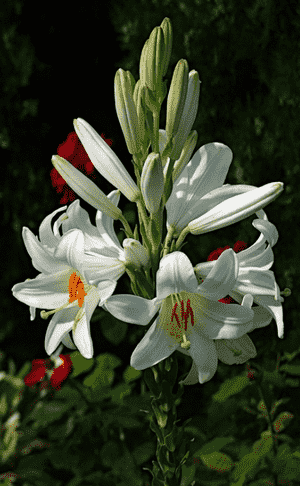
1
Moisten your Madonna lily every one to two weeks, letting the substrate become arid between hydration sessions.
2
Refrain from directly wetting the leaves, as this may promote fungal infections; concentrate on the plant's base.
3
Utilize collected rain or purified water when feasible, given the Madonna lily's susceptibility to tap water additives.
Deciphering the Hydration Requirements of Madonna Lily
Core Principles of Madonna Lily Moisture
The Madonna lily is a lovely perennial recognized for its graceful, aromatic white blossoms. To maintain these magnificent flowers in good health, proper hydration is vital. Typically, Madonna lilies need irrigation every 1-2 weeks to sustain optimal development. The key is to allow the soil to dry out between waterings to avoid root decay. Ensure the soil is moderately damp but not saturated, as excessively wet conditions can be harmful.
Indicators of Excessive and Insufficient Watering
It's crucial to identify the signs of both over- and under-watering. Overwatered Madonna lilies often display yellowing foliage, soggy substrate, and in severe instances, root rot. Conversely, insufficient watering manifests as dry, brittle leaves and stunted growth. Pay close attention to the soil's moisture level; if it remains consistently wet, you might need to decrease watering frequency. If the top inch (2.5 cm) of soil is arid, it's time to irrigate.
Optimal Watering Methods for Madonna Lily
Ideal Time of Day for Madonna Lily Irrigation
Watering your Madonna lily in the early morning is perfect. This allows the water to permeate the soil and be absorbed by the roots before the day's heat causes rapid evaporation. Morning irrigation also aids in preventing fungal diseases, as the leaves have ample time to dry before nightfall.
Implements and Approaches for Effective Hydration
Utilizing the correct tools can enhance watering effectiveness. A watering can with a long spout helps direct water to the plant's base, avoiding the foliage. When watering potted Madonna lilies, ensure drainage holes are present to prevent water stagnation. Another efficient method is to place a saucer beneath the pot and allow the plant to absorb water from the bottom up, which promotes the development of robust root systems.
Seasonal Watering Adjustments for Madonna Lily
Summer Versus Winter Watering Regimes
During the summer, the Madonna lily may require more frequent watering due to elevated temperatures and increased evaporation. However, in winter, reduce irrigation as the plant's growth decelerates. Overwatering in winter can lead to root rot since the plant consumes less water. It's essential to modify your watering schedule according to the plant's seasonal demands.
Modifying Water Frequency Based on Climatic Conditions
Weather conditions significantly influence your Madonna lily's watering requirements. During hot, arid periods, increase watering frequency, but be careful not to over-saturate. In rainy weather, decrease irrigation to prevent waterlogged soil. Always check the soil moisture before deciding to waterâan easy way to do this is by inserting your finger about an inch (2.5 cm) into the soil. If it feels dry, it's time to water.
Maintaining Soil Health for Optimal Madonna Lily Watering
Selecting the Appropriate Soil Blend
The correct soil mix is vital for your Madonna lily's well-being. A well-draining soil blend with loam, sand, and organic matter performs best. This mixture ensures the roots are adequately aerated and prevents water from accumulating at the bottom, which can cause root rot. If you are using garden soil, enrich it with compost or well-decomposed manure to enhance its structure and nutrient content.
Mulching for Moisture Retention
Applying mulch around your Madonna lily can help preserve soil moisture and lessen the frequency of watering. Organic mulches such as bark chips, straw, or compost are excellent choices. Mulching also aids in regulating soil temperature, suppressing weeds, and adding nutrients to the soil as it breaks down. Ensure the mulch layer is approximately 2-3 inches (5-7.5 cm) thick and keep it away from the plant's stem to prevent decay.



