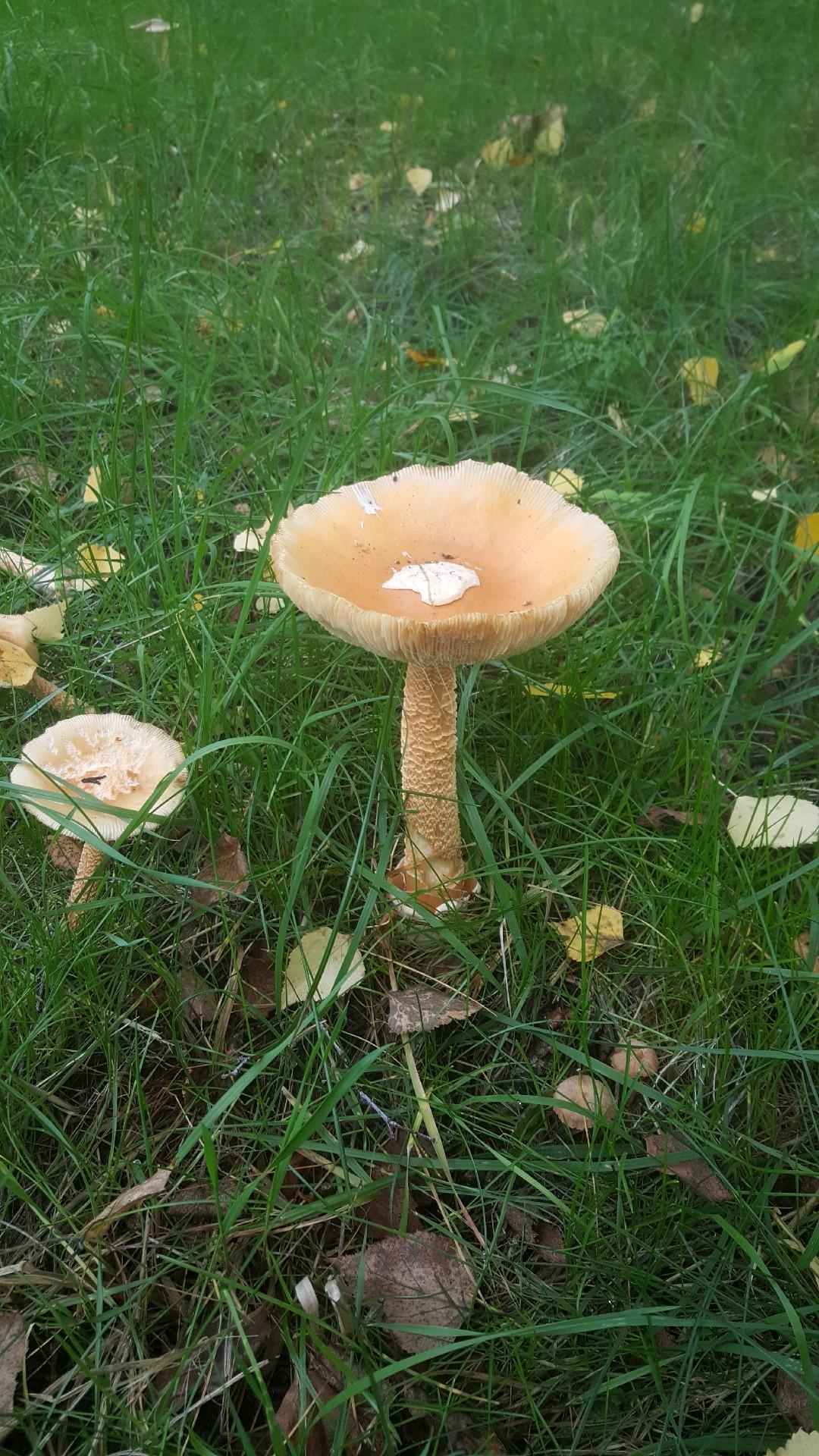
Saffron ringless amanita
Amanita crocea
A species of Amanita mushrooms.
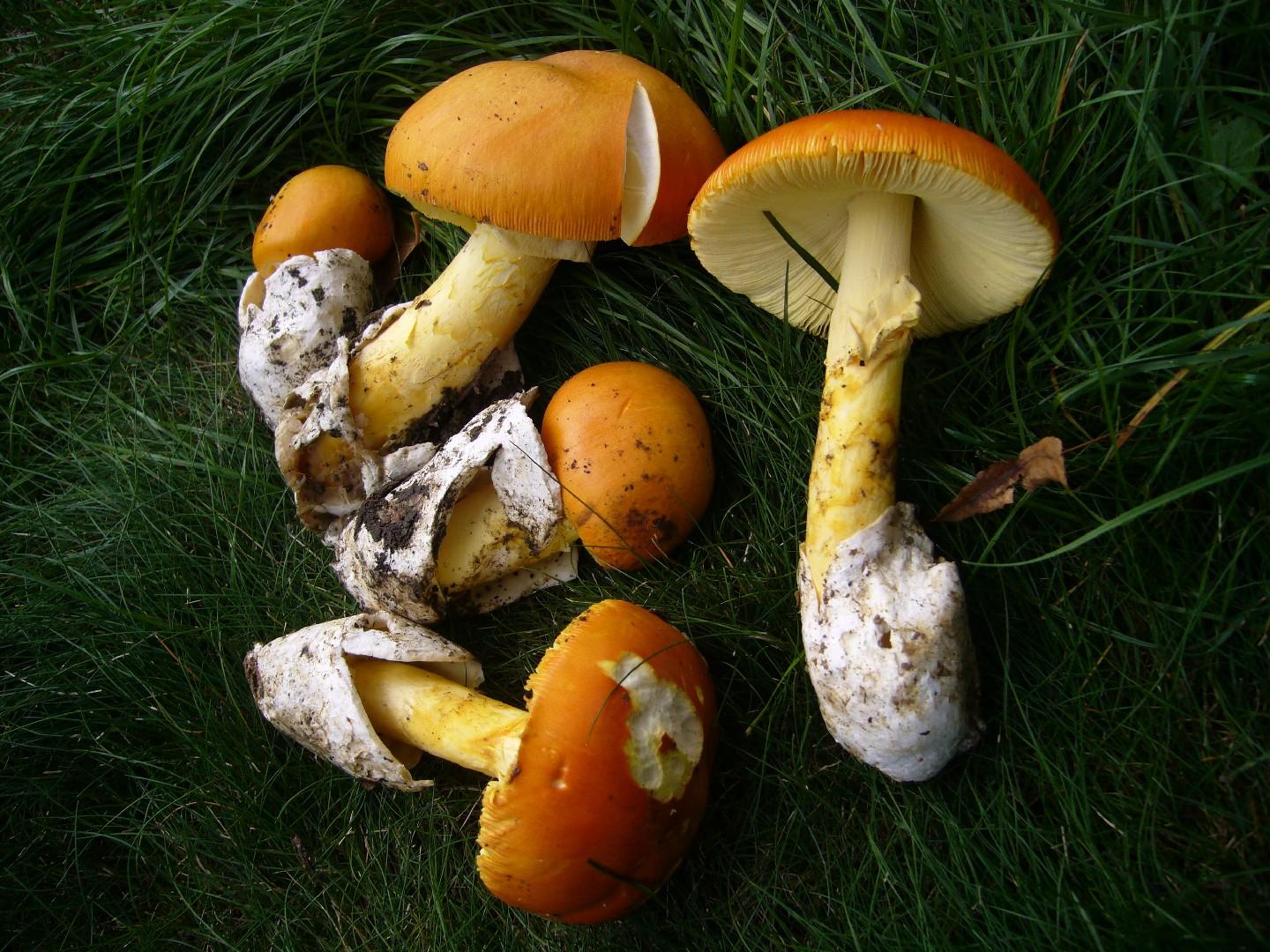
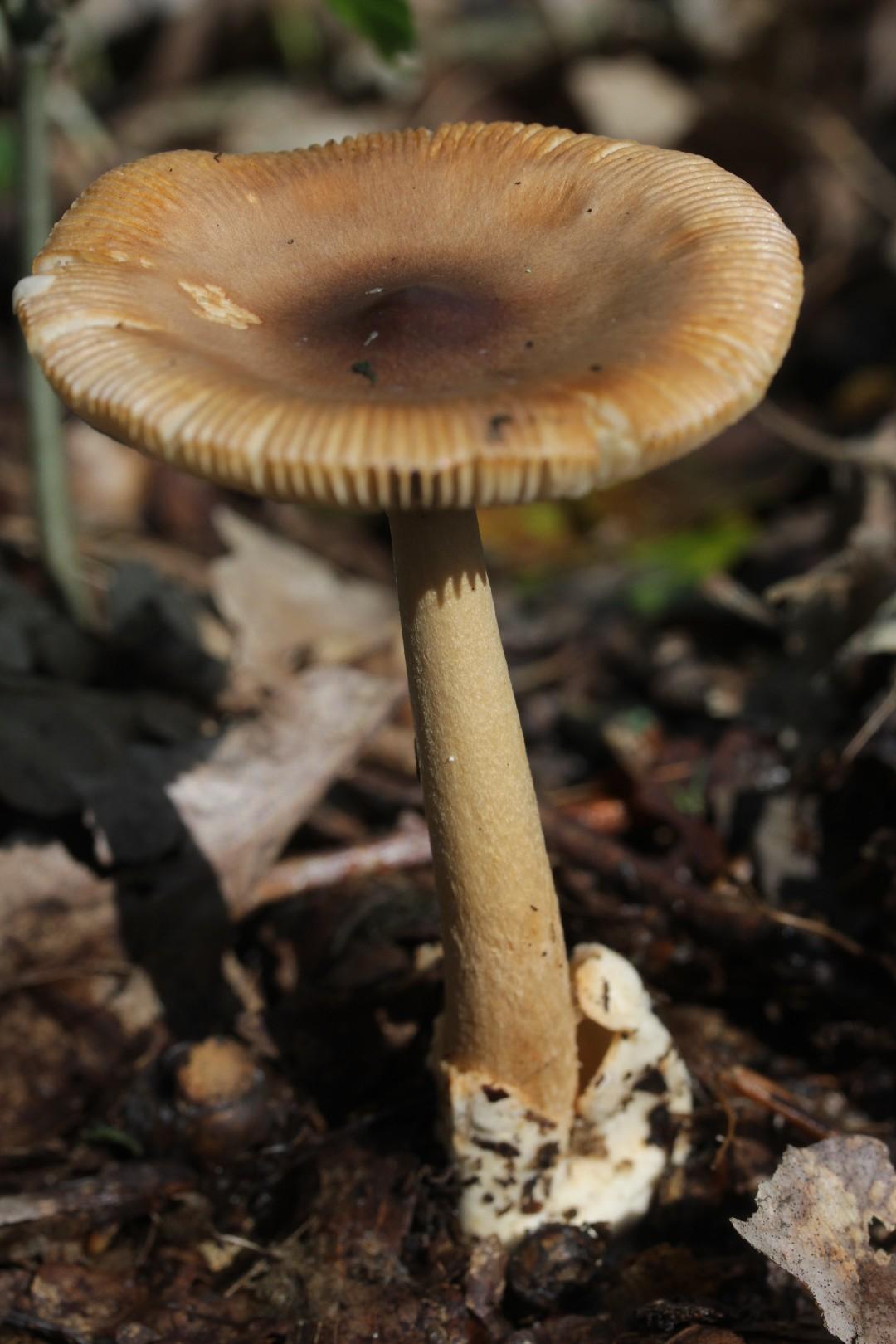
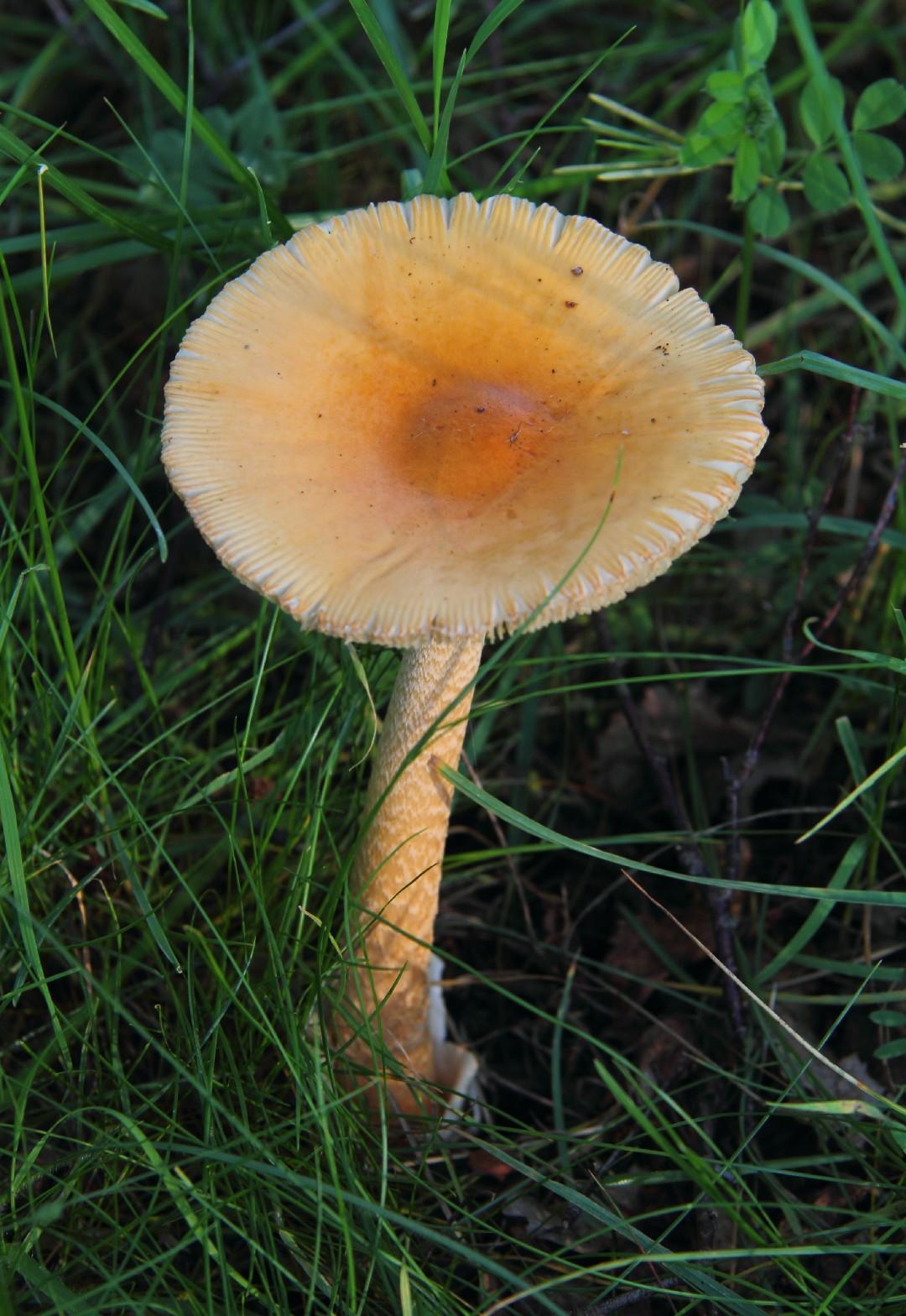
The saffron ringless amanita is characterized by its distinct orange cap. This vibrant color and the absence of a veil around the cap are the features from which the mushroom derives its name. This species is commonly found in European hardwood forests, thriving from summer through fall. It emits a pleasant, sweet aroma and can be observed growing in varying group sizes, from small to large, depending on its specific location.
In This Article
Attributes of Saffron ringless amanita
Cap Diameter
4 - 10 cm
Height
10 - 15 cm
Cap
Cap 3 - 8 cm; convex, expanding to flat; orange to dark orange; bald, smooth; the margin strongly lined for about 1 cm at maturity
Cap Shape
Convex, Flat, Central Bump
Cap Surfaces
Smooth, Visible lines or stripes
Gills
Free; close or crowded; whitish
Gill Attachment
Free to Attached
Stem
Stem 6 - 11 cm long, 1 - 1.5 cm thick; tapering slightly to apex; externally white and pale orange inside; covered with scaly patterns
Stem Shapes
With Cup
Stem Surfaces
Scaly
Flesh
White; unchanging when sliced
Volva
Sacklike; whitish
Ring
Ringless
Spore Print Color
White
Odor
Mildly mushroomy but not distinctive.
Body Color
WhiteOrange
Flesh Bruises
The flesh or milk does not discolor when bruised or cut.
Growth Form
Solitary, Scattered
Nutrient Gathering
Mycorrhizal
Substrate
On soil
You can find Saffron ringless amanita by these plants
Oaks, Spruces
Occurence Habitats
Deciduous Woodland, Coniferous Woodland, Mixed Woodland
Species Status
Widely distributed in North America and Europe
Endangered Species
No
Scientific Classification of Saffron ringless amanita
Phylum
Club fungi
Class
Mushroom-forming fungi
Order
Gilled fungi
Family
Amanita
Genus
Amanita mushrooms
Toxicity and Edibility of Saffron ringless amanita
Is Saffron ringless amanita Toxic?
Toxicity information is not available for this mushroom. Always consult with an expert before consuming any wild mushrooms.