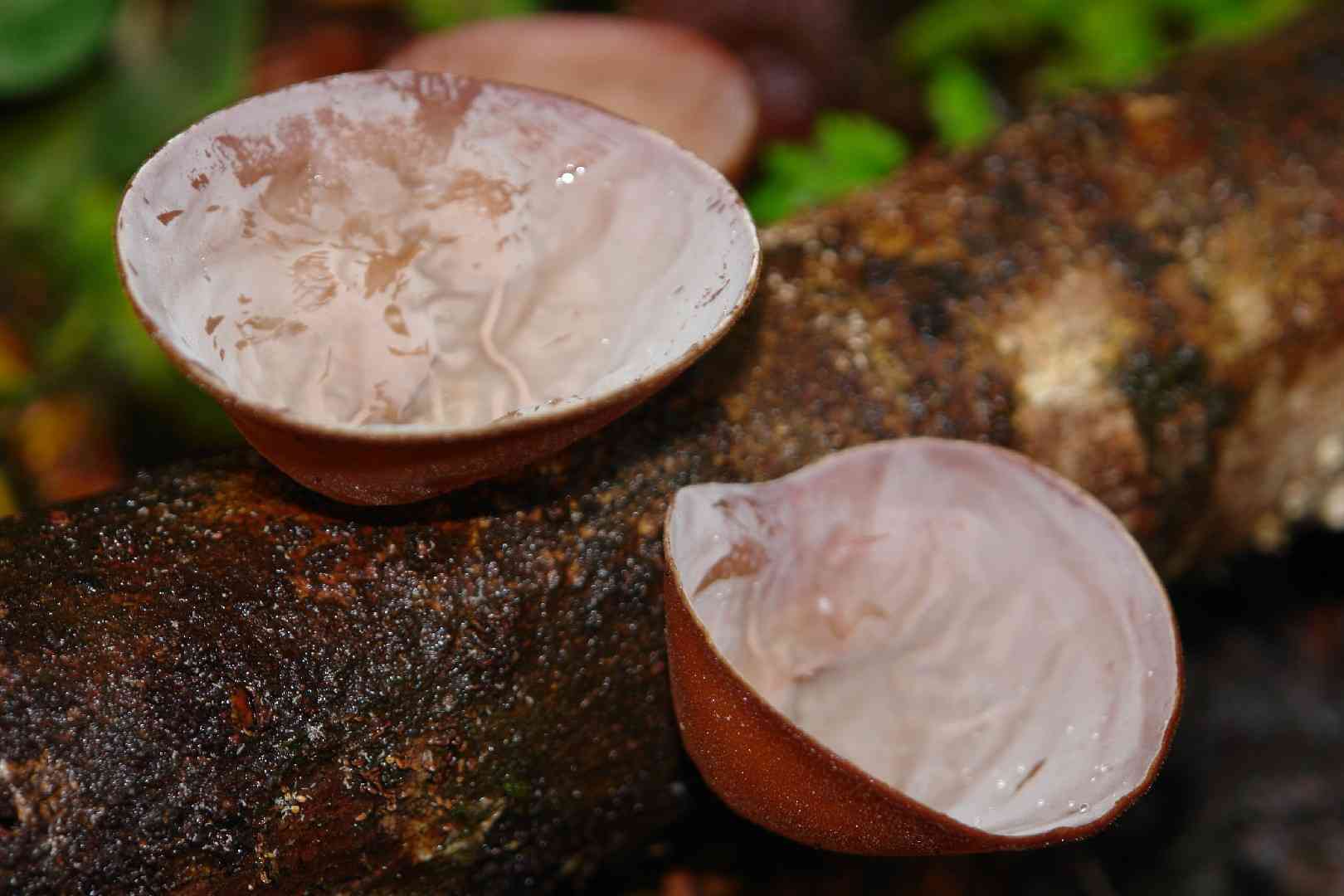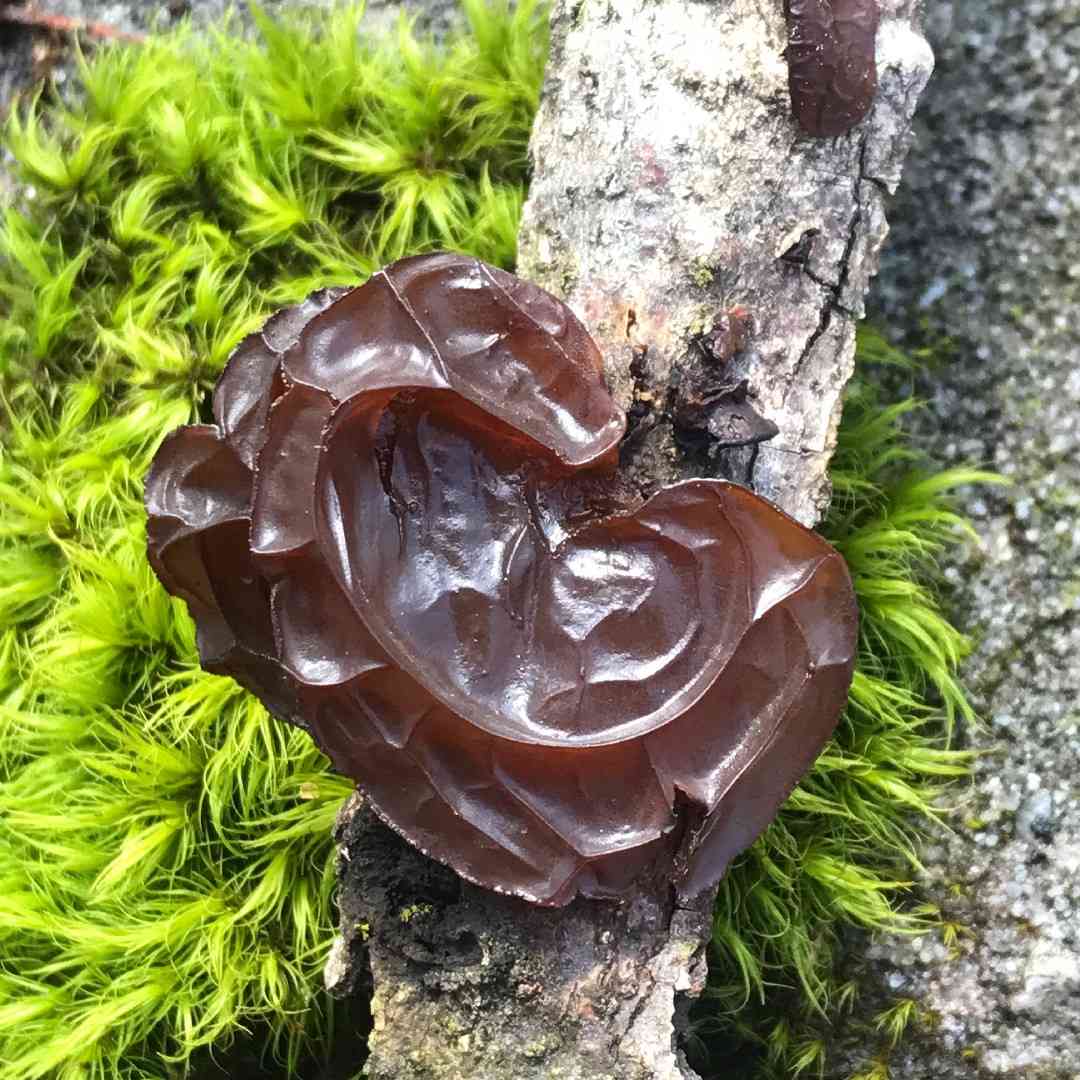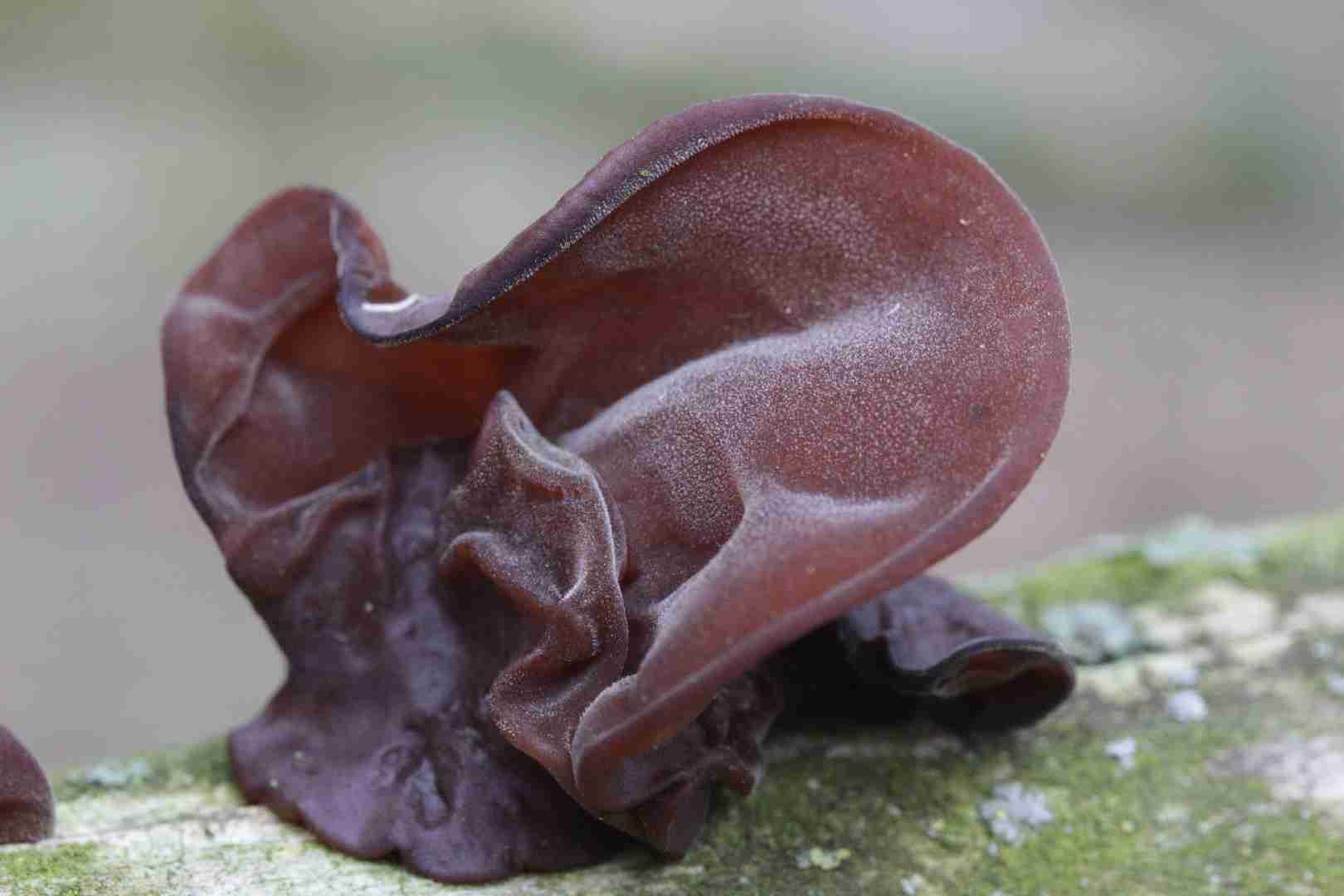
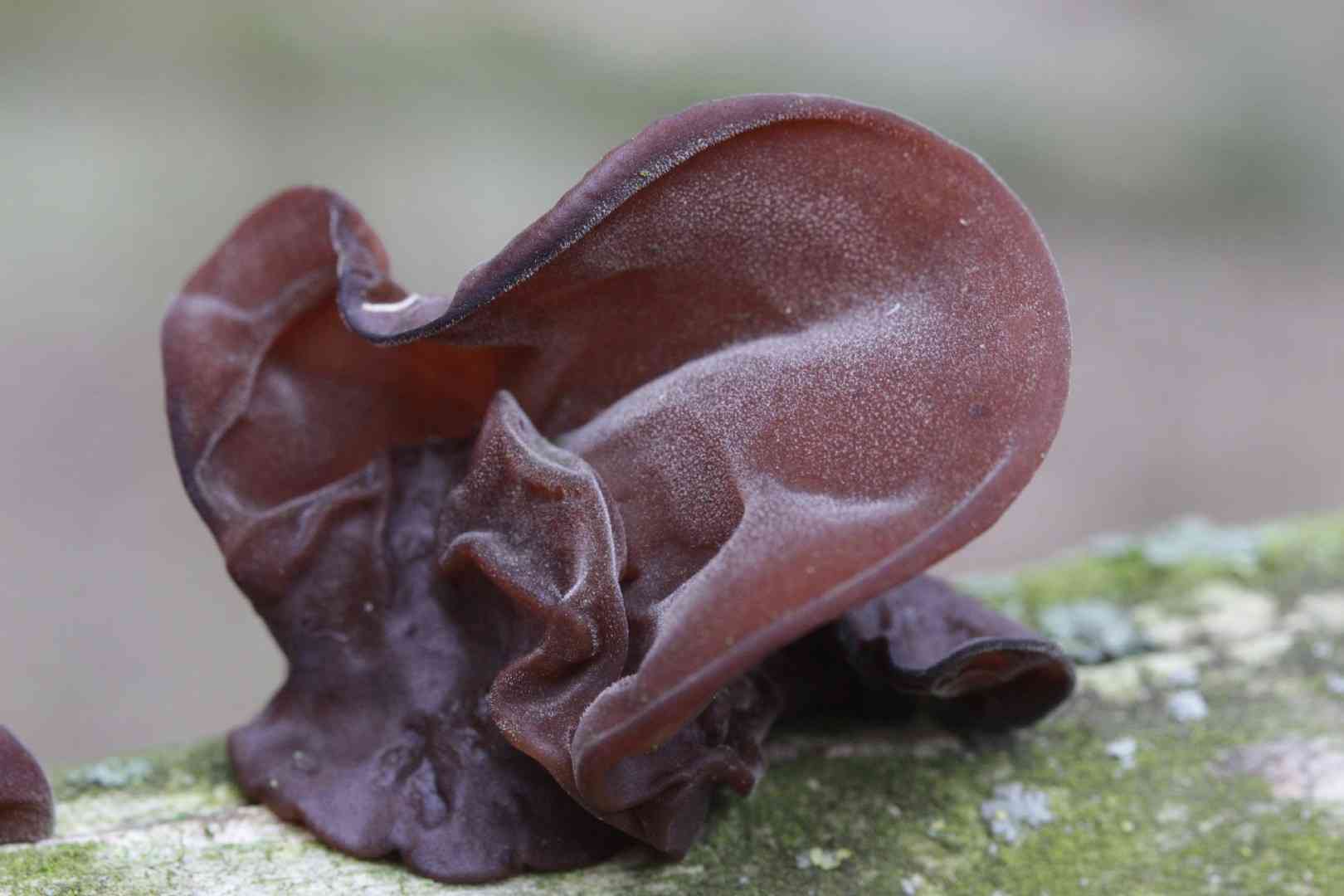
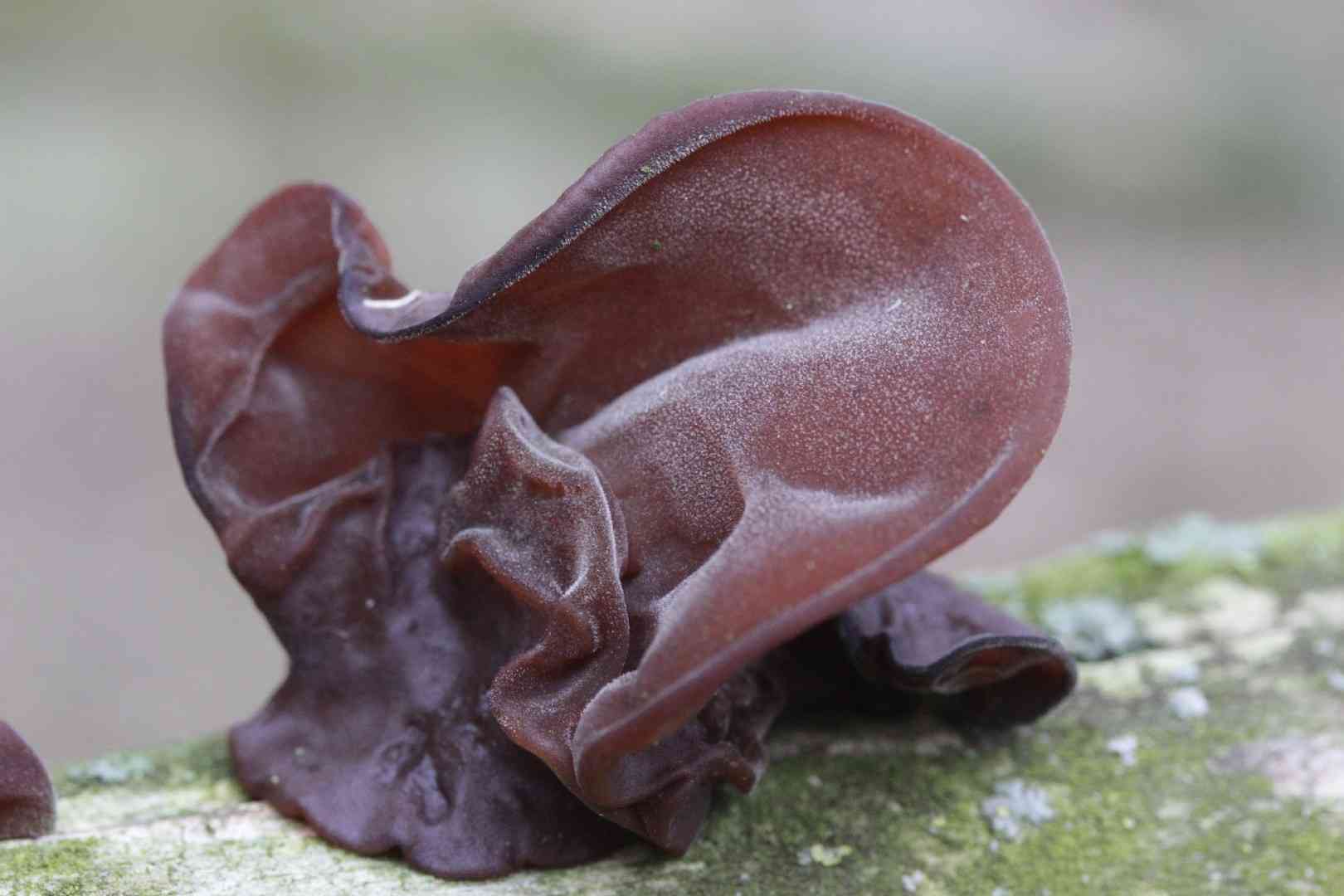
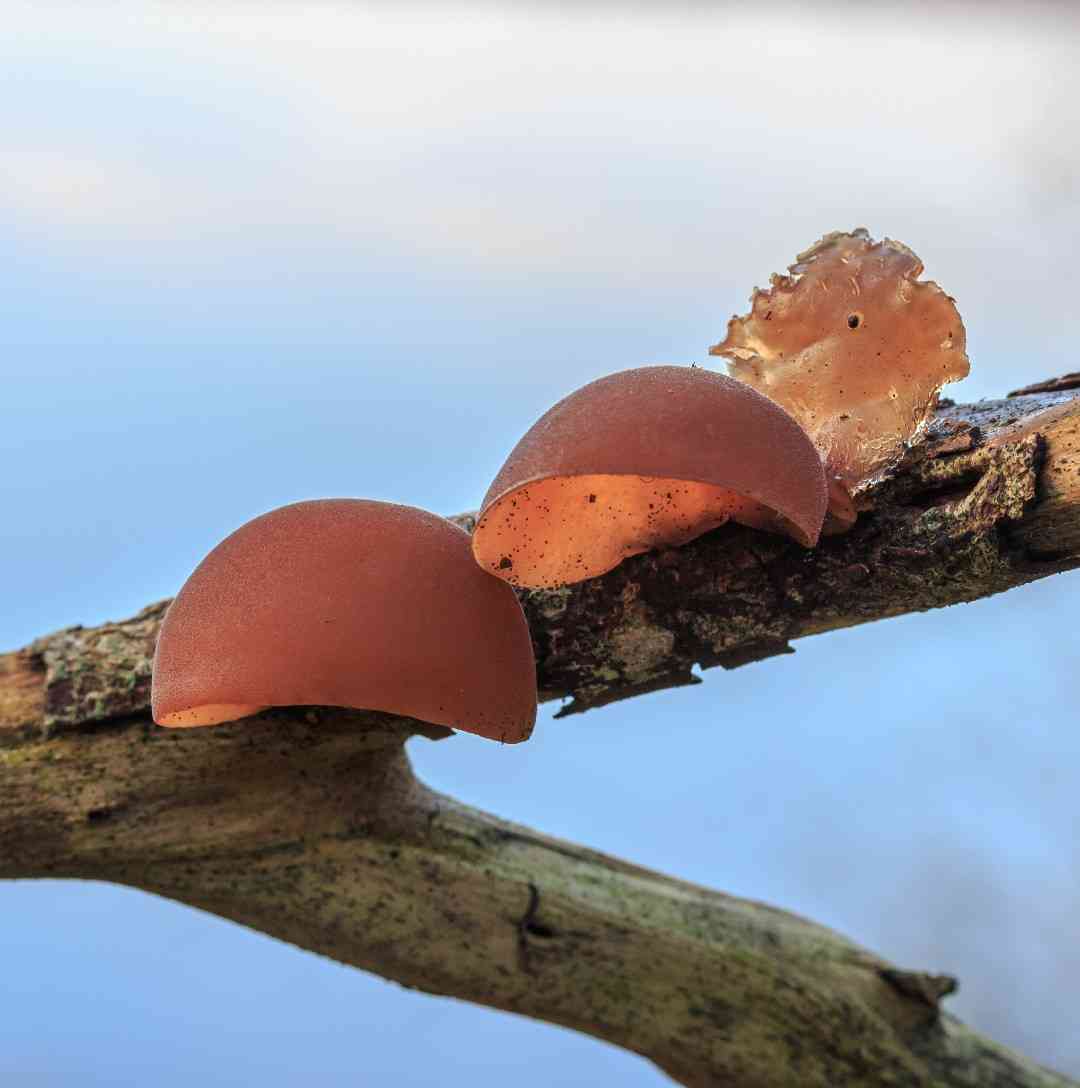
Jelly ear
Auricularia auricula-judae
A species of Auricularia. Also known as Tree ear, Black wood ear, Jew's ear, Yu ear, Mo-er.
Auricularia auricula-judae, or jelly ear fungus, thrives primarily during the colder months and springtime. It's most commonly found clinging to the decaying wood of elder trees, specifically their trunks and branches. This global species is a popular culinary ingredient, particularly in various Asian cuisines. Shoppers can typically find this distinctive ear-shaped, gelatinous mushroom readily available for purchase, either in its fresh or dried form.
In This Article
Attributes of Jelly ear
Height
3 - 8 cm
Cap
Pinkish brown, purple-brown; surface smooth, finely hairy, with a slightly downy
Spore Print Color
White
Odor
Mildly mushroomy but not distinctive.
Body Color
BrownGray
Flesh Bruises
The flesh or milk does not discolor when bruised or cut.
Growth Form
Gregarious, Clustered
Nutrient Gathering
Saprophytic, Parasitic
Substrate
Dead Woods, Wood of Living Trees
You can find Jelly ear by these plants
Mockernut hickory, Pignut hickory, Red hickory, Shagbark hickory, Sambucus , Elder
Occurence Habitats
Deciduous Woodland
Species Status
Auricularia auricula-judae is a species of edible Auriculariales fungus found worldwide.
Endangered Species
No
Scientific Classification of Jelly ear
Phylum
Club fungi
Class
Mushroom-forming fungi
Order
Auriculariales
Family
Auriculariaceae
Genus
Auricularia
Toxicity and Edibility of Jelly ear
Is Jelly ear Toxic?
Toxicity information is not available for this mushroom. Always consult with an expert before consuming any wild mushrooms.