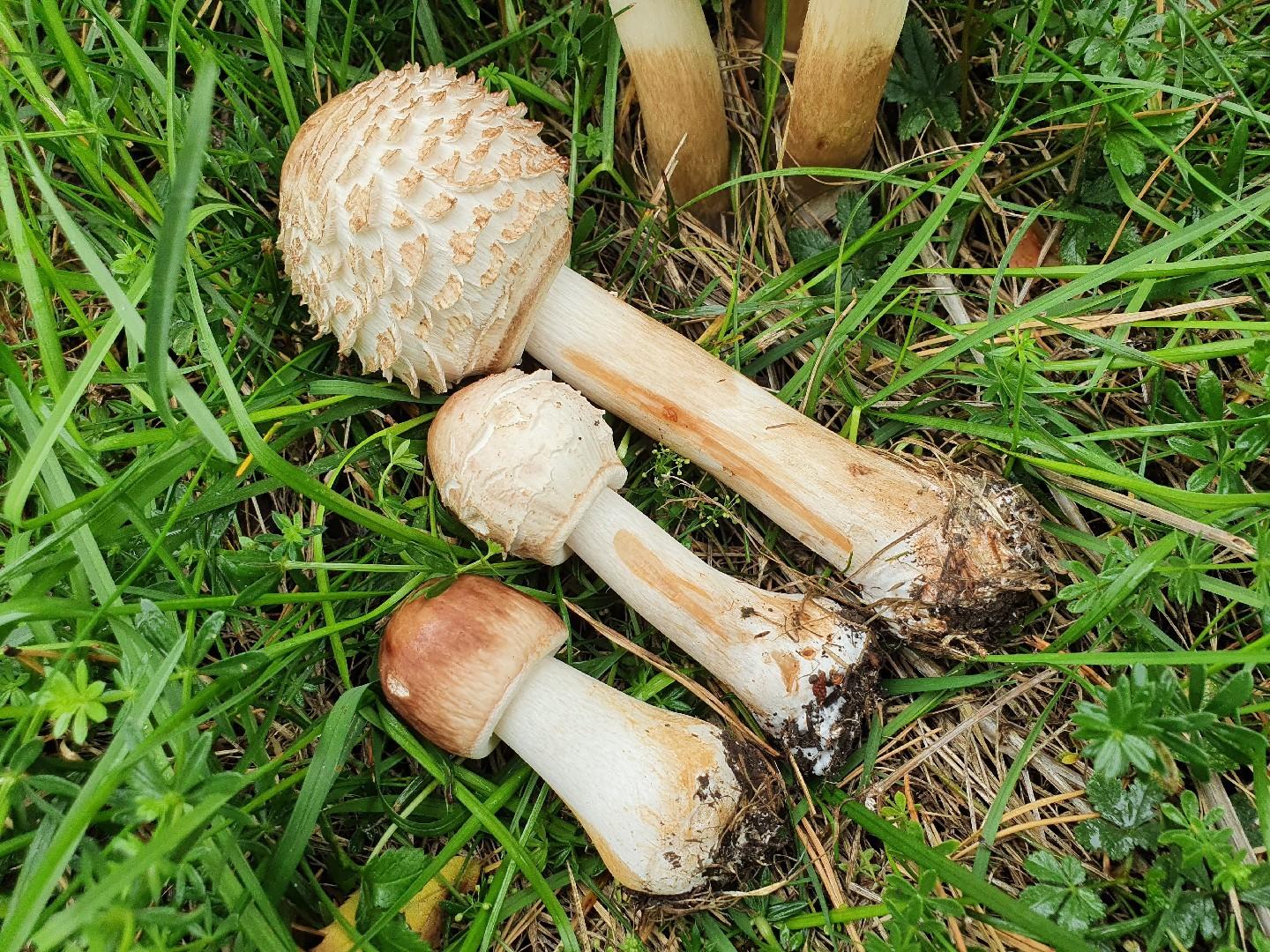
Shaggy parasol
Chlorophyllum rhacodes
A species of Chlorophyllum.
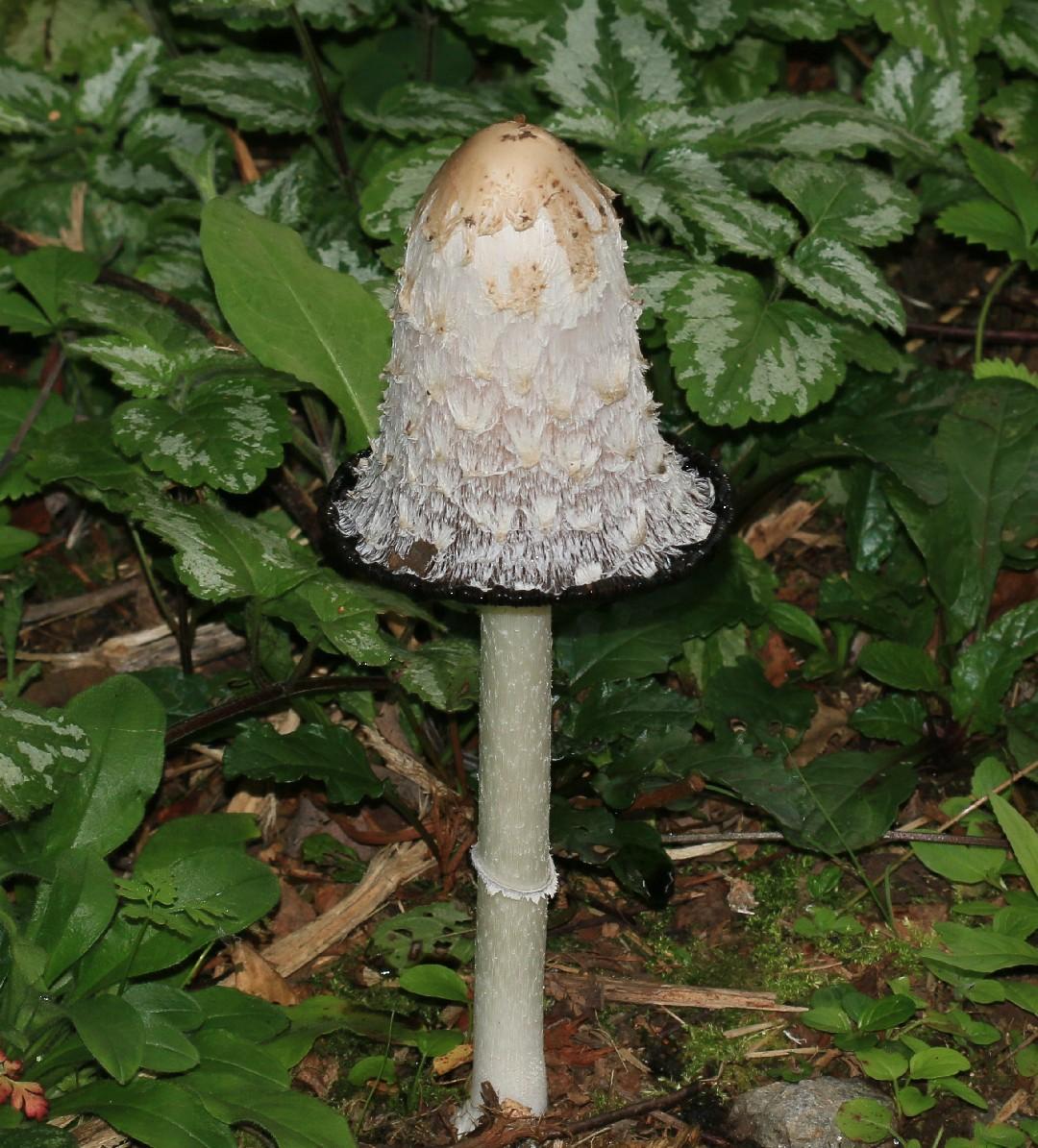
The Shaggy parasol mushroom frequently appears in circular formations, referred to as fairy rings in many European myths. These fungal circles were traditionally believed to be sites where elves or fairies would gather to dance. The Shaggy parasol is distinctive for its large, scaly cap, though it can sometimes be mistaken for other fungi, particularly the common parasol mushroom, which is larger and features a stem with a texture resembling snakeskin.
In This Article
Attributes of Shaggy parasol
Cap Diameter
5 - 15 cm
Height
8 - 25 cm
Cap
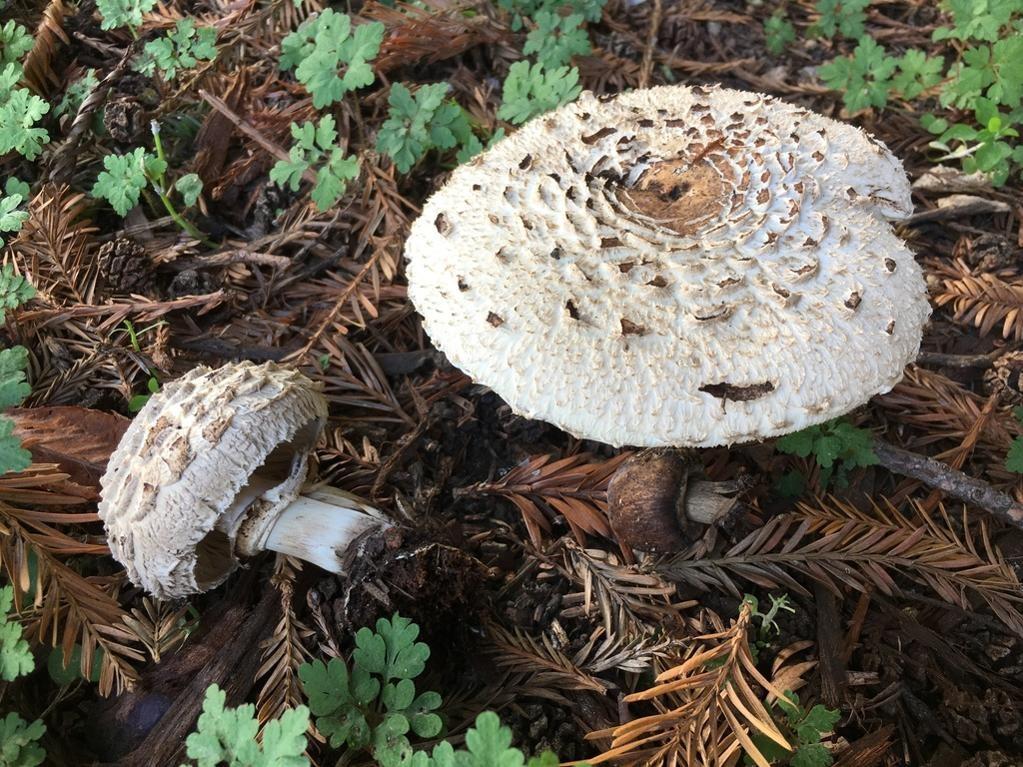
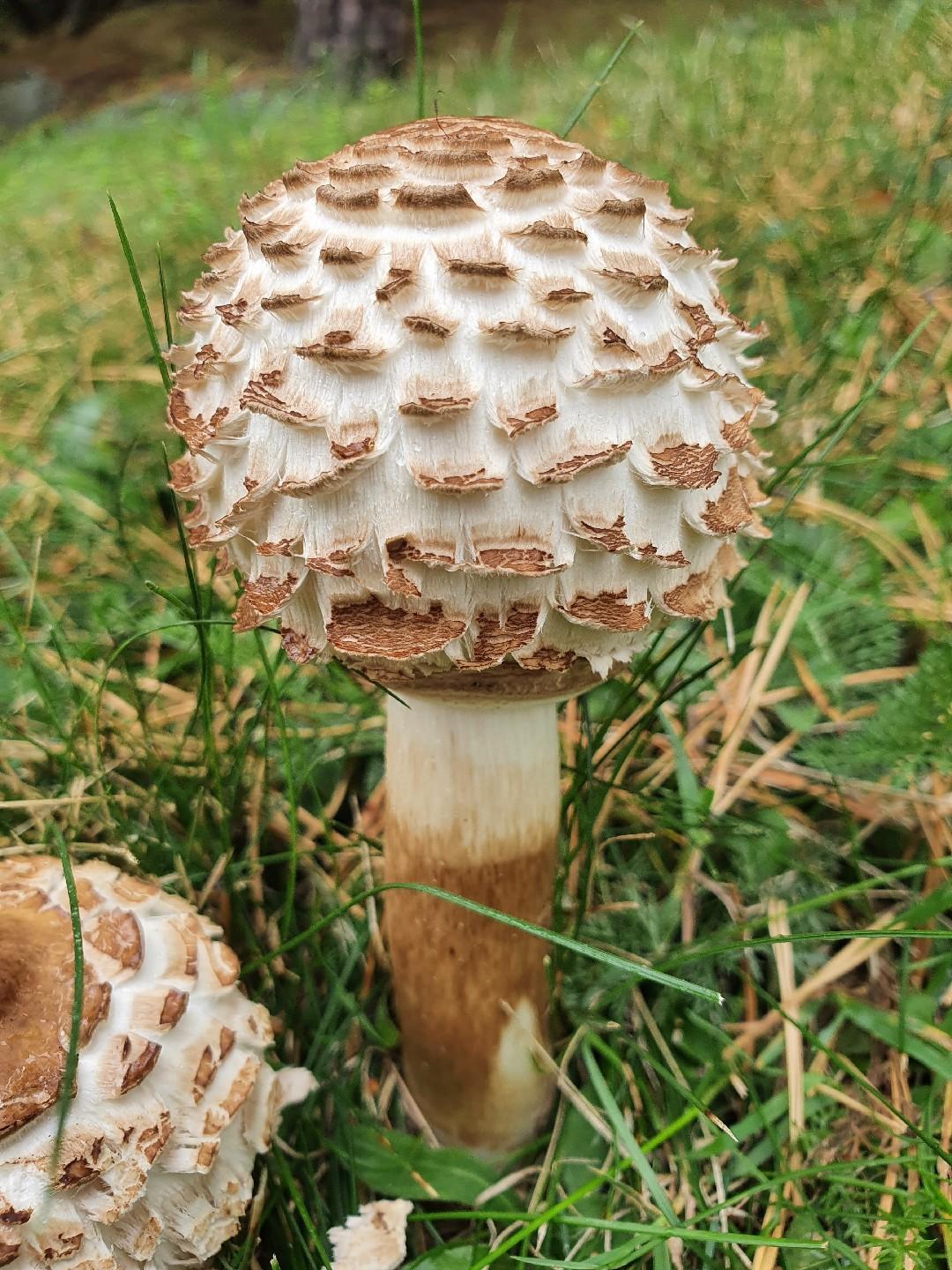
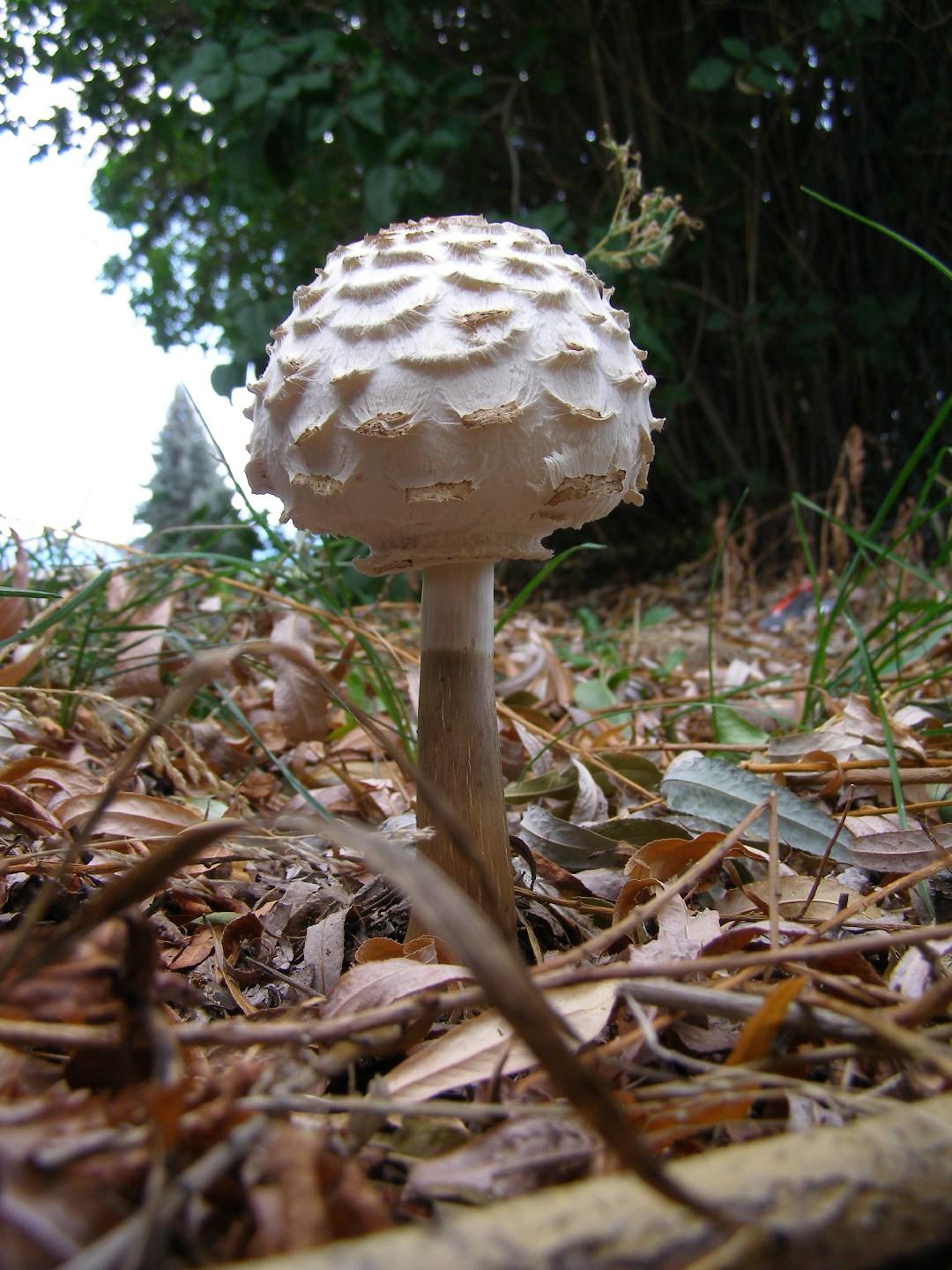
Cap 5 - 16 cm across; convex to nearly round, broadly convex, very broadly bell-shaped; brown to orangish brown; surface smooth, shaggy scales
Cap Shape
Convex, Flat, Bell-shaped, Central Bump
Cap Surfaces
Fibrillose-scaly
Gills
Free; close, nearly crowded; white, pale brownish
Gill Attachment
Free
Stem
Stem 6 - 21 cm long, 1.5 - 3.5 cm thick; club-shaped; whitish, brownish; bruising and discoloring brown to brownish
Stem Shapes
Club Shaped
Stem Surfaces
Smooth
Flesh
Thick; whitish to pale brownish; staining pinkish orange to reddish, then slowly brownish when sliced
Ring
With Ring
Spore Print Color
White
Odor
Mild, generally pleasant, not distinctive.
Body Color
BrownWhiteOrange
Flesh Bruises
The flesh or milk does not discolor when bruised or cut.
Growth Form
Solitary, Scattered, Gregarious
Nutrient Gathering
Saprophytic
Substrate
On soil
You can find Shaggy parasol by these plants
Spruces, Pines
Occurence Habitats
Disturbed Lands, Coniferous Woodland, Mixed Woodland
Species Status
Widely distributed in North America
Endangered Species
No
Scientific Classification of Shaggy parasol
Phylum
Club fungi
Class
Mushroom-forming fungi
Order
Gilled fungi
Family
Agaricaceae
Genus
Chlorophyllum
Toxicity and Edibility of Shaggy parasol
Is Shaggy parasol Toxic?
Toxicity information is not available for this mushroom. Always consult with an expert before consuming any wild mushrooms.