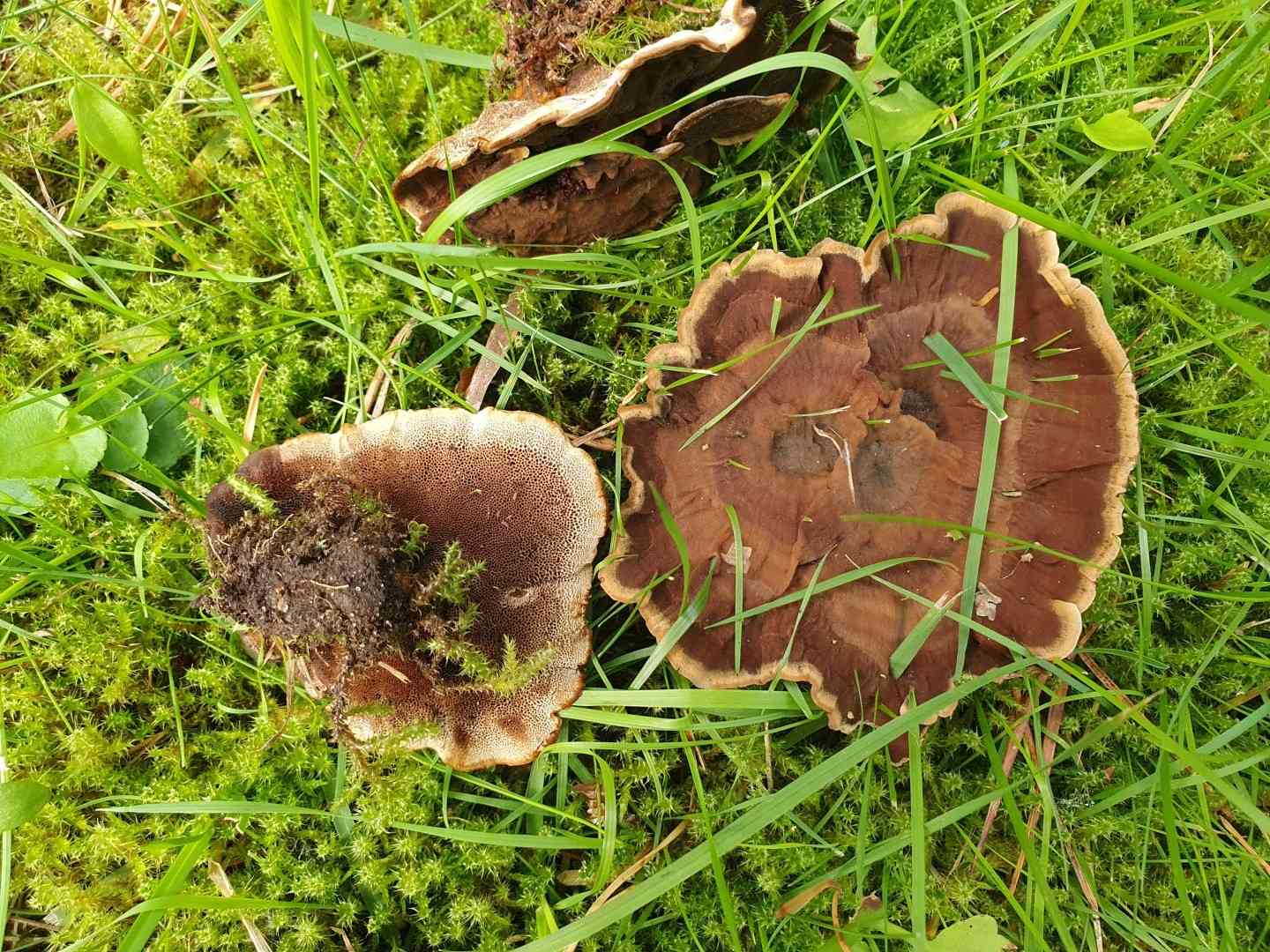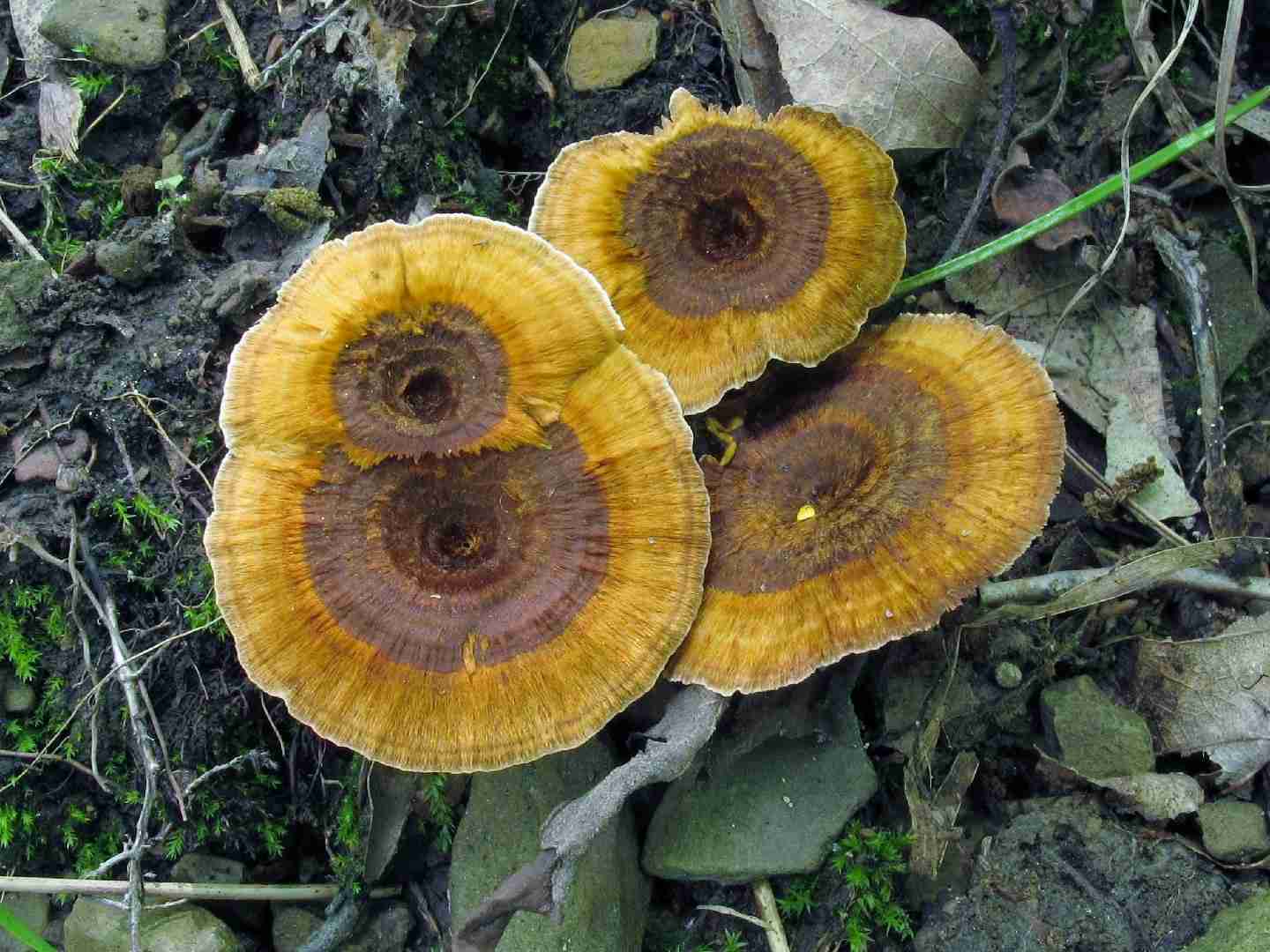
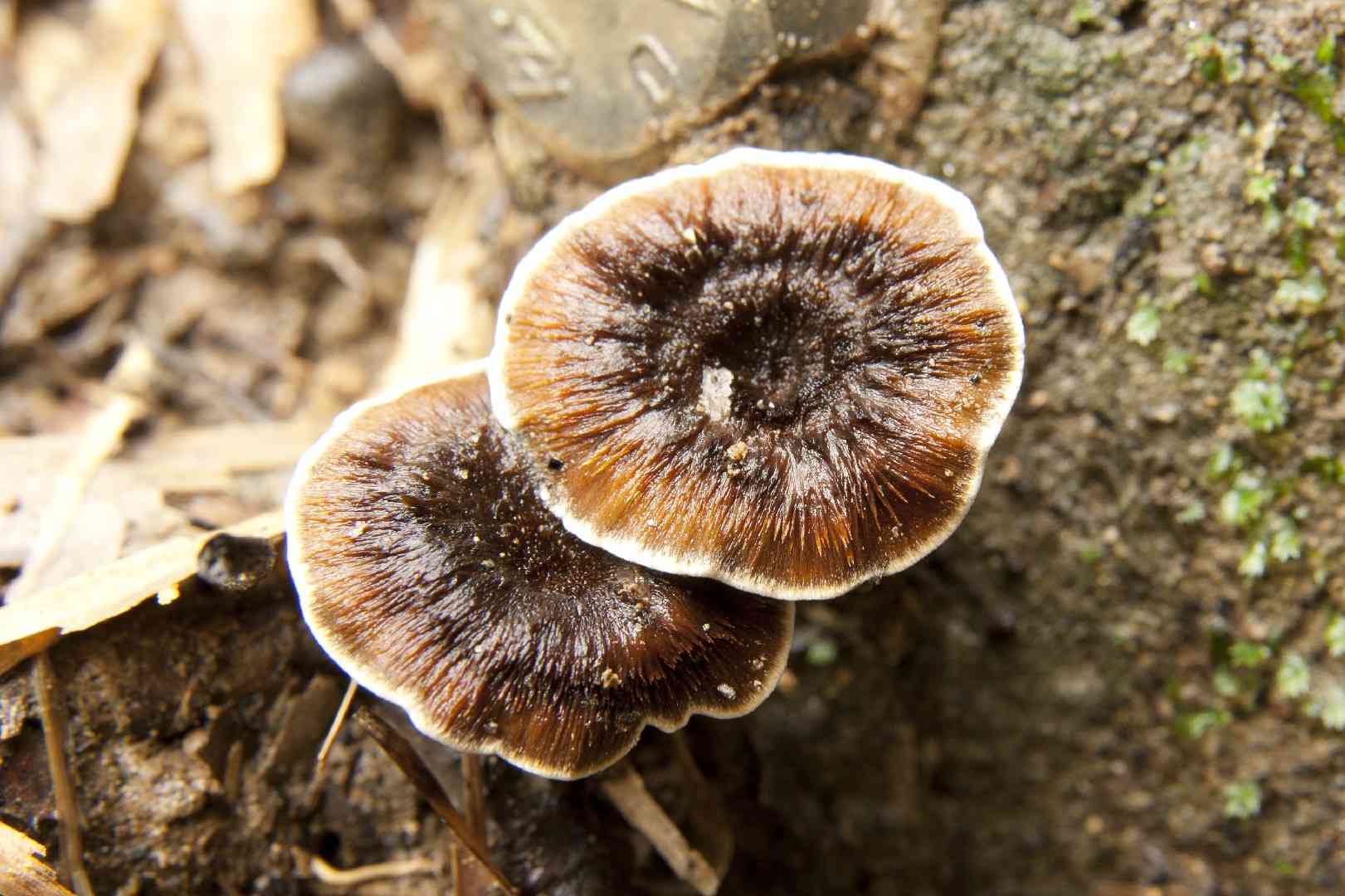
Shiny cinnamon polypore
Coltricia cinnamomea
A species of Tiger's eye fungus. Also known as Tiger's eye.
The glistening cinnamon polypore, though visually stunning, is regrettable unsuitable for consumption. However, this delightful fungus has a second life as an attractive decorative item. Upon drying, it retains its alluring characteristics, remaining just as exquisite as when freshly picked.
In This Article
Attributes of Shiny cinnamon polypore
Cap Diameter
1 - 6 cm
Height
5 - 40 mm
Cap
Cap 1 - 5 cm across; flat or vase-shaped; cinnamon brown
Cap Shape
Flat, Depressed
Cap Surfaces
Fibrillose-scaly, Velvety
Stem
Stem 1 - 5 cm long, 1 - 4 mm thick; brown to cinnamon brown; tough; velvety
Stem Shapes
Cylindrical
Stem Surfaces
Smooth to slightly fibrous
Flesh
Thin; tough; rusty brown to orange
Ring
Ringless
Spore Print Color
Yellowish brown
Odor
Mildly mushroomy but not distinctive.
Body Color
Brown
Flesh Bruises
The flesh or milk does not discolor when bruised or cut.
Growth Form
Solitary, Scattered, Gregarious
Nutrient Gathering
Mycorrhizal, Saprophytic
Substrate
On soil, Dead Woods
You can find Shiny cinnamon polypore by these plants
Pines, Oaks, Populus, Willows
Occurence Habitats
Deciduous Woodland, Mixed Woodland, Coniferous Woodland
Endangered Species
No
Scientific Classification of Shiny cinnamon polypore
Phylum
Club fungi
Class
Mushroom-forming fungi
Order
Hymenochaetales
Family
Hymenochaetaceae
Genus
Tiger's eye fungus
Toxicity and Edibility of Shiny cinnamon polypore
Is Shiny cinnamon polypore Toxic?
Toxicity information is not available for this mushroom. Always consult with an expert before consuming any wild mushrooms.