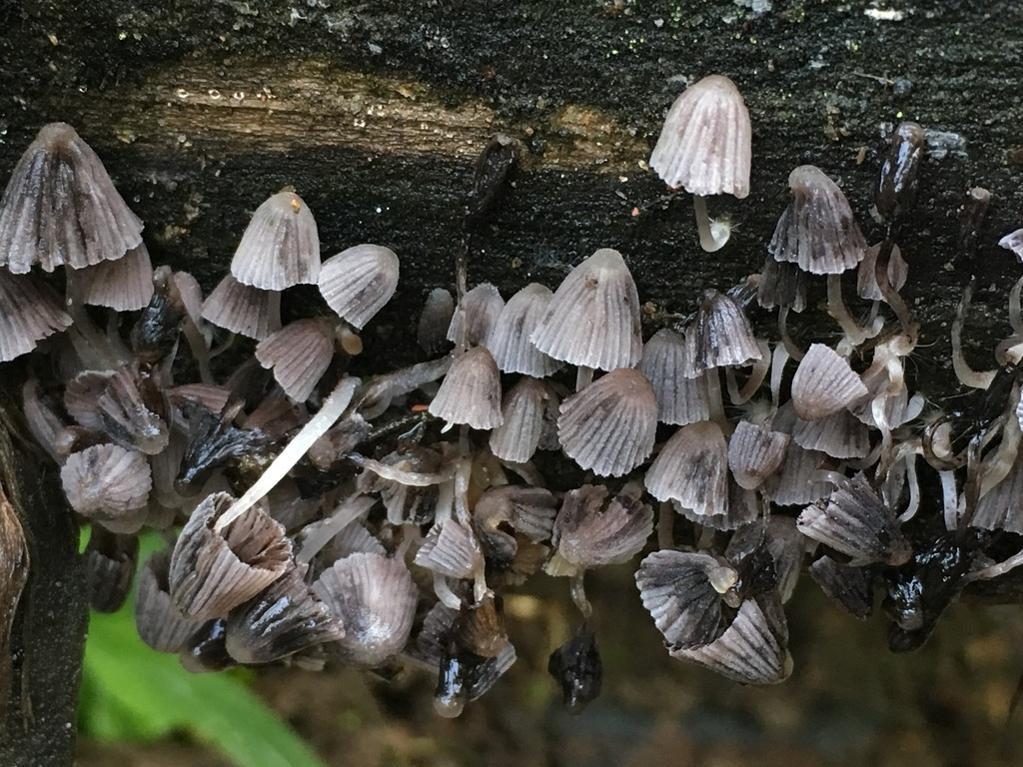
Fairy inkcap
Coprinellus disseminatus
A species of Coprinellus. Also known as Fairy bonnet, Crumble cap, Little helmets.
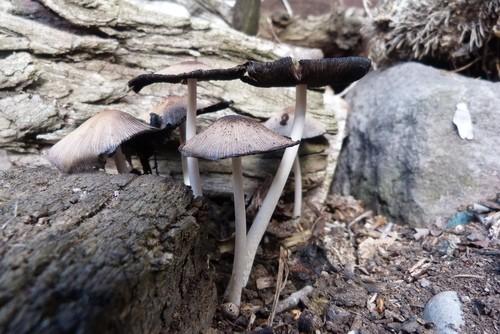
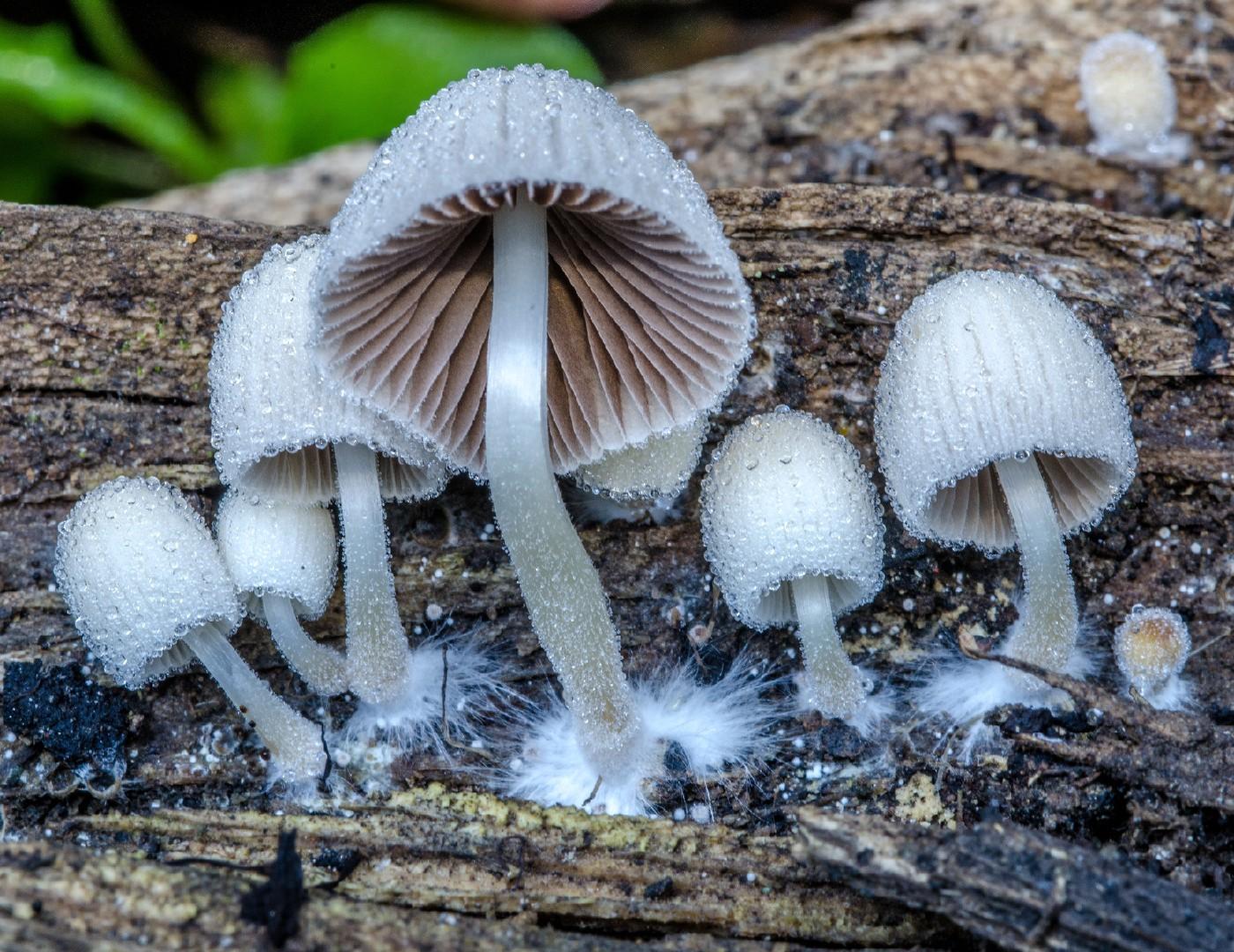
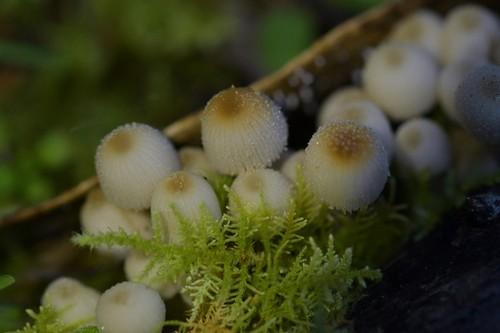
Fairy inkcap mushrooms frequently cluster together on dead wood and decaying roots across the globe. They are visible from early spring until the first frost, but individual mushrooms only persist for a few days before blackening and releasing their spores.
In This Article
Attributes of Fairy inkcap
Cap Diameter
1 - 2 cm
Height
2 - 5 cm
Cap
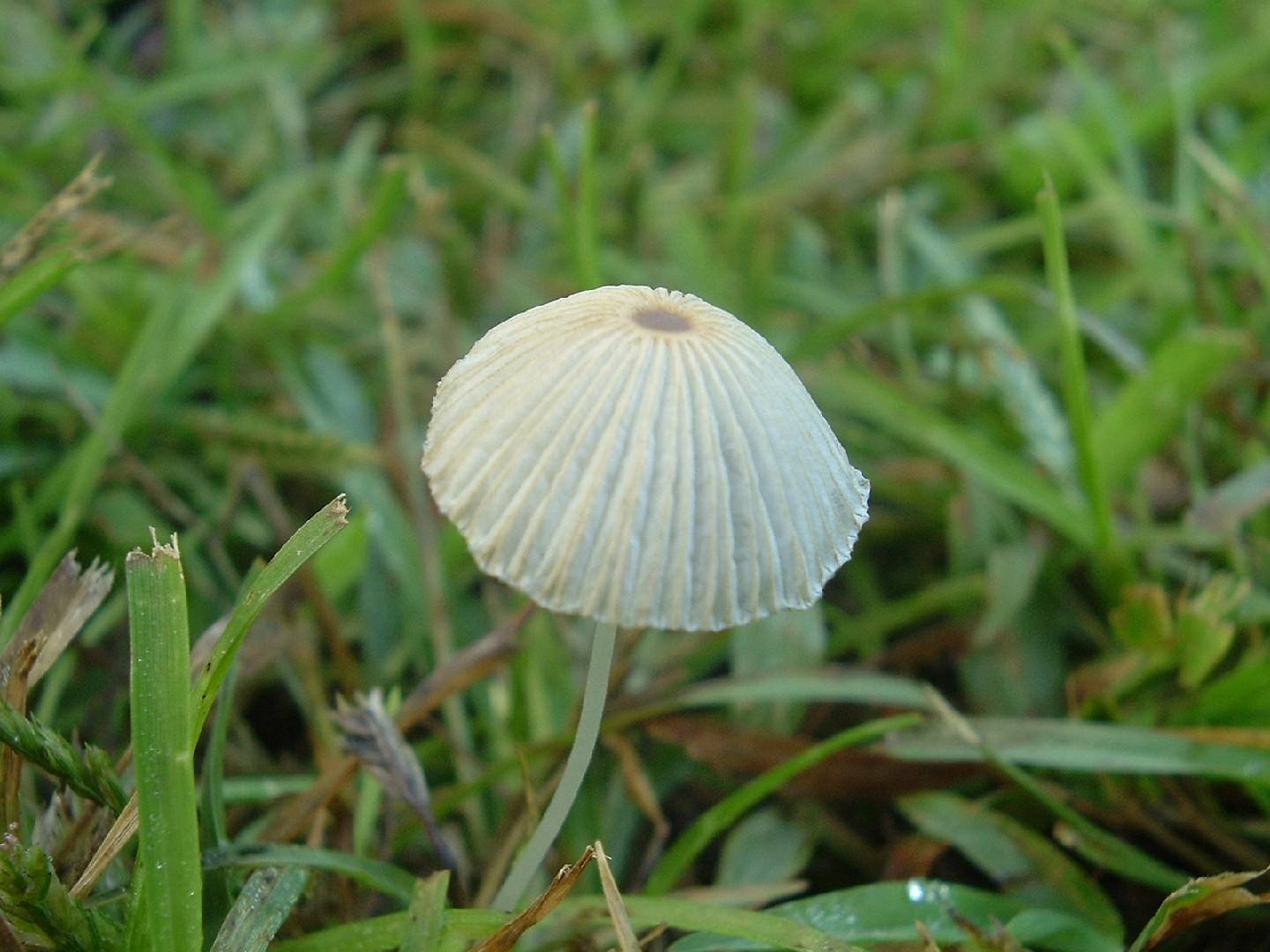
2 cm across; oval, expanding to broadly convex or bell-shaped; white, grayish; smooth; lined or grooved from the margin nearly to the center
Cap Shape
Bell-shaped, Convex
Cap Surfaces
Smooth, Visible lines or stripes, Fibrillose-scaly
Gills
Attached or free; close or almost distant; white to gray, then blackish
Gill Attachment
Attached
Stem
Stem 1.5 - 4 cm long, 1 - 2 mm thick; equal, often curved, hollow; white; smooth
Stem Shapes
Cylindrical
Stem Surfaces
Smooth
Flesh
Very thin; fragile
Ring
Ringless
Spore Print Color
Black
Odor
Mildly mushroomy but not distinctive.
Body Color
BrownGrayWhite
Flesh Bruises
The flesh or milk does not discolor when bruised or cut.
Growth Form
Gregarious, Clustered
Nutrient Gathering
Saprophytic
Substrate
Dead Woods
You can find Fairy inkcap by these plants
Willows, Ashes
Occurence Habitats
Deciduous Woodland, Disturbed Lands
Species Status
Widely distributed in North America
Endangered Species
No
Scientific Classification of Fairy inkcap
Phylum
Club fungi
Class
Mushroom-forming fungi
Order
Gilled fungi
Family
Coprinaceae
Genus
Coprinellus
Toxicity and Edibility of Fairy inkcap
Is Fairy inkcap Toxic?
Consuming the fairy inkcap mushroom is dangerous, as it can cause various adverse effects. Therefore, it's advisable to avoid contact with it.