Hare's foot ink cap
Coprinopsis lagopus
A species of Coprinopsis. Also known as Wooly inkcap.
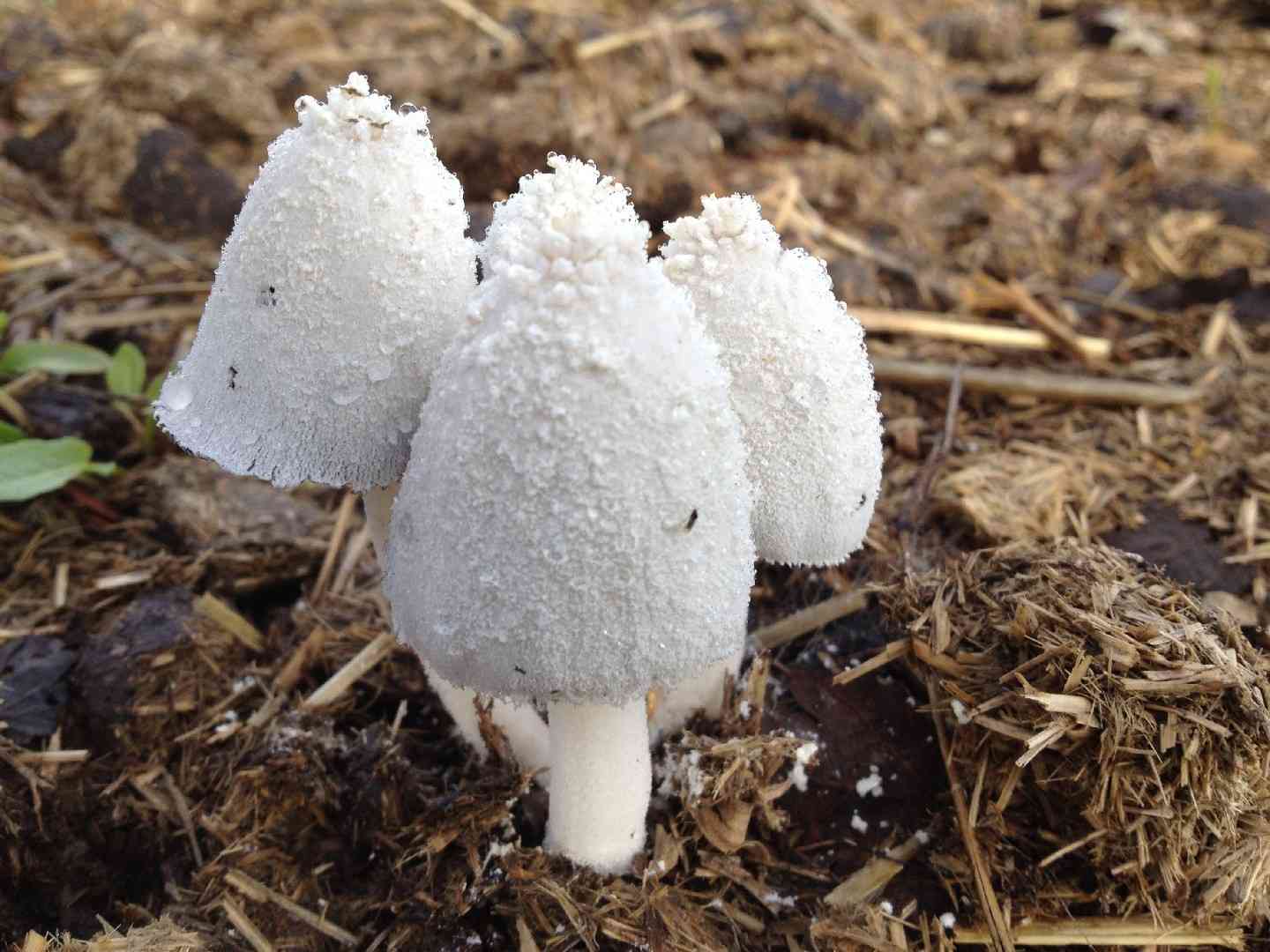
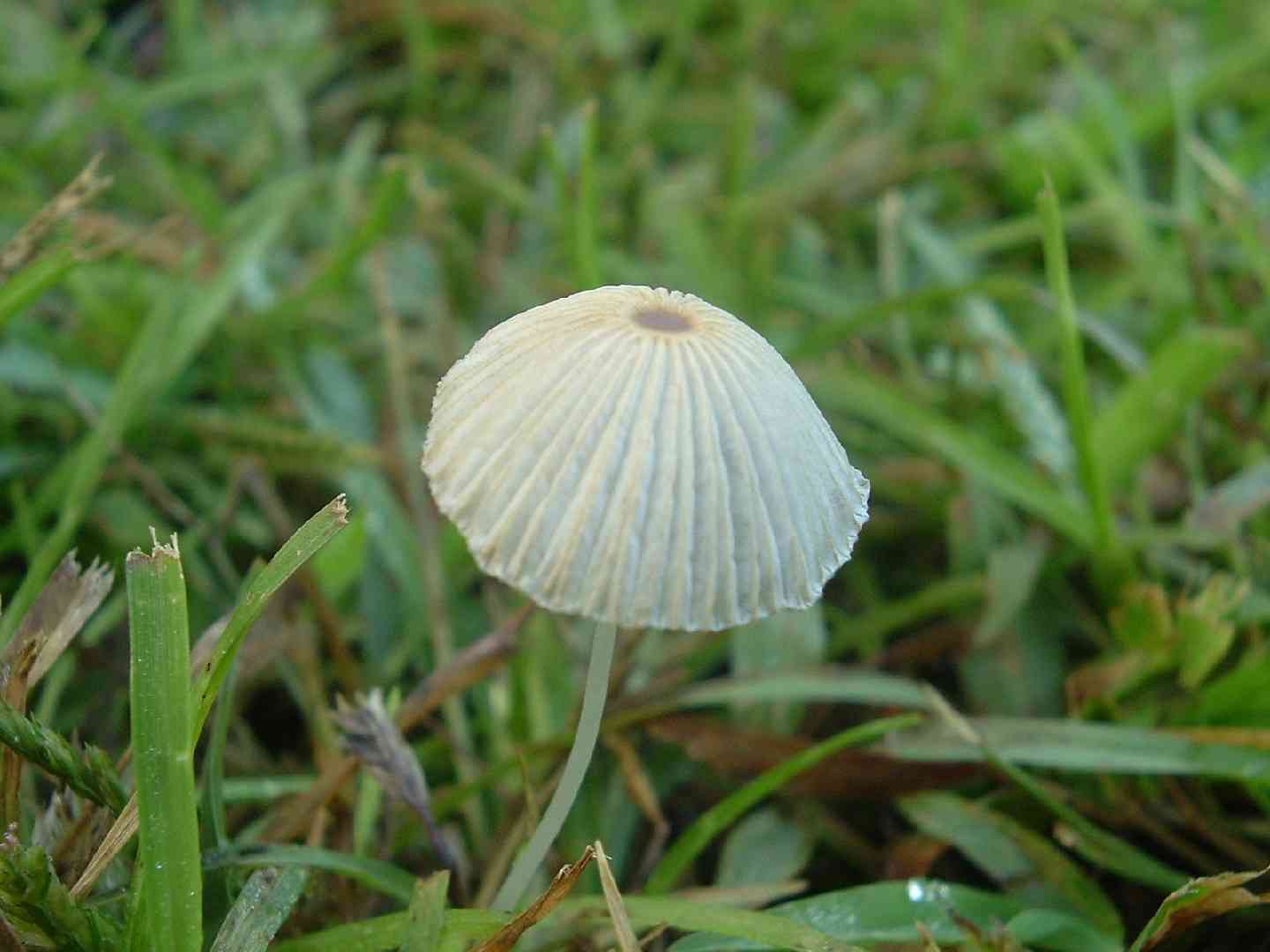
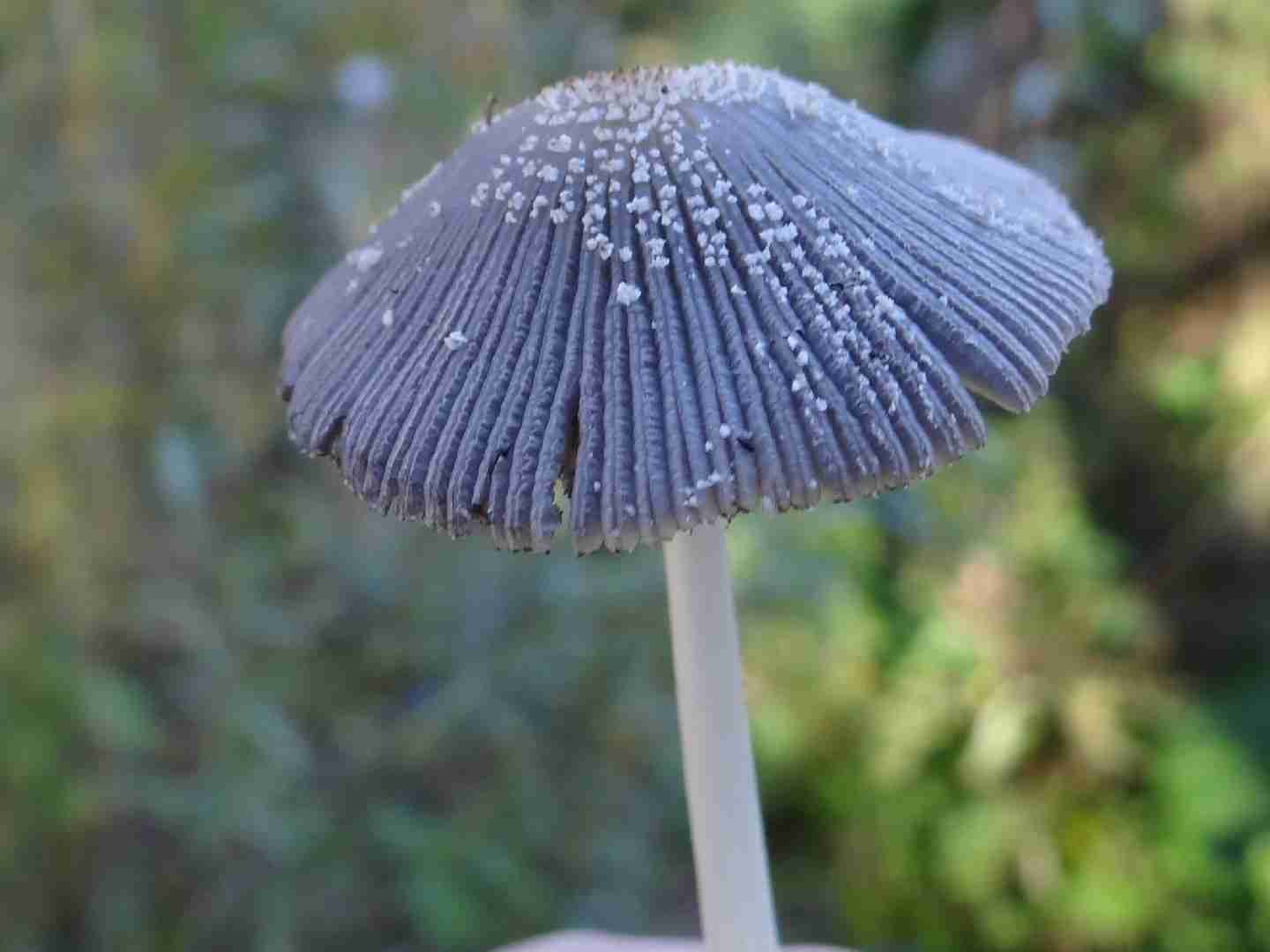
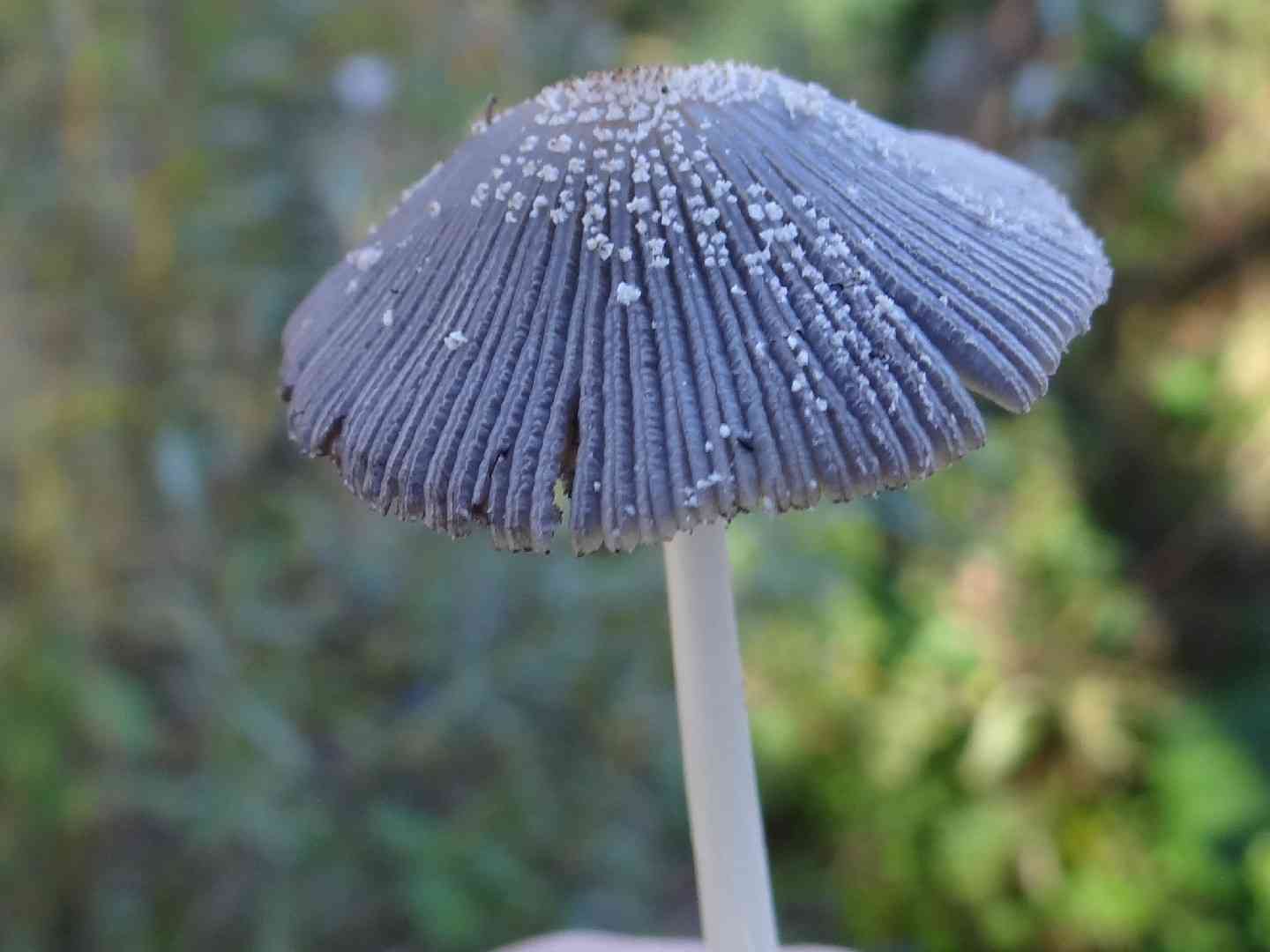
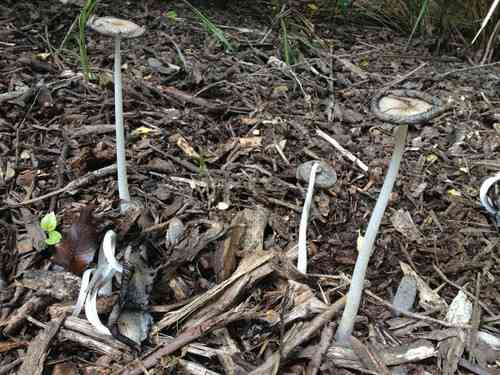
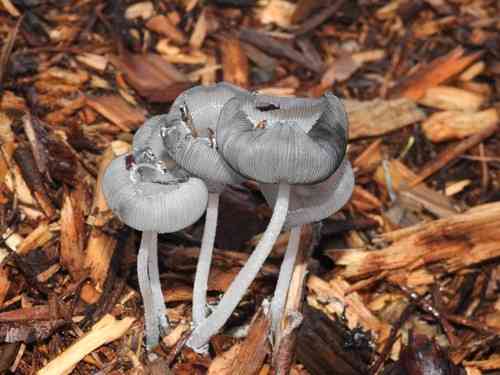
The fragile lifespan of the hare's foot ink cap mushroom unfolds entirely within a single day. These fungi emerge from leaf litter and woodchip mulch as fuzzy, egg-shaped forms, which then unfurl into flat, black-ribbed, bowl-like caps. Their scientific designation, Coprinopsis lagopus, is derived from Greek terms that translate to 'hare's foot dwelling on dung.'
In This Article
Attributes of Hare's foot ink cap
Cap Diameter
1 - 6 cm
Height
4 - 10 cm
Cap
Up to 4 cm across; oval, broadly convex, flat; gray to black
Cap Shape
Convex, Bell-shaped, Flat
Cap Surfaces
Fibrillose-scaly, Velvety, Visible lines or stripes
Gills
Adnexed; crowded; pale, gray, blackish
Gill Attachment
Free
Stem
Up to 2 cm long, 5 mm thick; equal, hollow, fragile; white; densely hairy at first
Stem Shapes
Cylindrical
Stem Surfaces
Scaly
Ring
Ringless
Spore Print Color
Blackish-violet
Odor
Mildly mushroomy but not distinctive.
Body Color
BlackGrayWhite
Flesh Bruises
The flesh or milk does not discolor when bruised or cut.
Growth Form
Solitary, Scattered, Gregarious
Nutrient Gathering
Saprophytic
Substrate
Dead Woods, On soil, Wood Chips or Mulch
You can find Hare's foot ink cap by these plants
Spruces, Oaks
Occurence Habitats
Deciduous Woodland, Disturbed Lands
Species Status
Widely distributed and common in North America.
Endangered Species
No
Scientific Classification of Hare's foot ink cap
Phylum
Club fungi
Class
Mushroom-forming fungi
Order
Gilled fungi
Family
Coprinaceae
Genus
Coprinopsis
Toxicity and Edibility of Hare's foot ink cap
Is Hare's foot ink cap Toxic?
Toxicity information is not available for this mushroom. Always consult with an expert before consuming any wild mushrooms.