Golden reishi
Ganoderma curtisii
A species of Artist's bracket and allies.
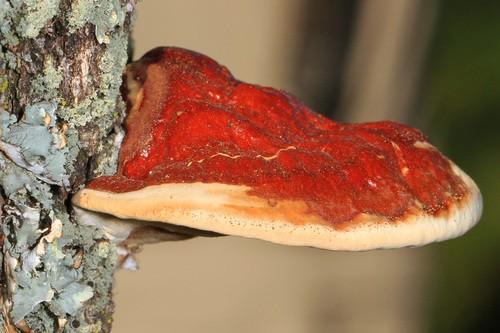
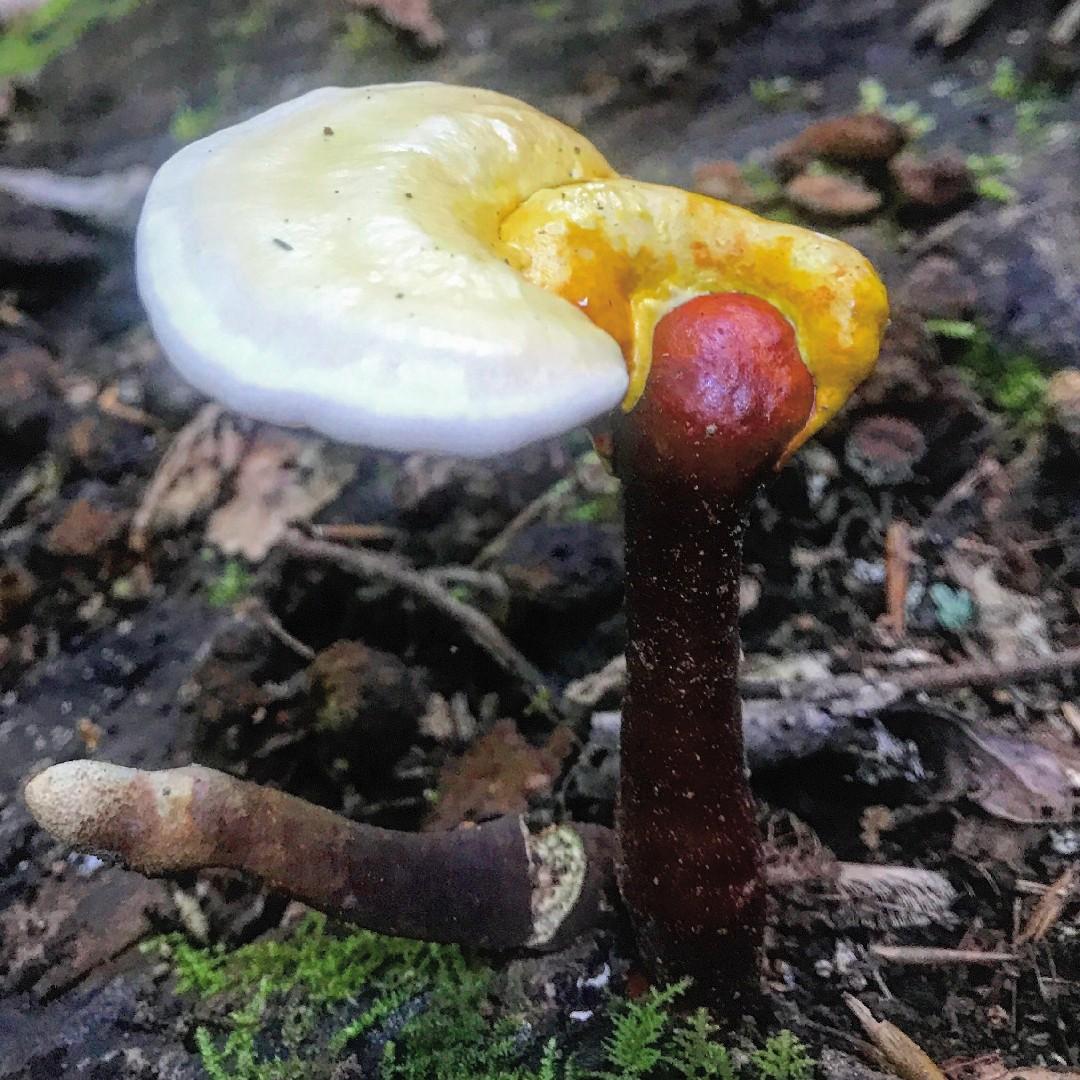
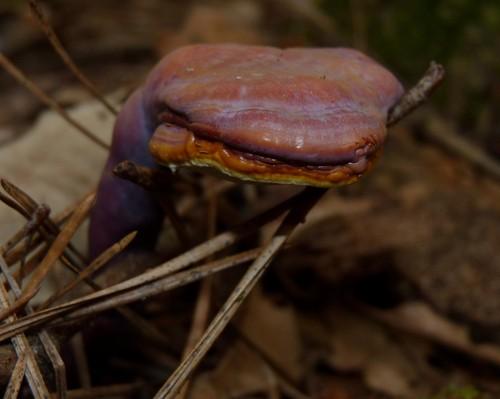
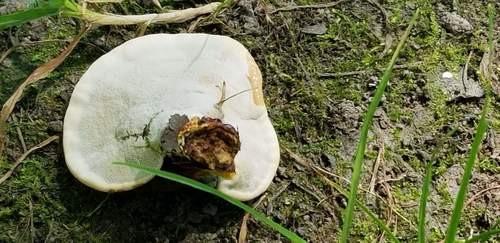
Golden reishi, a firm-bodied fungus, grows on both living and deceased hardwood trees, and occasionally softwoods. It exhibits rich hues of red, orange, or yellow, though paler variations exist. Despite assertions regarding its potential health advantages, there's no scientific backing for these claims, and this variety is not considered edible.
In This Article
Attributes of Golden reishi
Cap Diameter
3 - 12 cm
Height
5 - 18 cm
Cap
3 - 12 cm across; semicircular, irregularly kidney-shaped; zoned with yellow, white, red, reddish brown
Cap Surfaces
Smooth
Stem
Up to 18 cm; brownish red to reddish brown; bald, lacquered
Stem Surfaces
Smooth
Flesh
Tough but not woody; very pale brown, darker immediately above the tubes
Ring
Ringless
Spore Print Color
Brown
Odor
Mild, not distinctive.
Body Color
BrownRedWhiteOrange
Flesh Bruises
The flesh or milk does not discolor when bruised or cut.
Growth Form
Solitary, Gregarious
Nutrient Gathering
Saprophytic, Parasitic
Substrate
Dead Woods, Wood of Living Trees
You can find Golden reishi by these plants
Spruces
Occurence Habitats
Deciduous Woodland
Species Status
Widely distributed east of the Rocky Mountains
Endangered Species
No
Scientific Classification of Golden reishi
Phylum
Club fungi
Class
Mushroom-forming fungi
Order
Shelf fungi
Family
Ganodermataceae
Genus
Artist's bracket and allies
Toxicity and Edibility of Golden reishi
Is Golden reishi Toxic?
Toxicity information is not available for this mushroom. Always consult with an expert before consuming any wild mushrooms.