Western varnished conk
Ganoderma oregonense
A species of Artist's bracket and allies. Also known as Oregon polypore.
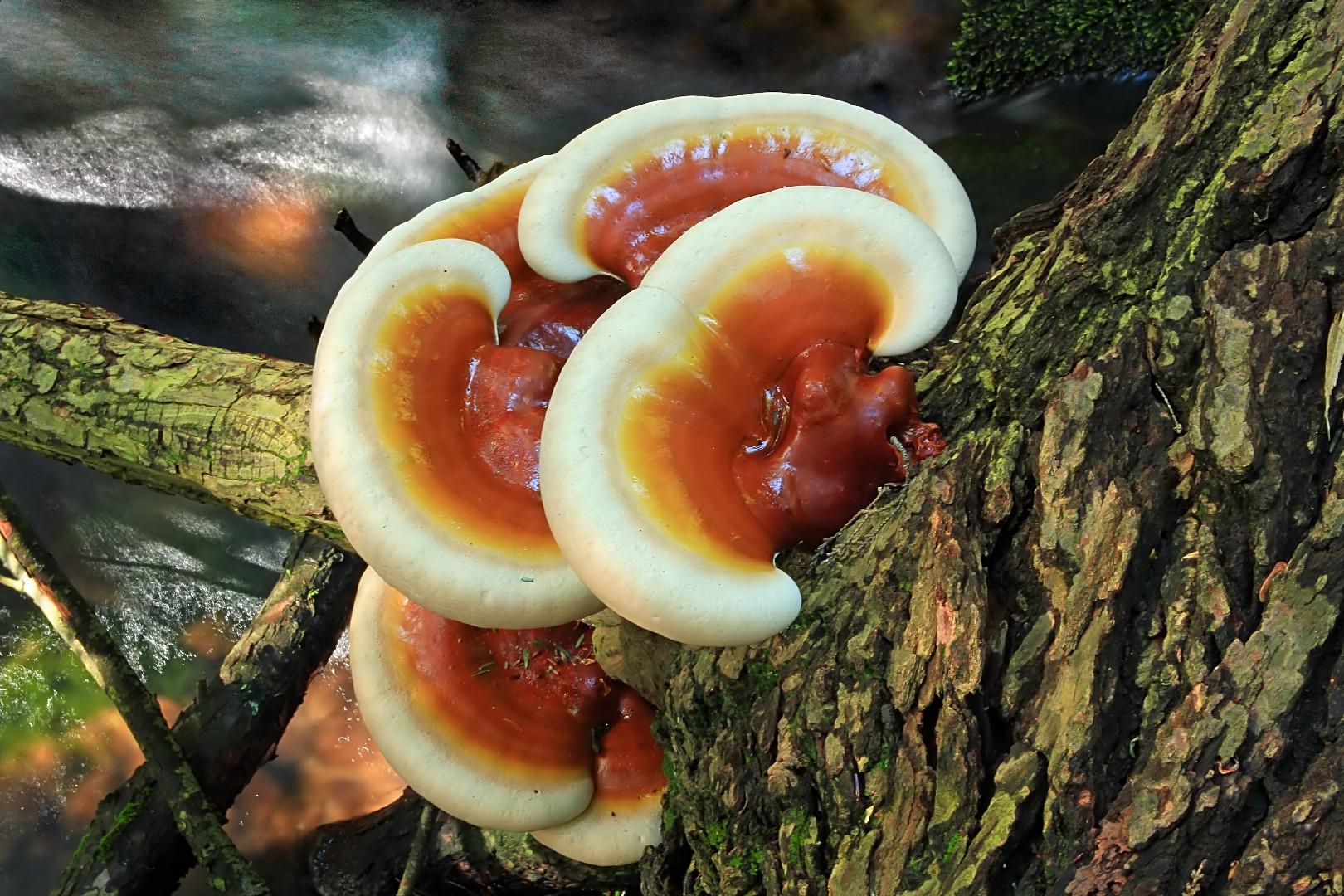
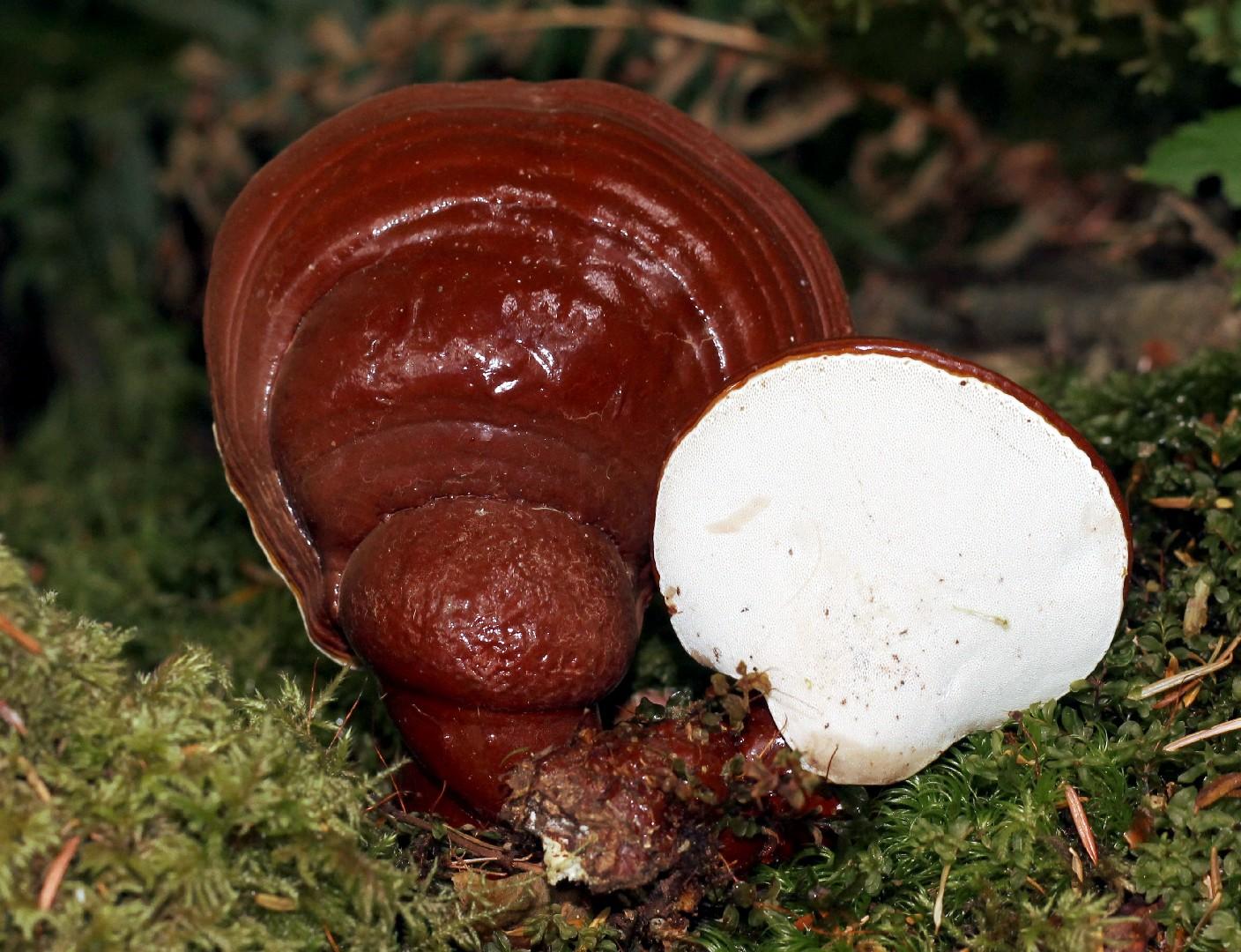
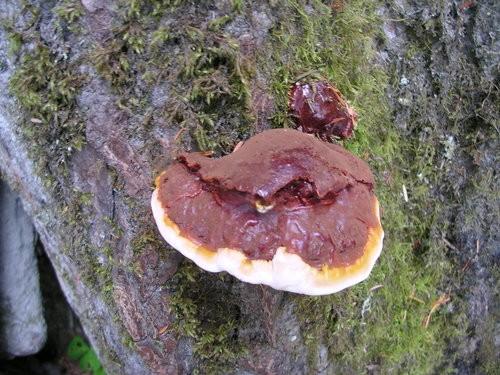
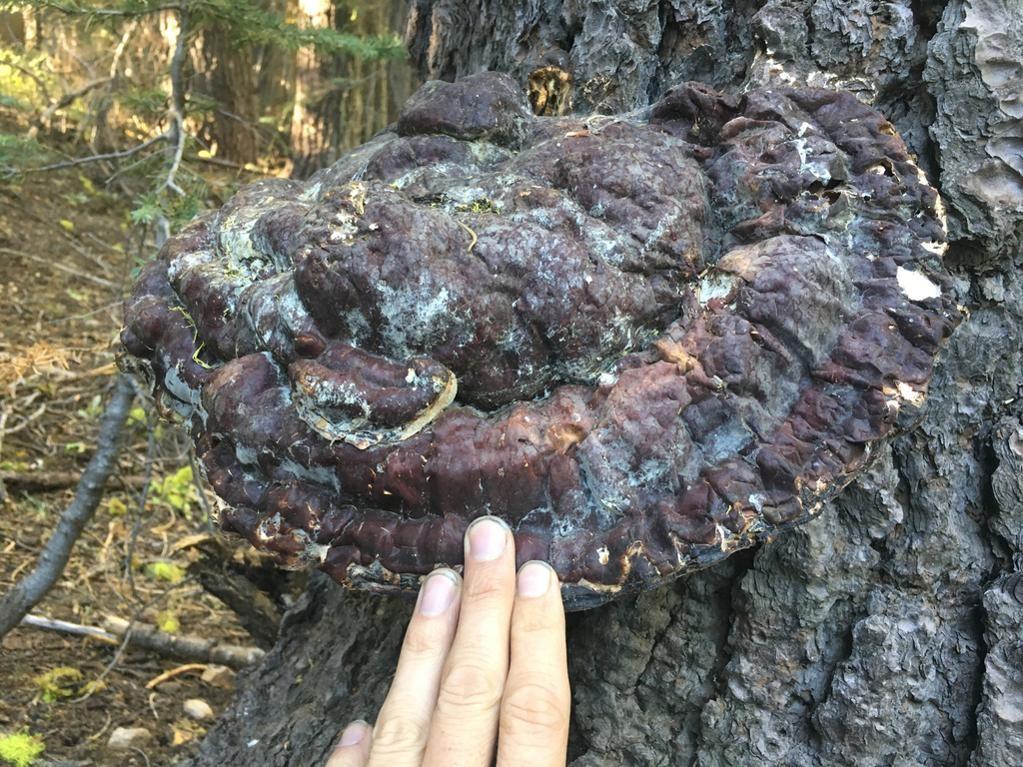
The western varnished conk (Ganoderma oregonense) is a truly beautiful fungus, resembling something sculpted from terracotta and then given a high-gloss finish across its entire surface. These can reach considerable sizes, with individual caps expanding to an impressive 50 cm in diameter. Their visual impact is even greater when multiple specimens are discovered growing in close proximity. Despite their striking appearance, which might suggest they are edible, this mushroom is actually poisonous and not fit for consumption.
In This Article
Attributes of Western varnished conk
Cap Diameter
8 - 60 cm
Cap
Cap 10 - 50 cm across; semicircular, irregularly kidney-shaped; brownish red; bald
Cap Surfaces
Smooth
Stem
Usually absent; brownish red to reddish brown; lacquered
Stem Surfaces
Smooth
Flesh
Tough but not woody; whitish to creamy
Ring
Distant, crowded; sulcate, zonate
Spore Print Color
Reddish brown
Odor
Mildly mushroomy but not distinctive.
Body Color
BrownRed
Flesh Bruises
The flesh or milk does not discolor when bruised or cut.
Growth Form
Solitary, Gregarious
Nutrient Gathering
Saprophytic, Parasitic
Substrate
Dead Woods, Wood of Living Trees
You can find Western varnished conk by these plants
Spruces
Occurence Habitats
Coniferous Woodland
Species Status
Distributed in the Pacific Northwest and California
Endangered Species
No
Scientific Classification of Western varnished conk
Phylum
Club fungi
Class
Mushroom-forming fungi
Order
Shelf fungi
Family
Ganodermataceae
Genus
Artist's bracket and allies
Toxicity and Edibility of Western varnished conk
Is Western varnished conk Toxic?
Toxicity information is not available for this mushroom. Always consult with an expert before consuming any wild mushrooms.