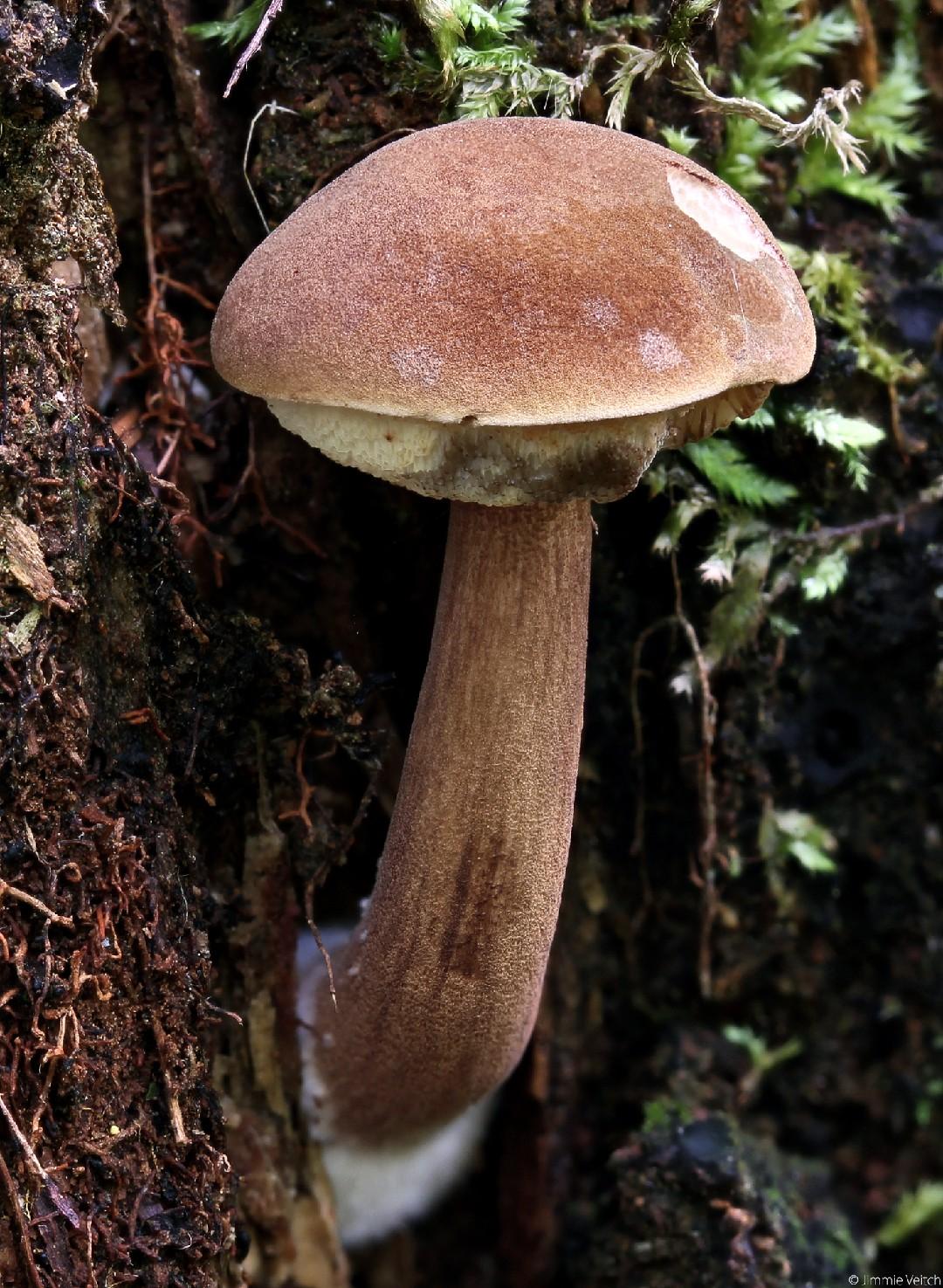
Bay bolete
Imleria badia
A species of Imleria.
The bay bolete, a common species throughout the northern hemisphere, typically inhabits spruce and pine forests, though it can also be found beneath deciduous trees. Although it forms a symbiotic bond with living trees, its fruiting bodies are most frequently observed near well-decomposed, moss-covered stumps, appearing either alone or in small clusters.
In This Article
Attributes of Bay bolete
Cap Diameter
5 - 15 cm
Height
5 - 18 cm
Cap
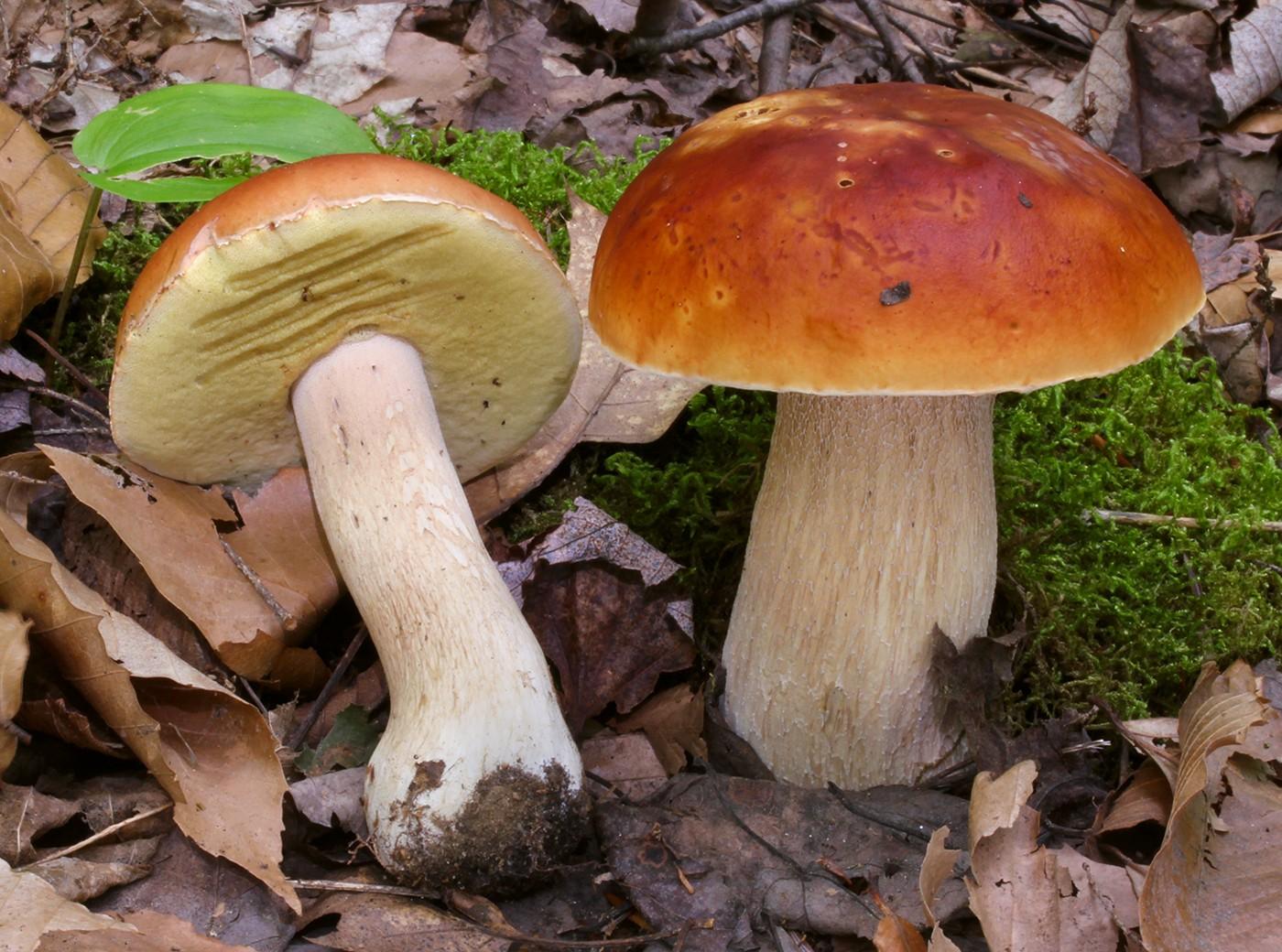
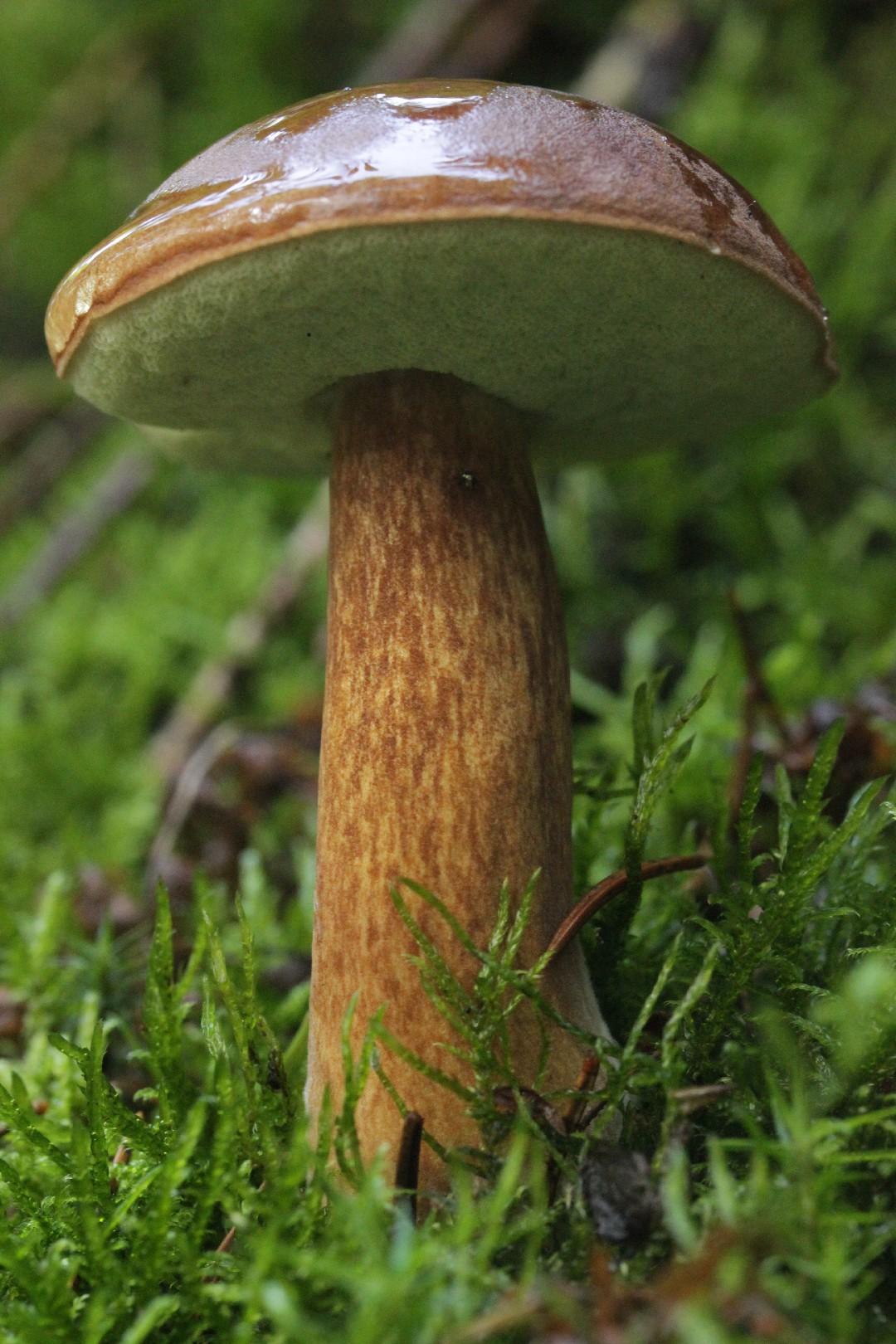
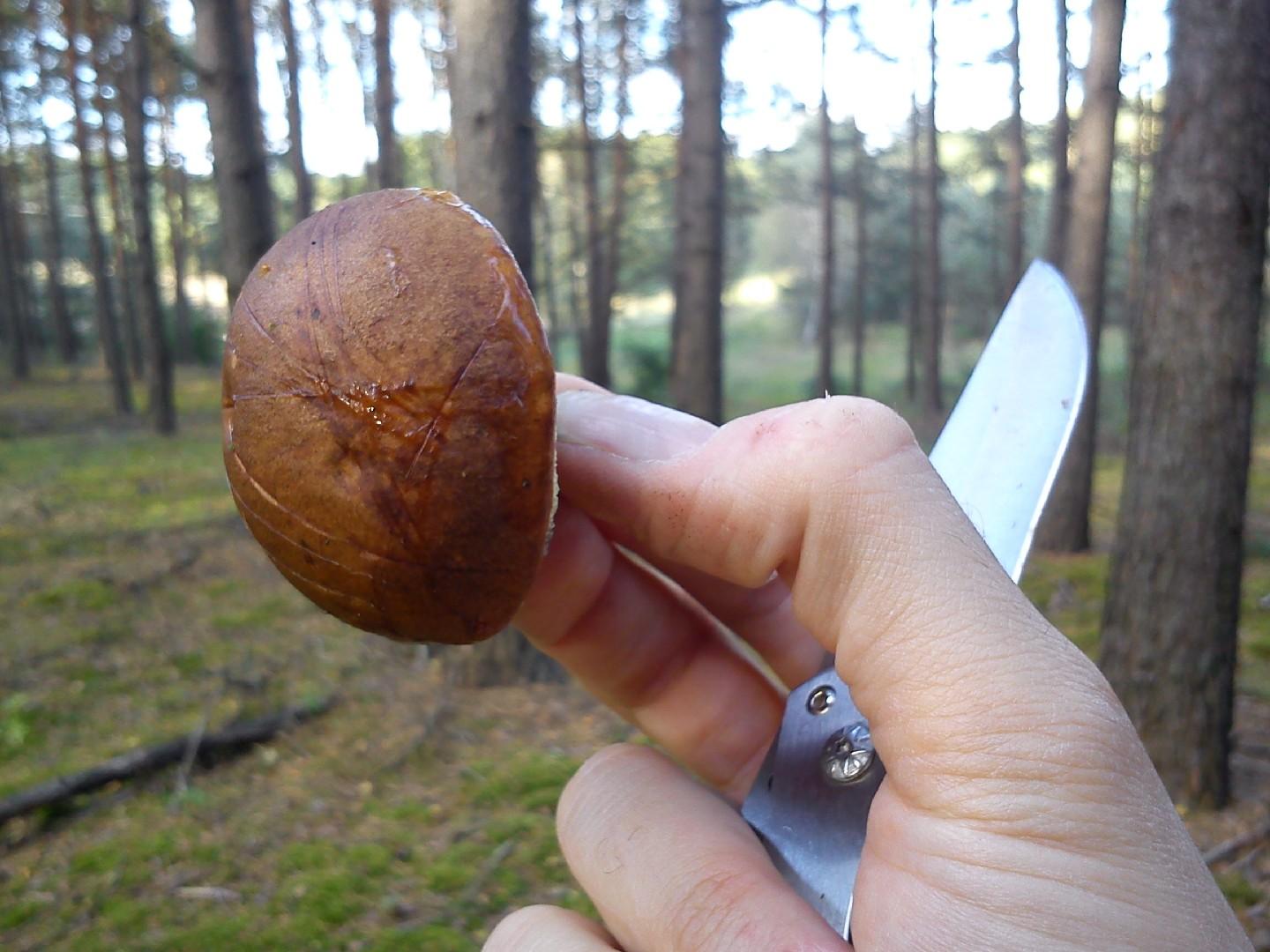
Cap 3 - 9 cm; convex; brown; margin with a tiny overhanging sterile portio
Cap Shape
Convex
Cap Surfaces
Smooth, Slimy or slightly sticky
Stem
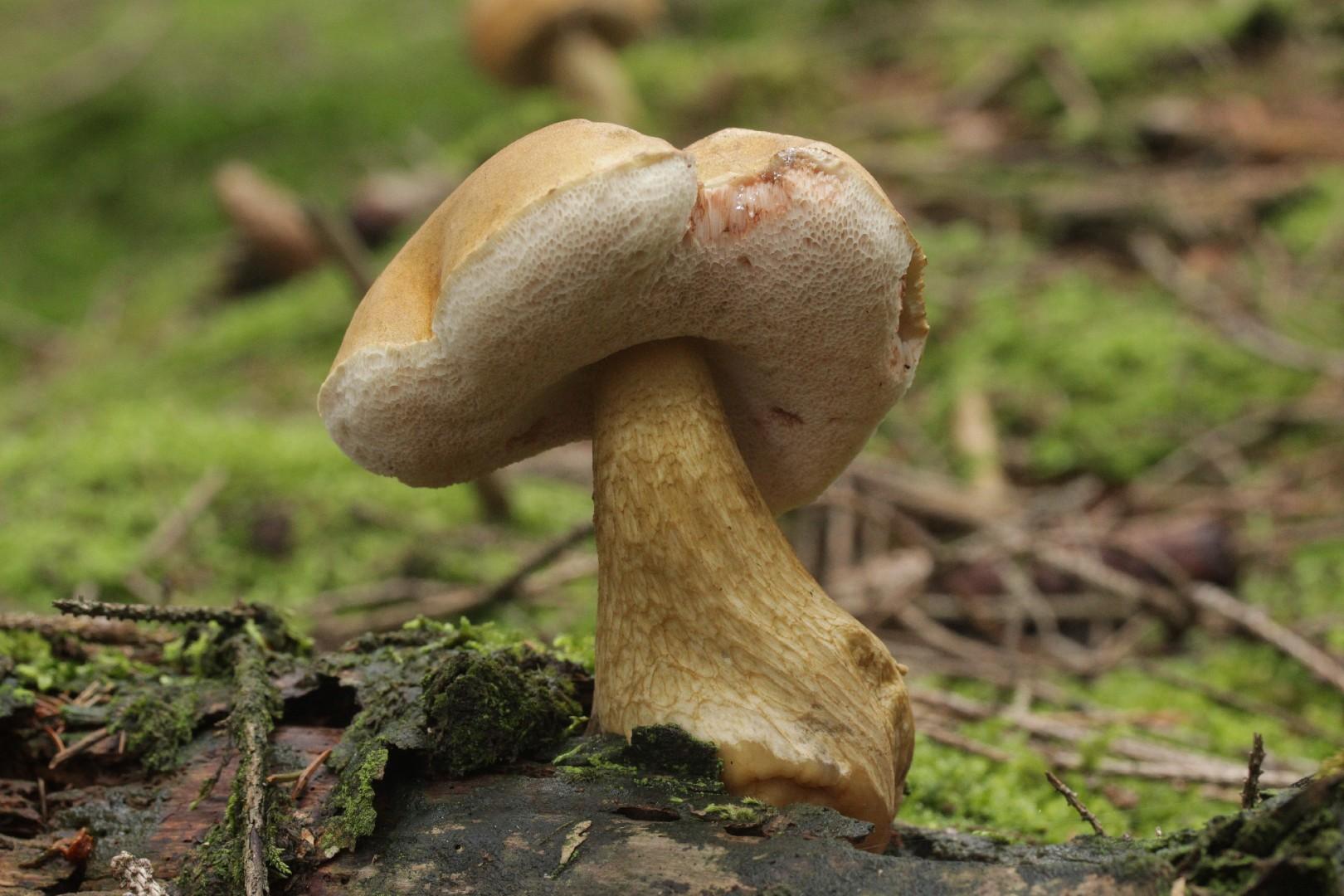
Stem 5 - 18 cm long, 1.5 - 4 cm thick; enlarged at the base; pale yellowish near the apex, brown below
Stem Shapes
Cylindrical
Stem Surfaces
Smooth to slightly fibrous
Flesh
White, unchanging when sliced
Ring
Ringless
Spore Print Color
Olive-brown
Odor
Mildly mushroomy but not distinctive.
Body Color
BrownYellowRedPink
Flesh Bruises
Discolor to blue
Growth Form
Solitary, Scattered, Gregarious
Nutrient Gathering
Mycorrhizal
Substrate
On soil, Dead Woods
You can find Bay bolete by these plants
Eastern hemlock, Spruces, Pines
Occurence Habitats
Coniferous Woodland, Deciduous Woodland, Mixed Woodland
Species Status
Least Concern
Endangered Species
No
Scientific Classification of Bay bolete
Phylum
Club fungi
Class
Mushroom-forming fungi
Order
Boletes and allies
Family
Boletes
Genus
Imleria
Toxicity and Edibility of Bay bolete
Is Bay bolete Toxic?
Toxicity information is not available for this mushroom. Always consult with an expert before consuming any wild mushrooms.