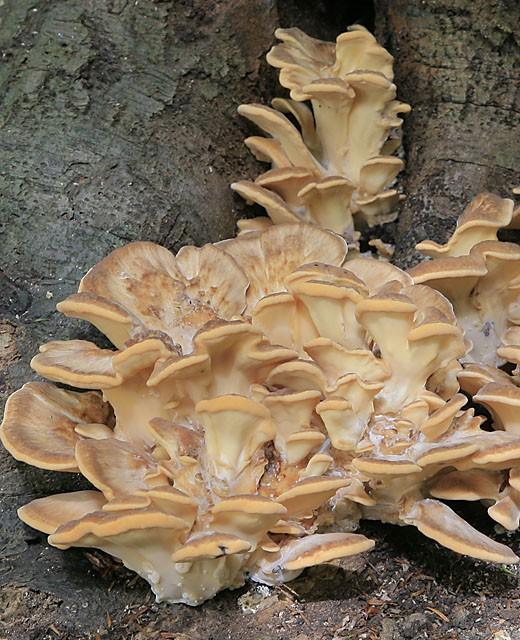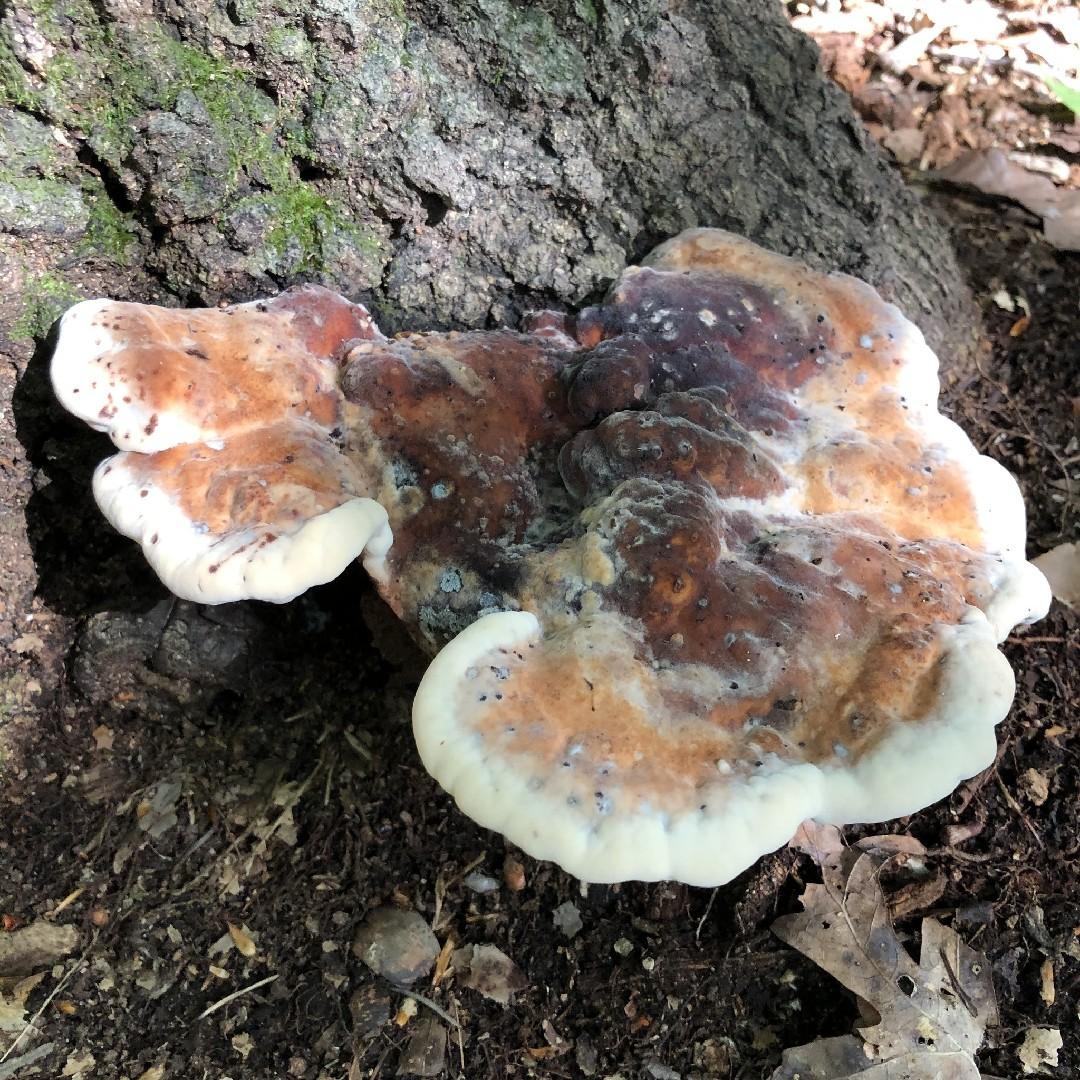
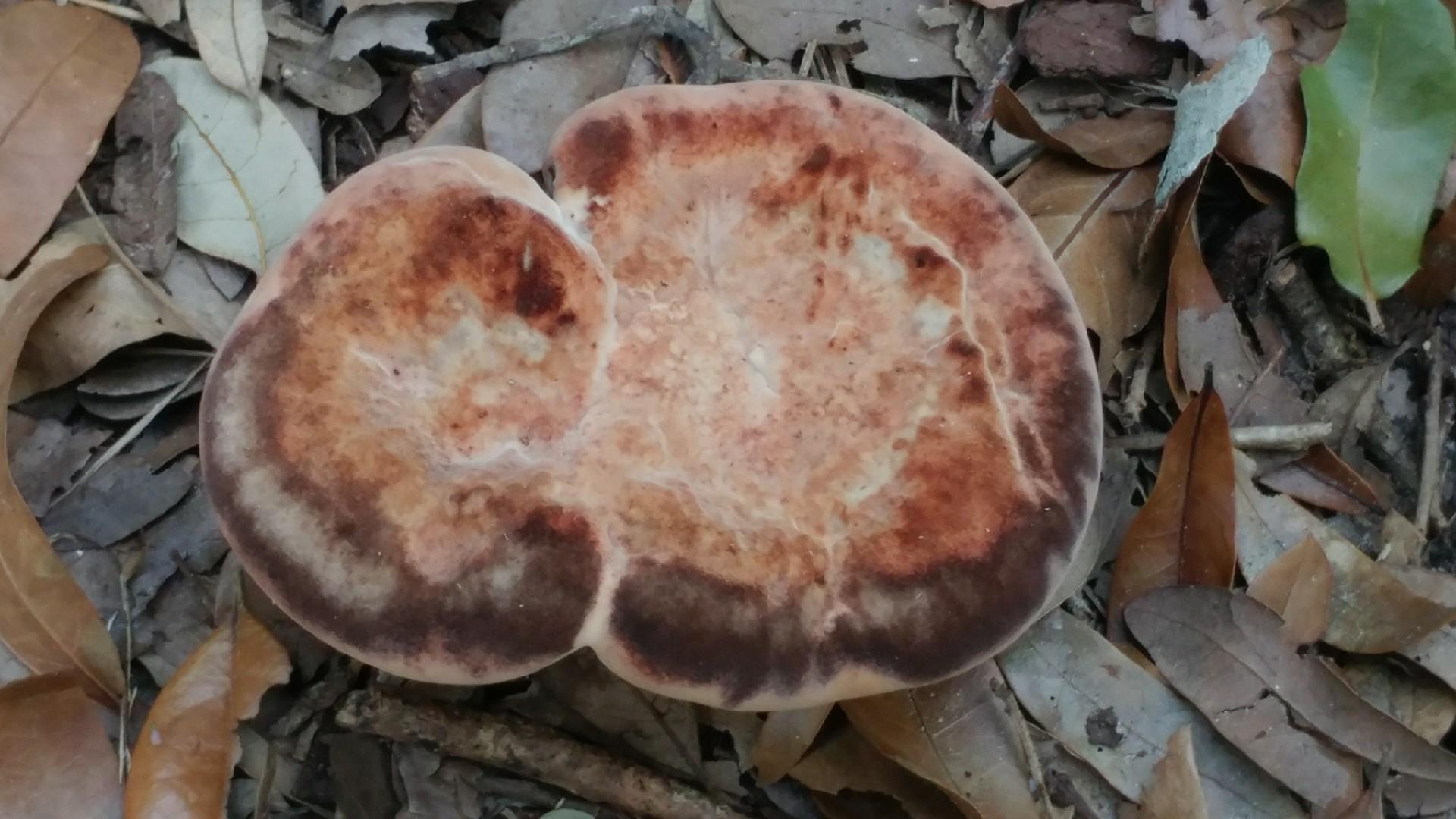
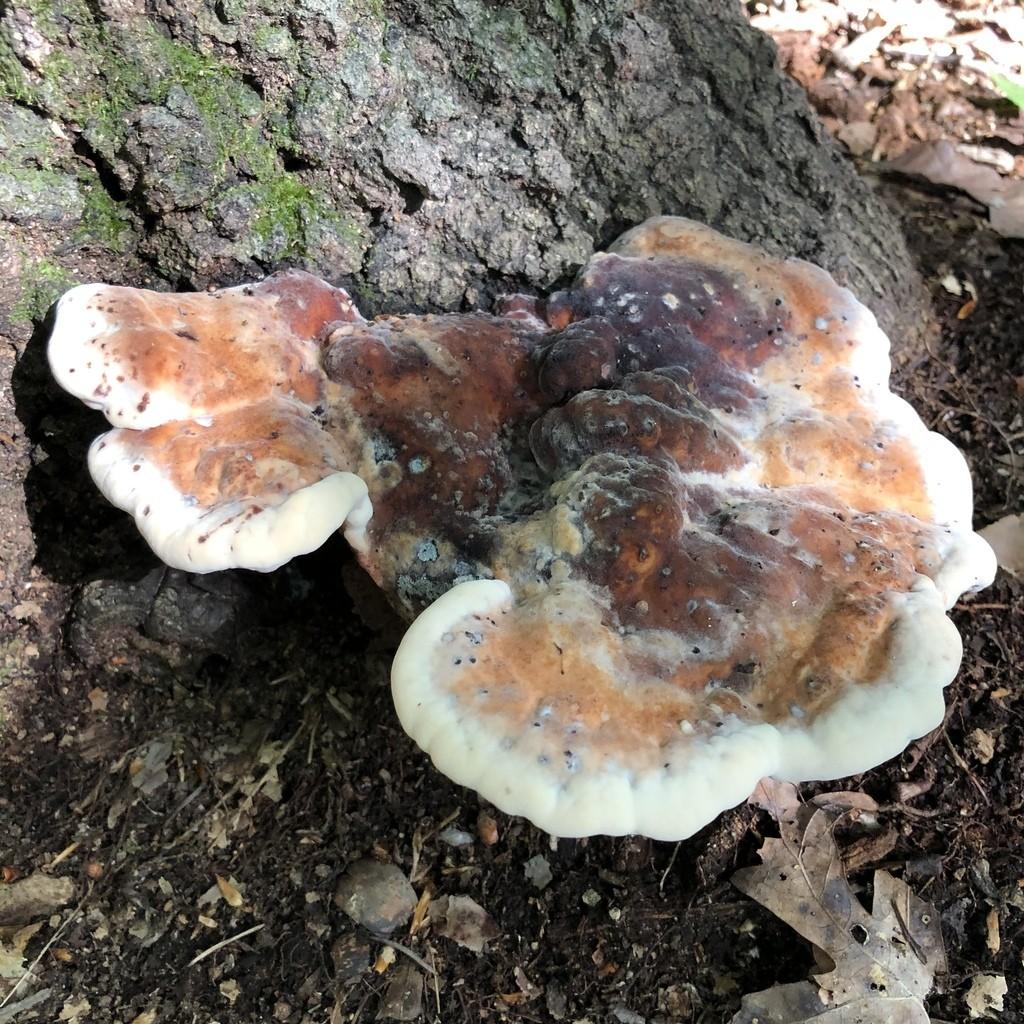
White chicken mushroom
Laetiporus persicinus
A species of Laetiporus.
The fruiting body of the white chicken mushroom undergoes a striking transformation when exposed to rain, shifting its color from a pinkish-orange to a purple-brown hue within minutes. A similar color change can be triggered by human touch. Furthermore, be advised that handling this fungus will impart an unpleasant, musty smell to your fingers.
In This Article
Attributes of White chicken mushroom
Cap Diameter
3 - 26 cm
Cap
Cap 3 - 26 cm wide; petal- to fan-shaped; pinkish orange to pinkish brown; dry, radially wrinkled; wavy
Stem
Stocky and central
Flesh
Up to 2 cm thick; sofi, fieshy-fibrous; whitish to pale pinkish yellow
Spore Print Color
White
Odor
Smell musty and not described as pleasant
Body Color
BrownOrangePinkCream
Flesh Bruises
The flesh or milk does not discolor when bruised or cut.
Growth Form
Clustered
Substrate
On wood
You can find White chicken mushroom by these plants
Oaks, Willows, Sweet cherry
Species Status
Most common in southeast America
Scientific Classification of White chicken mushroom
Phylum
Club fungi
Class
Mushroom-forming fungi
Order
Shelf fungi
Family
Bracket polypores
Genus
Laetiporus
Toxicity and Edibility of White chicken mushroom
Is White chicken mushroom Toxic?
Toxicity information is not available for this mushroom. Always consult with an expert before consuming any wild mushrooms.