Redlead roundhead
Leratiomyces ceres
A species of Leratiomyces.
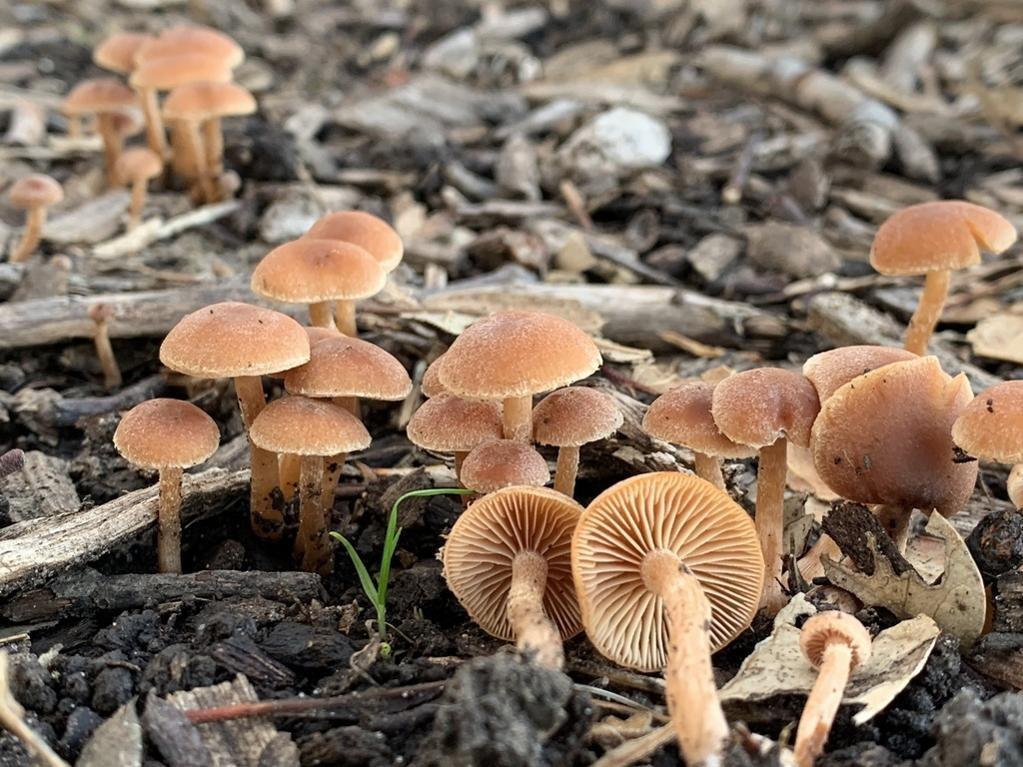
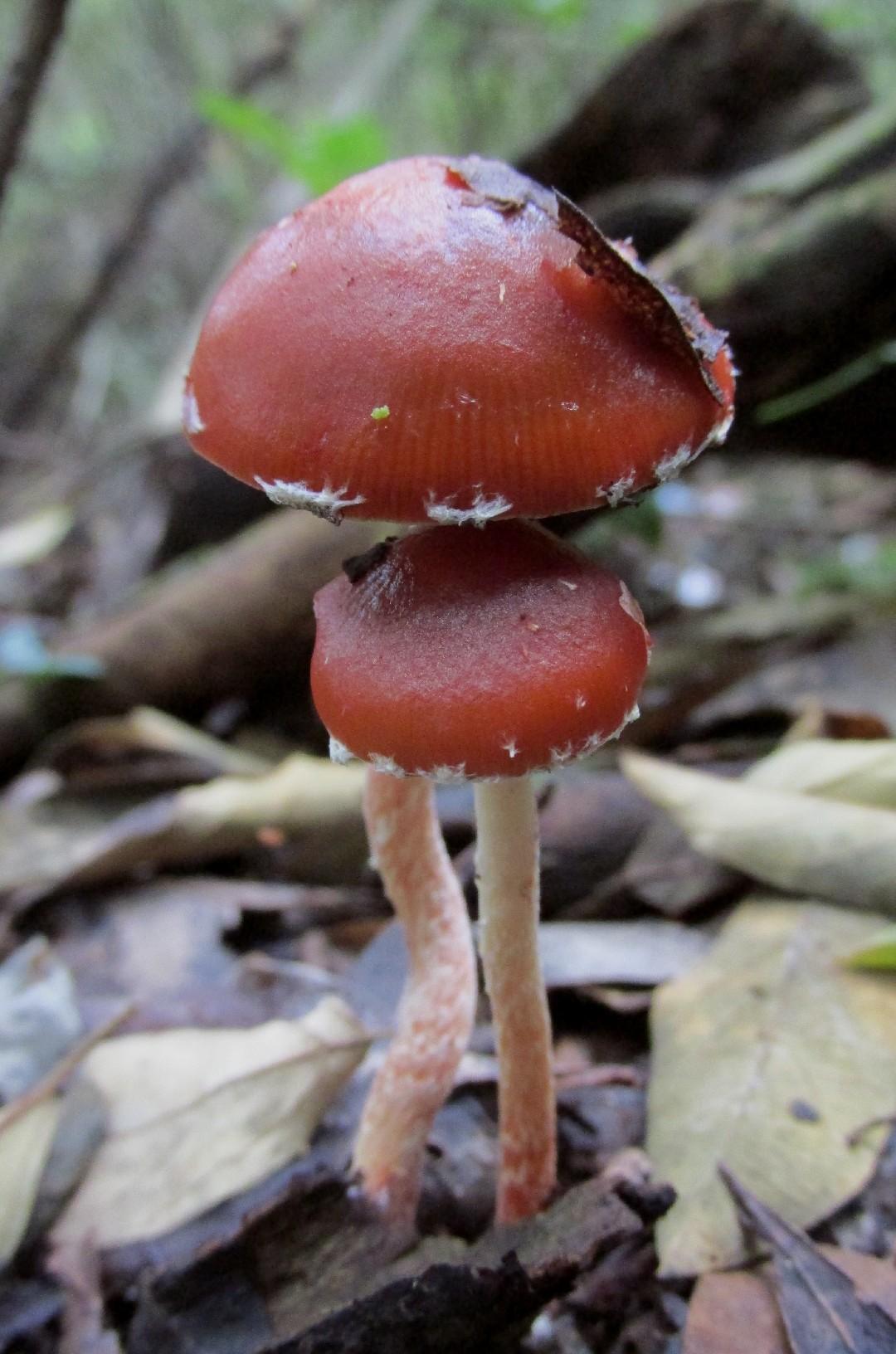
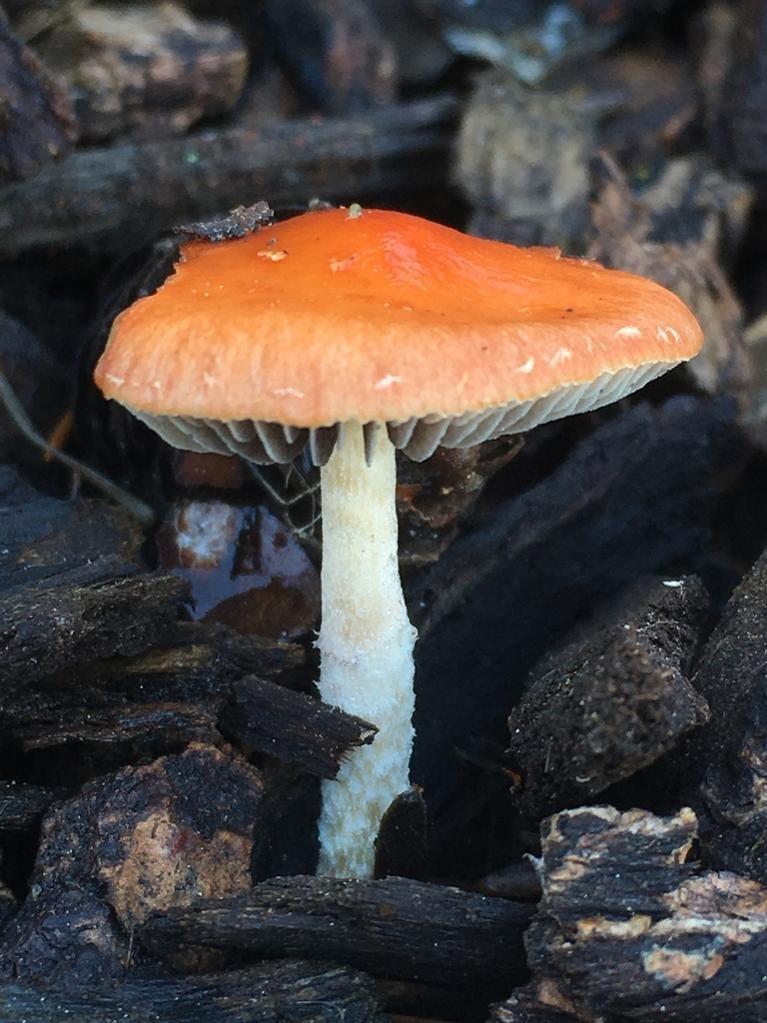
This vibrant fungi, often found on woodchip beds and sandy pine soils in global coastal regions, is known as the redlead roundhead. Its origins are thought to be in Australia. While visually appealing, consumption is ill-advised; it possesses a bitter taste, is toxic, indigestible, and is likely to induce gastrointestinal discomfort.
In This Article
Attributes of Redlead roundhead
Cap Diameter
2 - 6 cm
Height
3 - 9 cm
Cap
Cap 2 - 7 cm; convex, broadly bell-shaped, or nearly flat; reddish orange to brownish orange; sticky when fresh, soon dry, bald; the margin not lined
Cap Shape
Convex, Bell-shaped, Flat
Cap Surfaces
Smooth, Slimy or slightly sticky
Gills
Attached; close; pale yellow, purplish gray to purple-black
Gill Attachment
Notched
Stem
Stem 3 - 5 cm long, up to 1 cm thick; equal; whitish to yellowish, staining reddish orange with maturity; dry, bald or finely hairy
Stem Shapes
Cylindrical
Stem Surfaces
Smooth to slightly fibrous
Flesh
Whitish; unchanging when sliced
Ring
With Ring
Spore Print Color
Purple-brown
Odor
Mildly mushroomy but not distinctive.
Body Color
BrownYellowRedWhiteOrange
Flesh Bruises
Discolor to pink or red
Growth Form
Scattered, Gregarious
Nutrient Gathering
Saprophytic
Substrate
On soil, Wood Chips or Mulch
You can find Redlead roundhead by these plants
Lindens
Occurence Habitats
Disturbed Lands
Species Status
Common
Endangered Species
No
Scientific Classification of Redlead roundhead
Phylum
Club fungi
Class
Mushroom-forming fungi
Order
Gilled fungi
Family
Strophariaceae
Genus
Leratiomyces
Toxicity and Edibility of Redlead roundhead
Is Redlead roundhead Toxic?
While the redlead roundhead has generally been regarded as edible by most experts, an increasing number of accounts indicate that this appealing fungus can cause stomach upset in certain individuals. Consequently, it is advisable not to gather or consume the redlead roundhead, and it's best to steer clear of it.