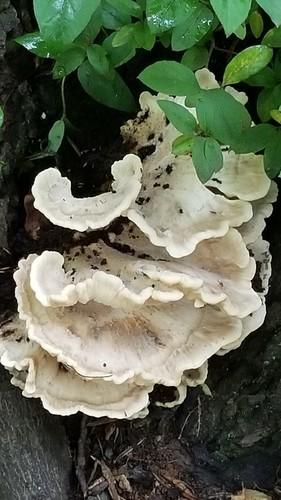
Giant polypore
Meripilus giganteus
A species of Meripilus.
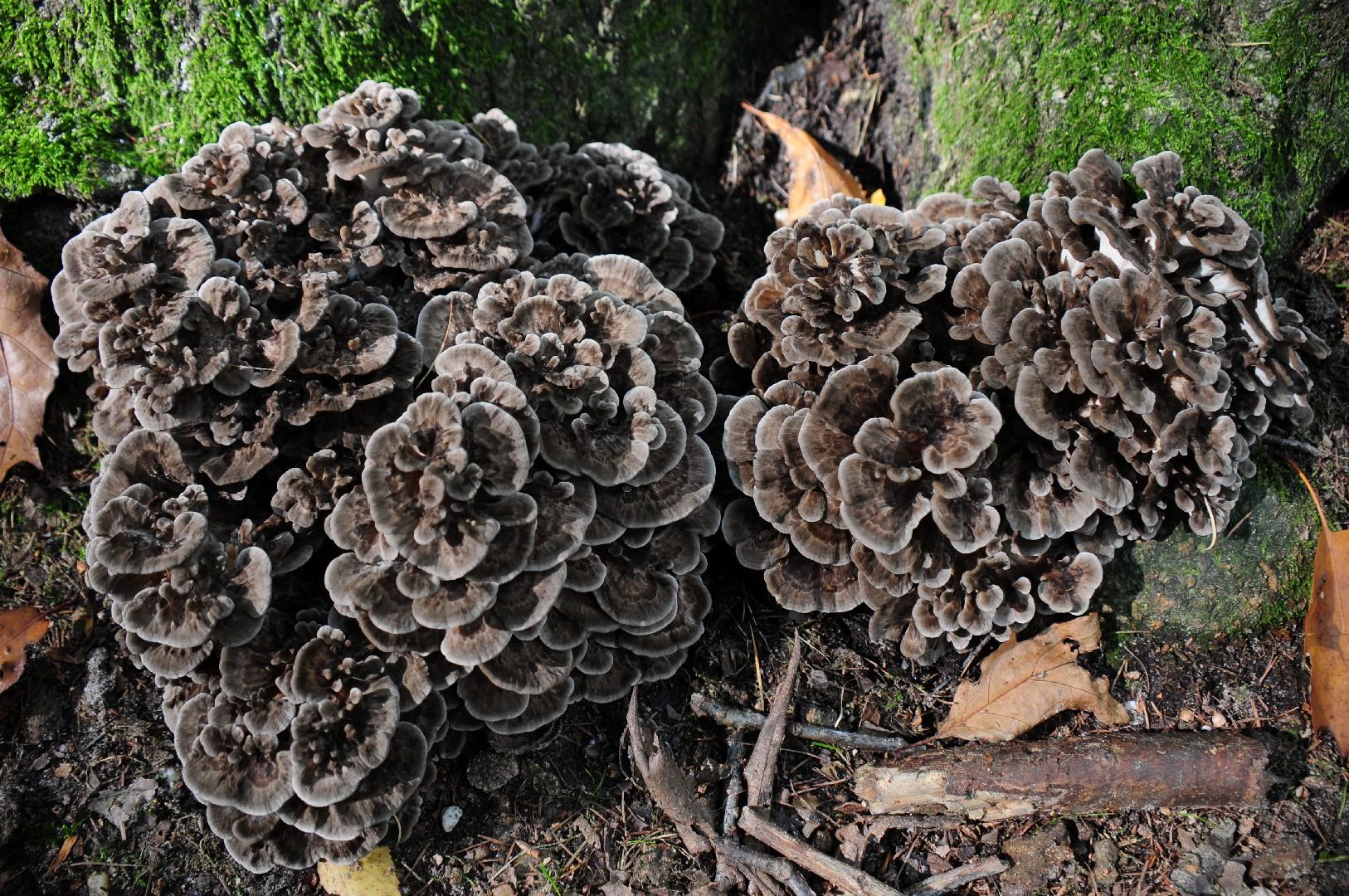
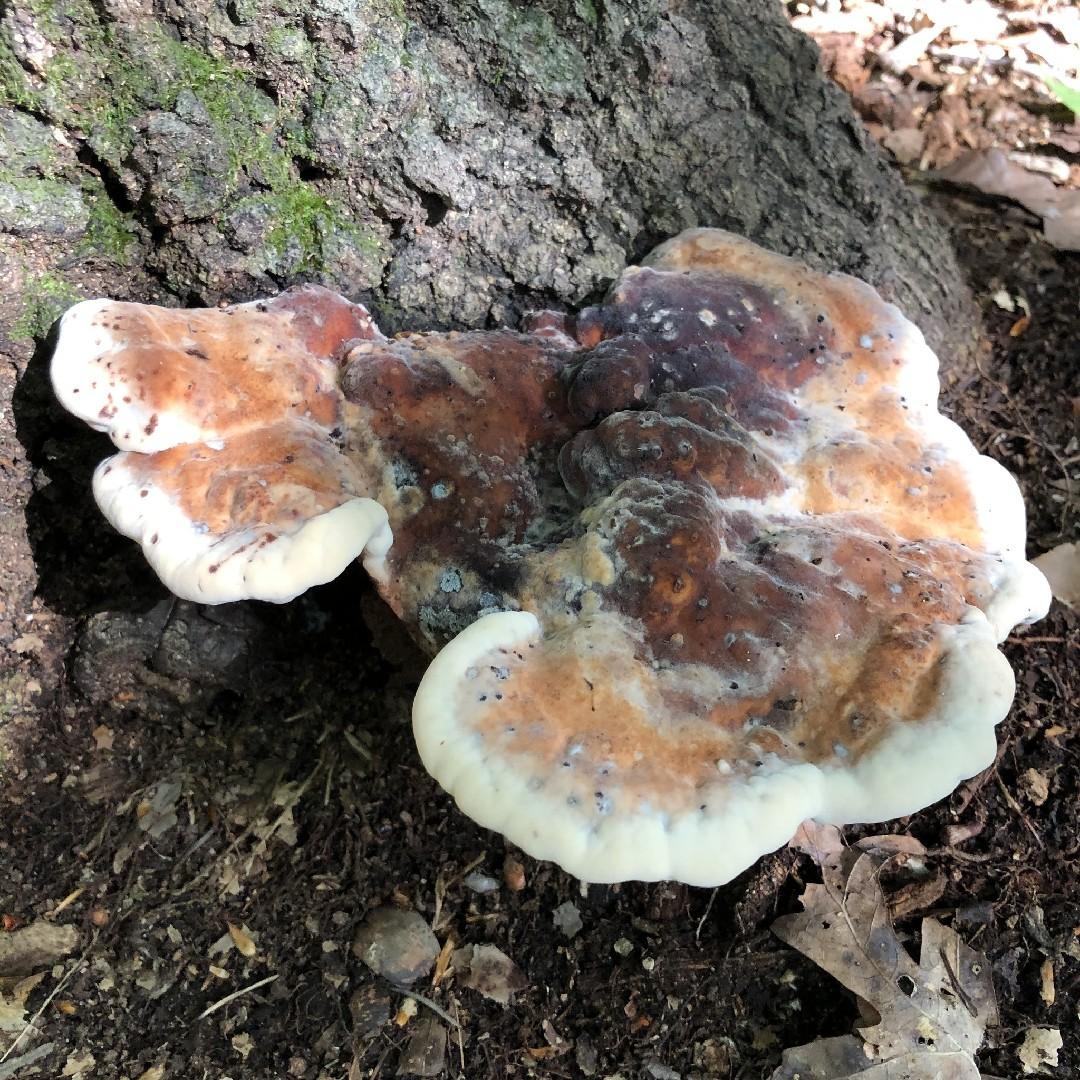
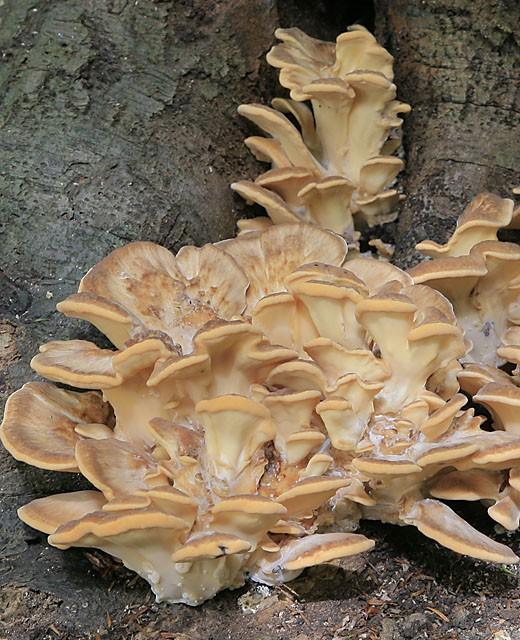
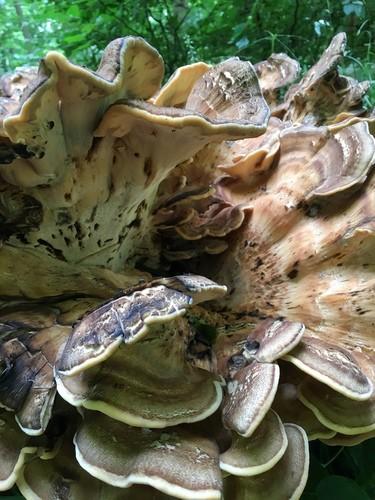
Meripilus giganteus, commonly known as the giant polypore, is a resilient shelf or bracket fungus. This species thrives as a parasite on the roots, branches, or trunks of trees, particularly hardwoods, throughout the temperate zones of Europe and Asia. A very similar species, Meripilus sumstenei, inhabits North America, with some authorities considering the two to be the same species.
In This Article
Attributes of Giant polypore
Cap Diameter
10 - 50 cm
Height
10 - 30 cm
Cap
Individual cap up to 10 - 50 cm; fan-shaped; pale tan, darkens in age; finely fibrillose with tiny scales; quickly darkens black when bruised or injured
Flesh
Coarse
Ring
Ringless
Spore Print Color
White
Odor
Mildly mushroomy, not distinctive.
Body Color
BrownBronze
Flesh Bruises
Discolor to gray or black
Growth Form
Clustered
Nutrient Gathering
Saprophytic, Parasitic
Substrate
Wood of Living Trees, Dead Woods
You can find Giant polypore by these plants
European beech, Oaks
Occurence Habitats
Deciduous Woodland
Species Status
Widely distributed in Europe.
Endangered Species
No
Scientific Classification of Giant polypore
Phylum
Club fungi
Class
Mushroom-forming fungi
Order
Shelf fungi
Family
Meripilaceae
Genus
Meripilus
Toxicity and Edibility of Giant polypore
Is Giant polypore Toxic?
While the substantial, fleshy caps of the giant polypore might resemble the palatable oyster mushroom in their early stages, consuming them is known to lead to digestive upset and gastrointestinal issues for some individuals. Consequently, ingestion is not recommended.