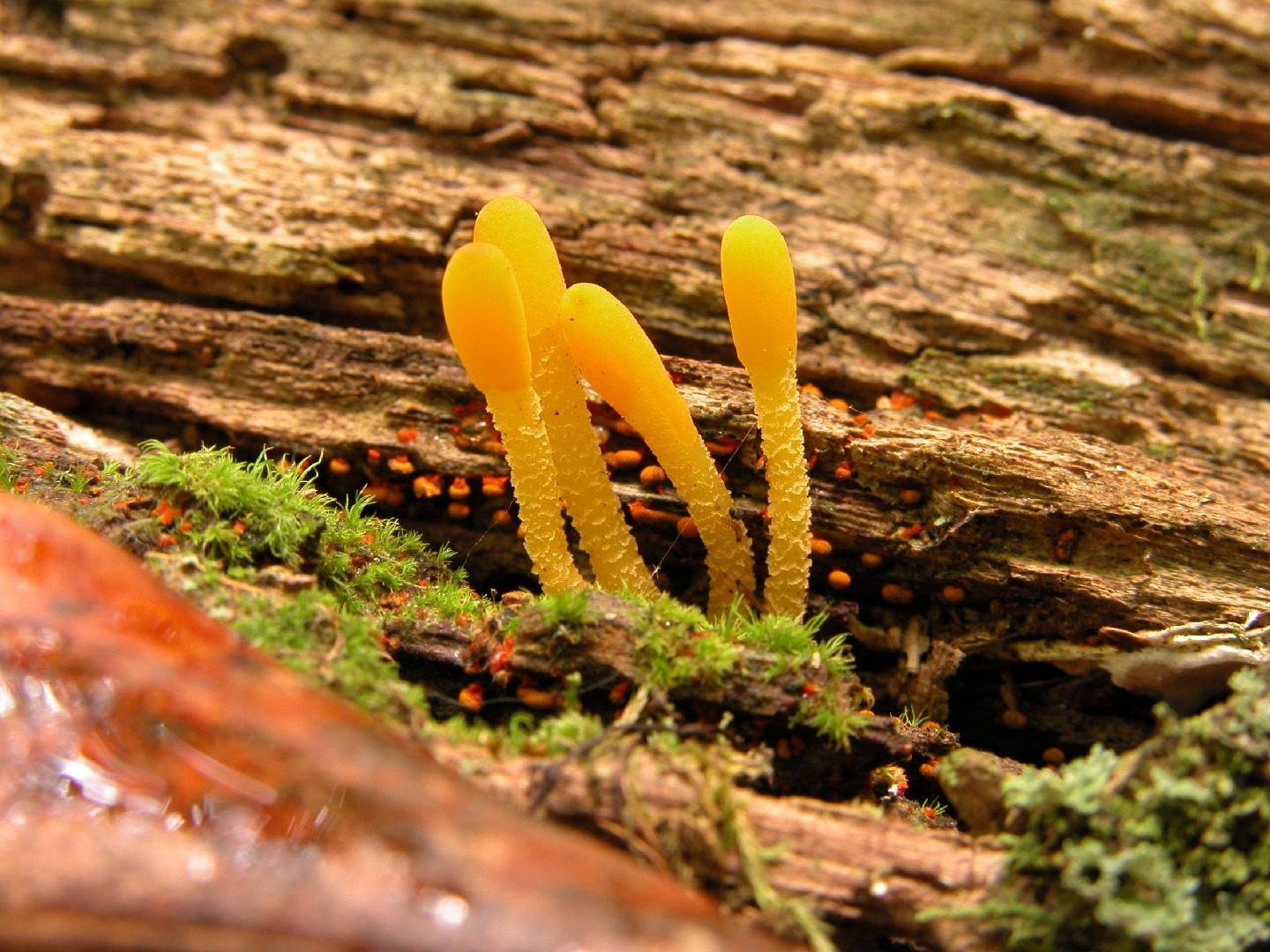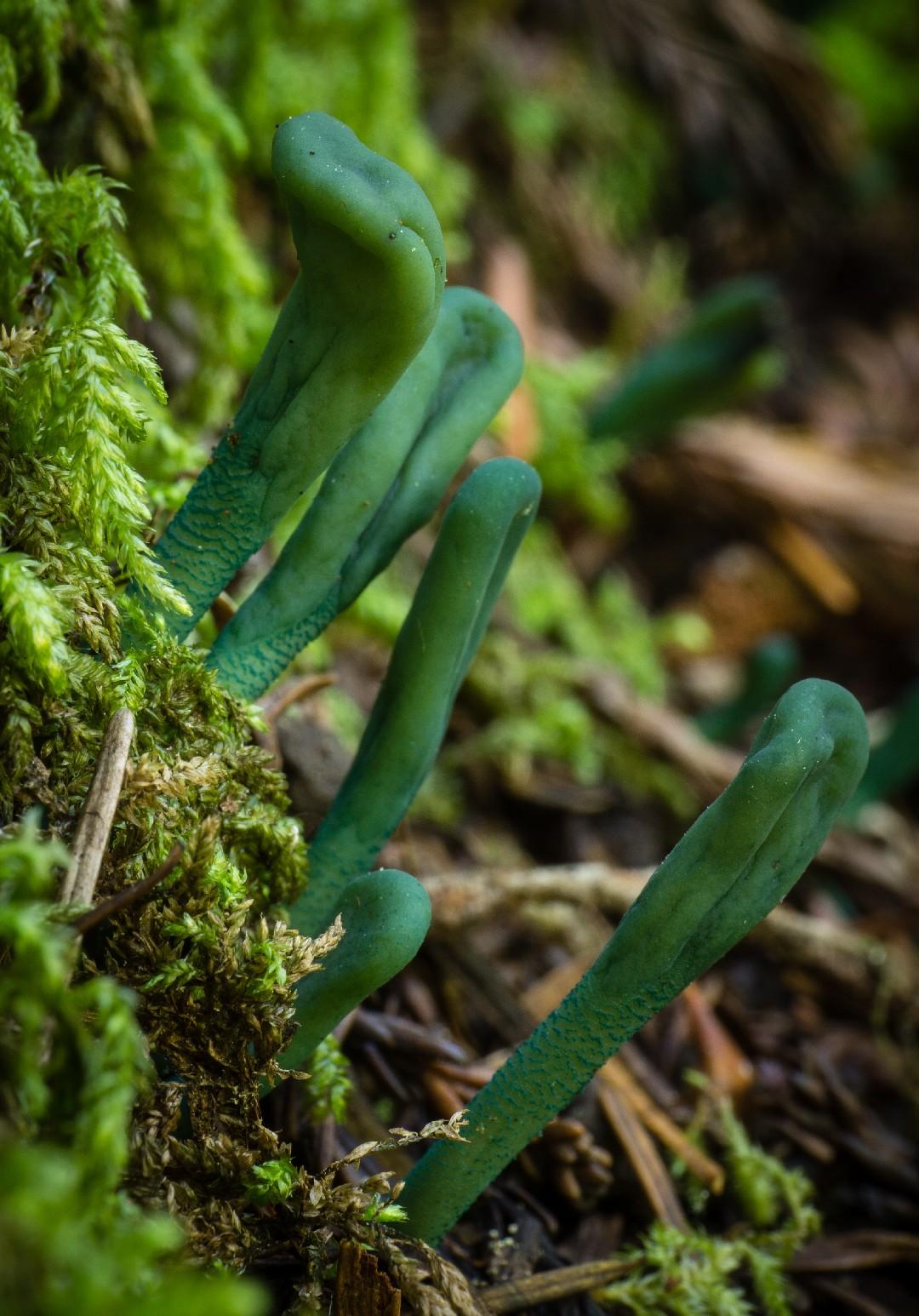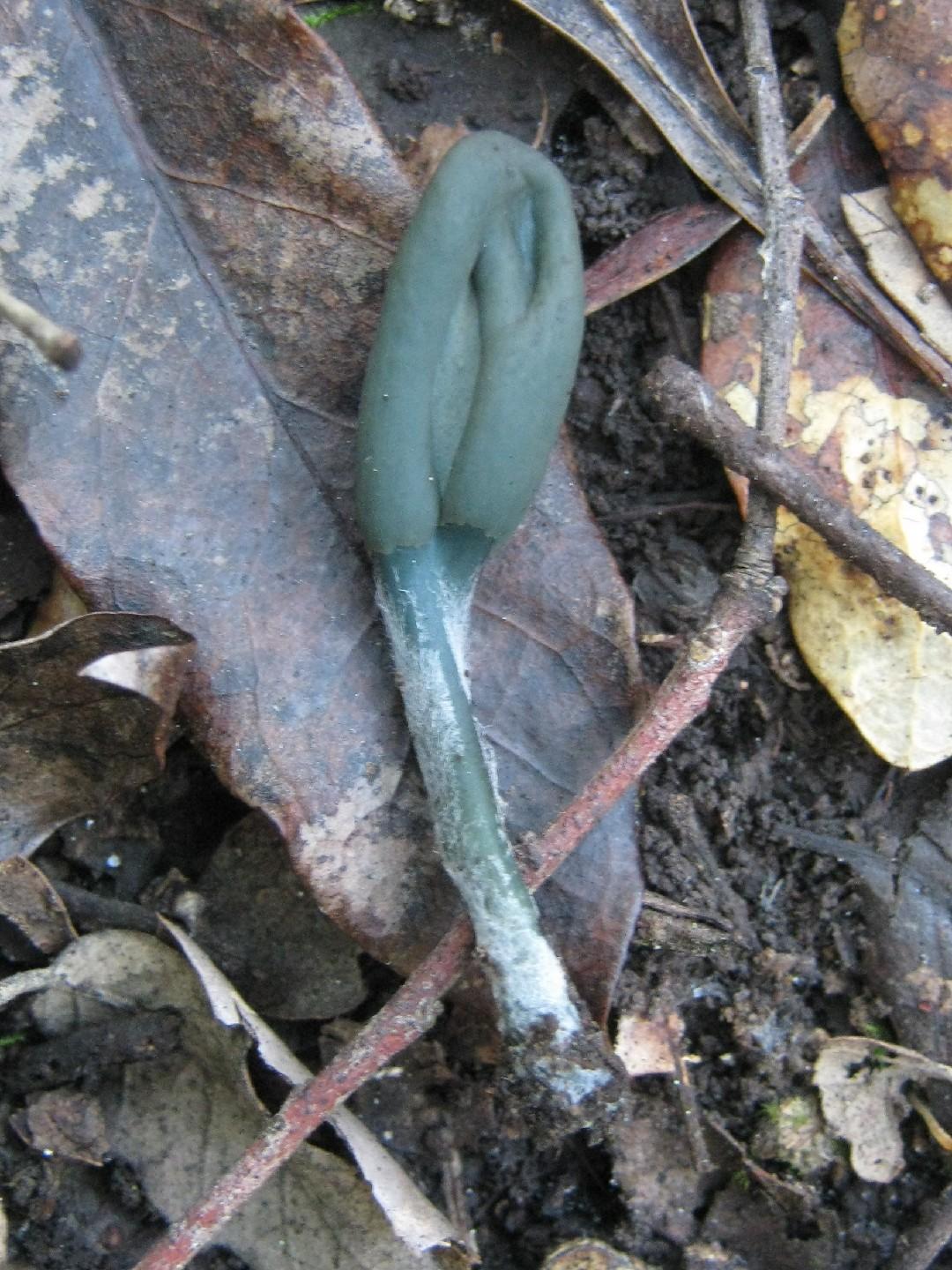
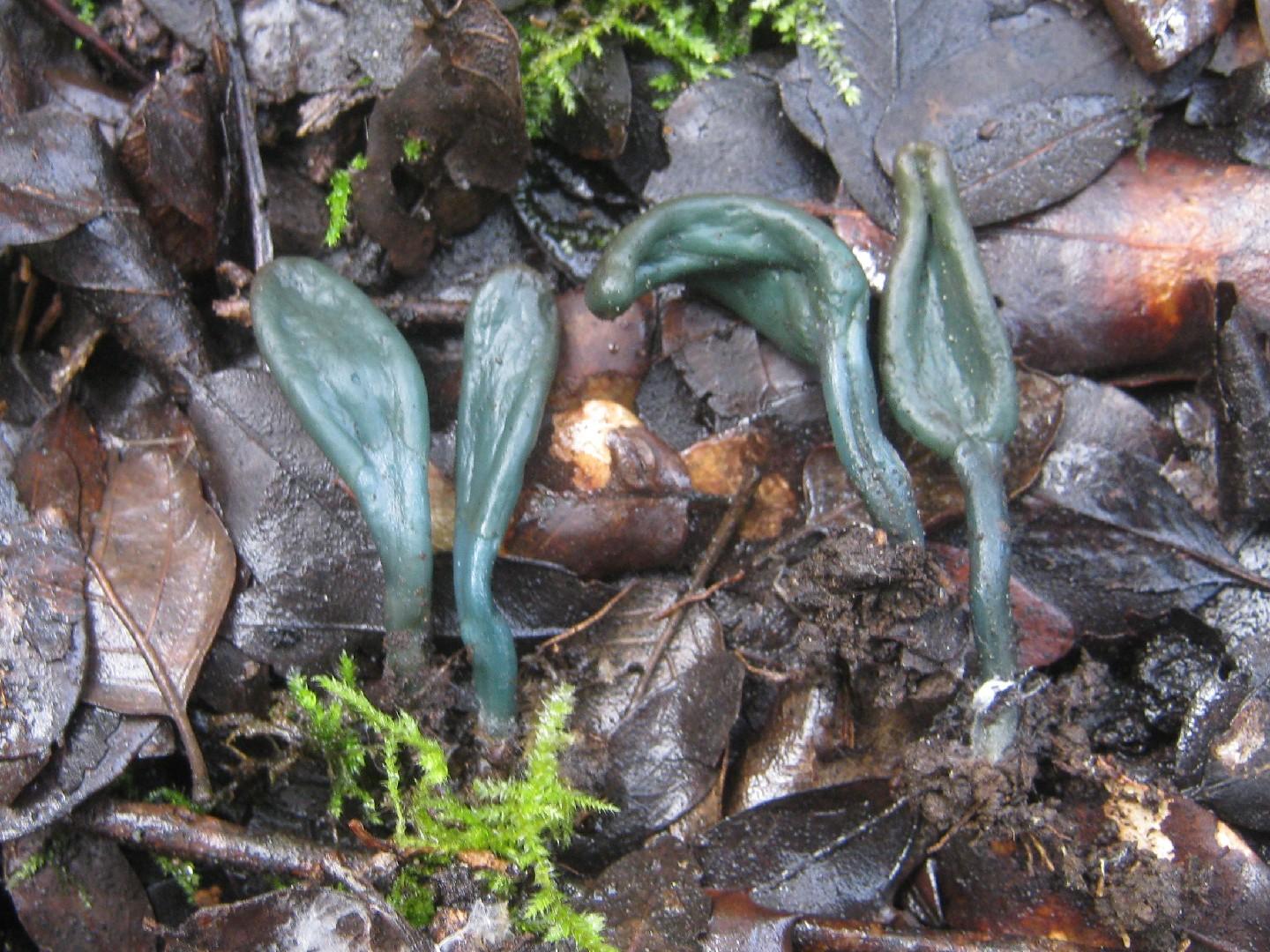
Olive earthtongue
Microglossum olivaceum
A species of Microglossum.
The olive earthtongue is an easily recognizable fungus, notable for its petite, dark, and tongue-like growths that emerge directly from the ground. It thrives in both deciduous and coniferous woodlands, showing a clear preference for damp yet well-drained environments, and flourishes during cooler periods. This organism plays a crucial ecological role by aiding in the breakdown of fallen leaves and thereby enriching the soil.
In This Article
Attributes of Olive earthtongue
Cap Diameter
2 - 5 mm
Height
2 - 8 cm
Cap
2 - 5 mm wide; cylindric to club-shaped, sometimes becoming somewhat flattened, grooved, or irregular; dull yellow to yellowish brown; bald
Cap Surfaces
Smooth
Stem
Stem cylindric; sometimes glossy olive to brown, or occasionally blue-green; bald, smooth
Stem Shapes
Cylindrical
Stem Surfaces
Smooth
Flesh
Brownish to yellowish; unchanging when sliced
Ring
Ringless
Spore Print Color
White
Odor
Mild, nondescript with no significant characteristic.
Body Color
BrownYellow
Flesh Bruises
The flesh or milk does not discolor when bruised or cut.
Growth Form
Solitary, Gregarious
Nutrient Gathering
Saprophytic
Substrate
On soil, Mosses
Occurence Habitats
Deciduous Woodland, Meadows
Species Status
Widely distributed in North America
Endangered Species
No
Scientific Classification of Olive earthtongue
Phylum
Sac fungi
Class
Geoglossomycetes
Order
Geoglossales
Family
Earth tongues
Genus
Microglossum
Toxicity and Edibility of Olive earthtongue
Is Olive earthtongue Toxic?
Toxicity information is not available for this mushroom. Always consult with an expert before consuming any wild mushrooms.