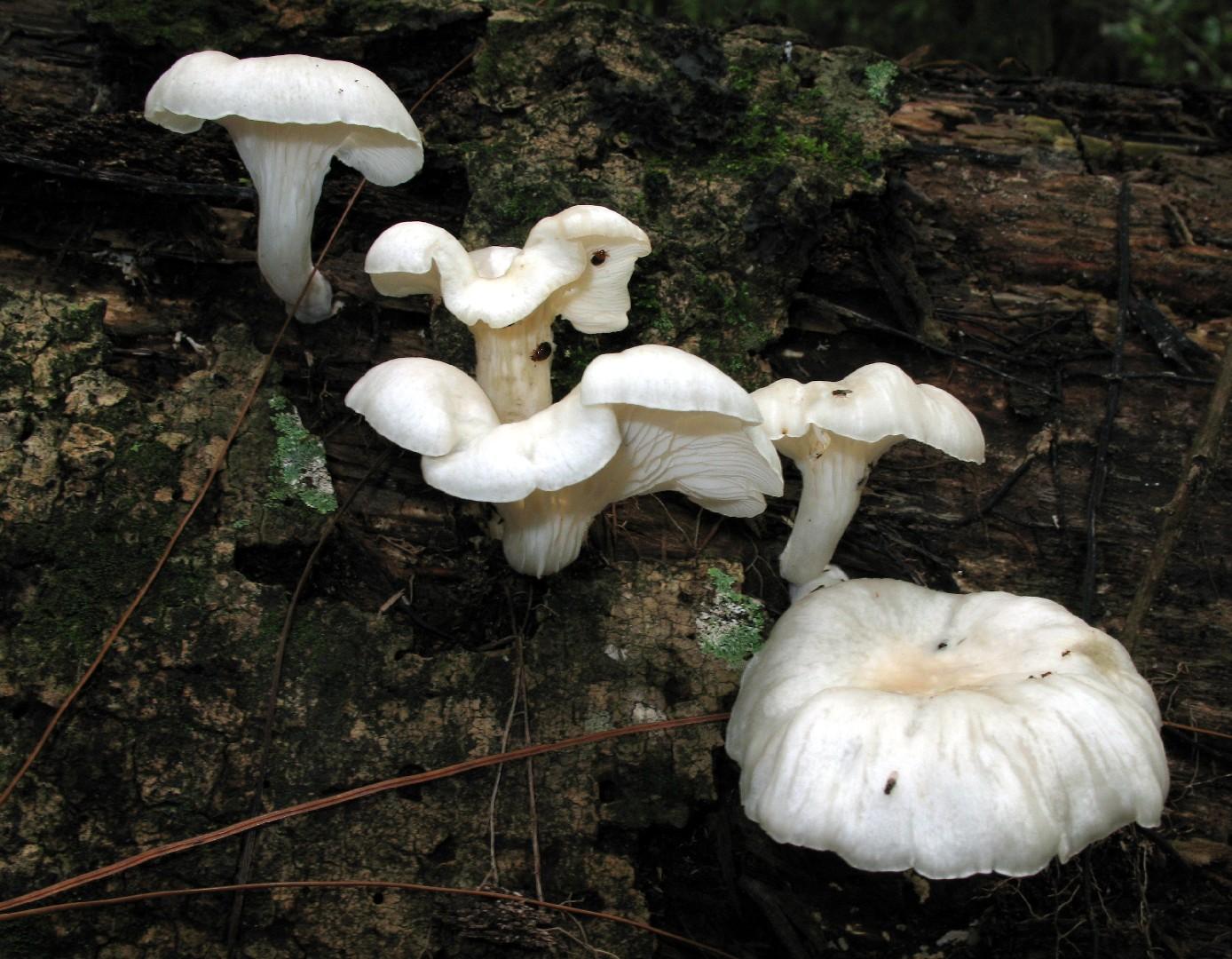
Lung oyster
Pleurotus pulmonarius
A species of Oysters. Also known as Indian oyster, Phoenix mushroom, Tree oyster.
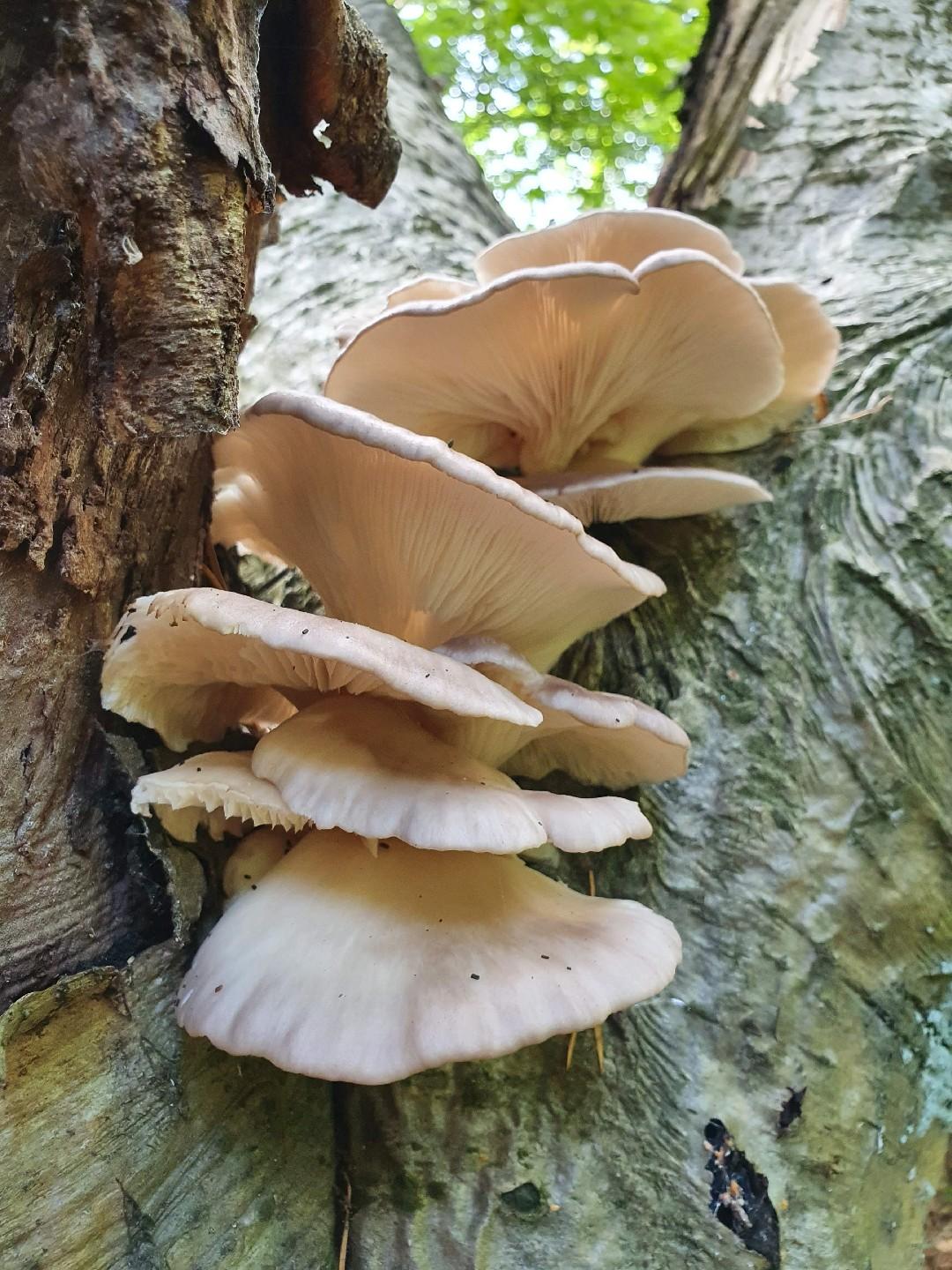
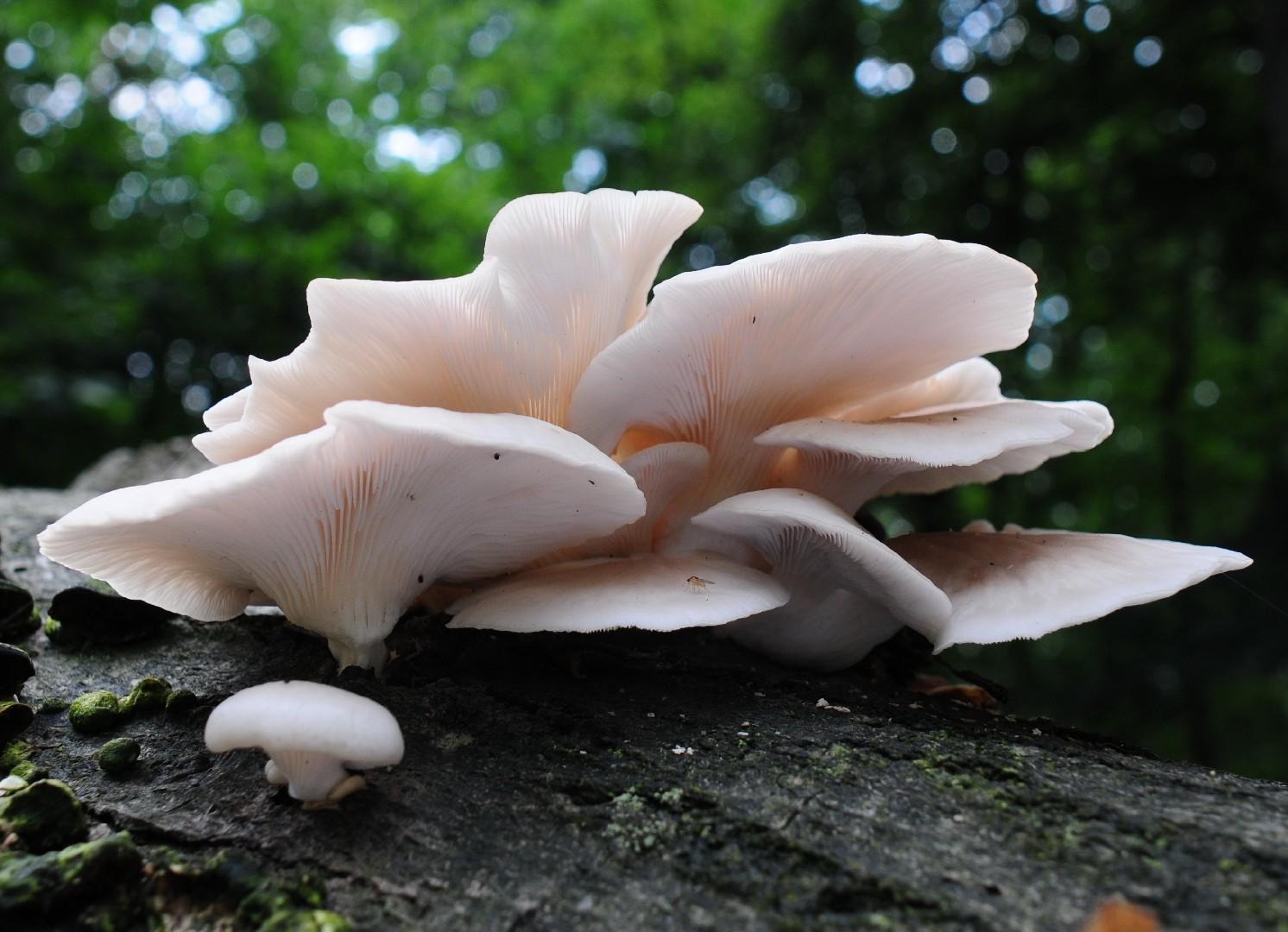
Found throughout the northern hemisphere, lung oyster mushrooms naturally sprout in layered, shelf-like formations on the wood of broadleaf trees, whether on branches, trunks, or fallen logs. Their cultivation is straightforward on alternative media such as used coffee grounds and sawdust, making them suitable for commercial ventures. While generally deemed safe for consumption, allergic reactions are possible in some individuals.
In This Article
Attributes of Lung oyster
Cap Diameter
3 - 10 cm
Height
2 - 6 cm
Cap
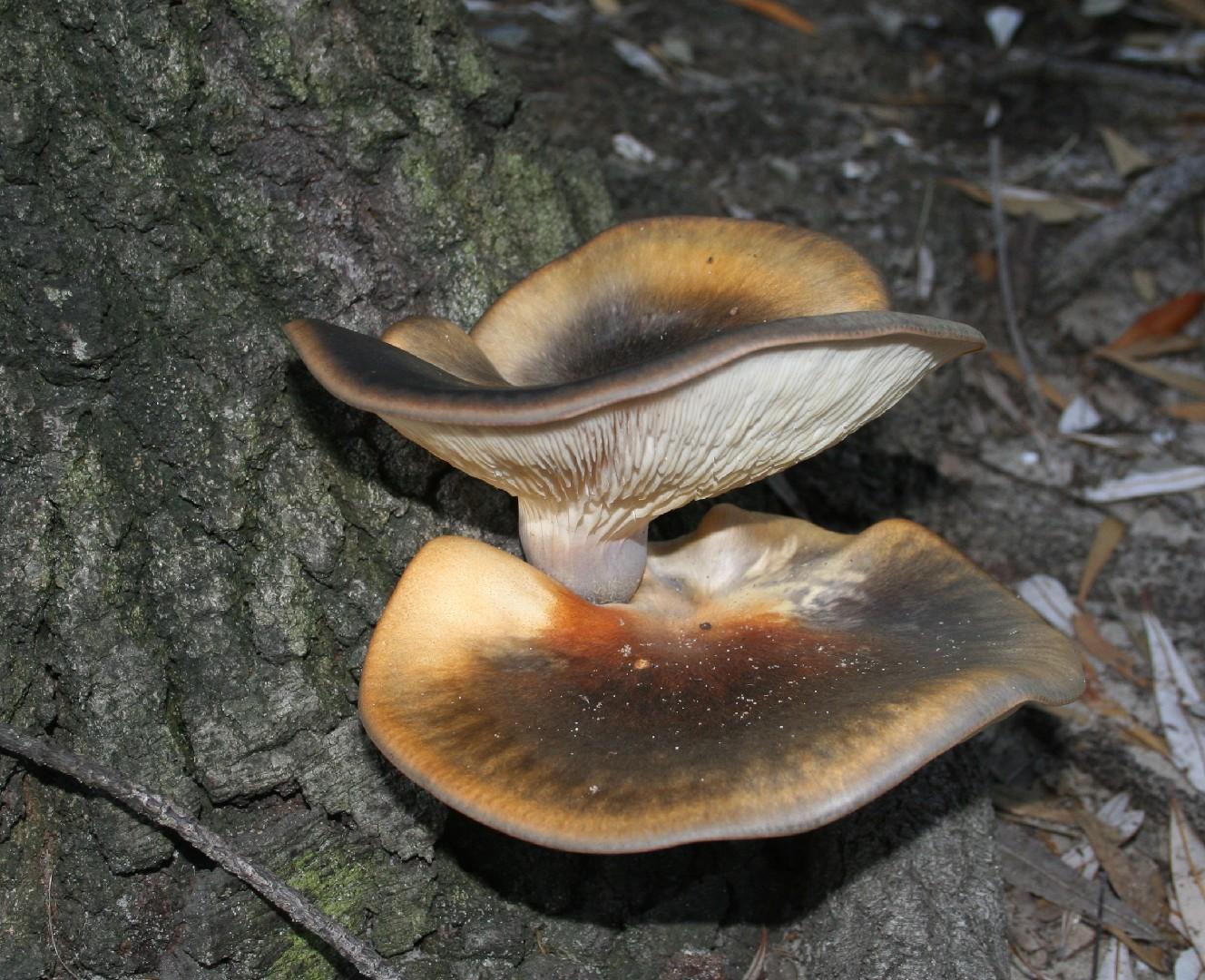
3 - 10 cm across; convex to flat, fan-shaped; whitish to pale tan; margin inrolled when young
Cap Shape
Convex, Flat, Depressed
Cap Surfaces
Smooth, Slimy or slightly sticky
Gills
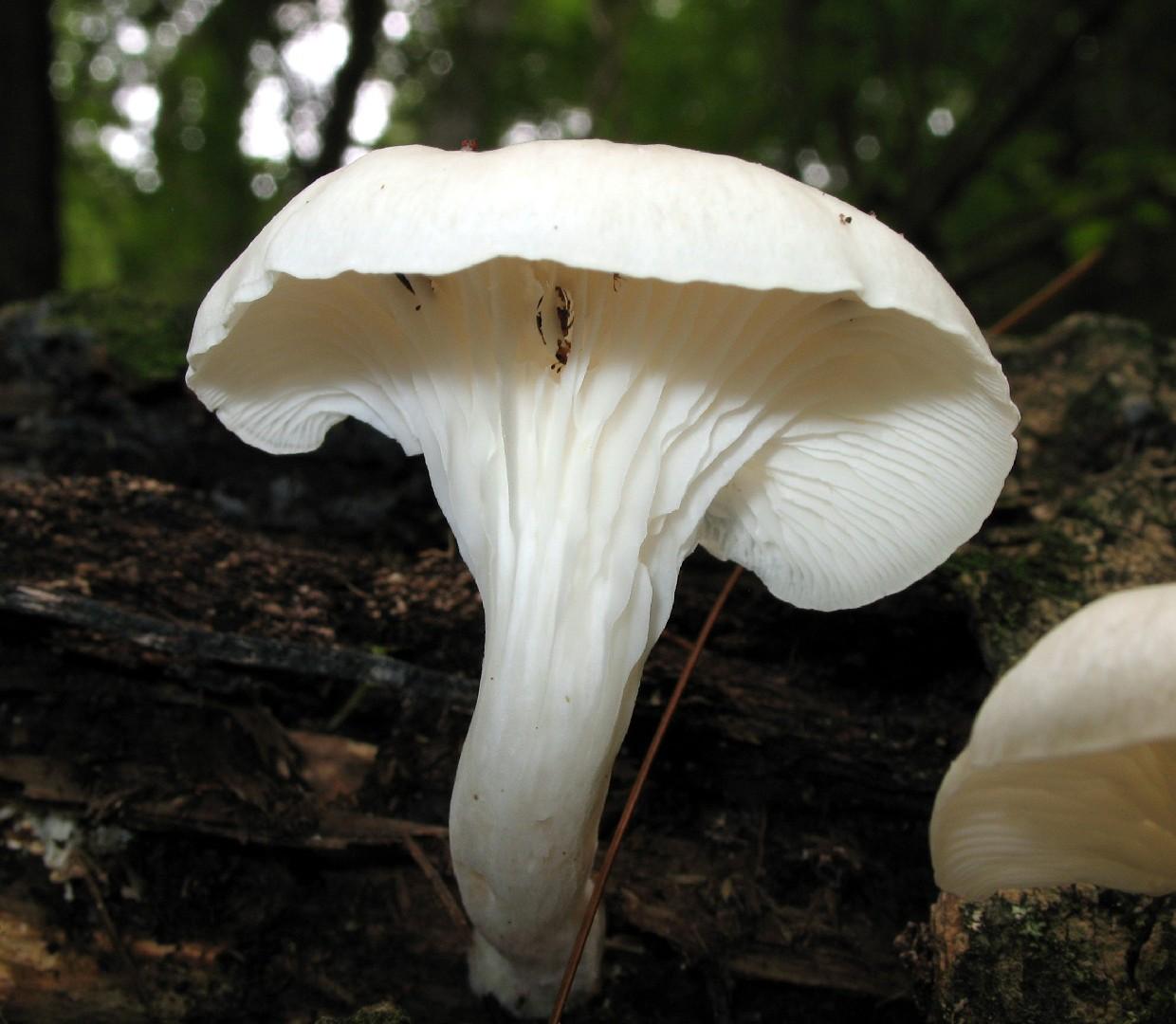
Decurrent; close, distant; whitish
Gill Attachment
Decurrent
Stem
1 - 4 cm long, 5 - 10 mm thick; eccentric, central; whitish; bald
Stem Shapes
Cylindrical
Stem Surfaces
Smooth
Flesh
Thick; white; unchanging colors when sliced
Ring
Ringless
Spore Print Color
Whitish, grayish, lilac
Odor
Mildly mushroomy, slightly anise-like.
Body Color
BrownYellowBronzeWhiteCream
Flesh Bruises
The flesh or milk does not discolor when bruised or cut.
Growth Form
Clustered
Nutrient Gathering
Saprophytic
Substrate
Dead Woods, Wood of Living Trees
You can find Lung oyster by these plants
Eastern cottonwood, European beech, Sorbus
Occurence Habitats
Deciduous Woodland
Species Status
Widely distributed in North America
Endangered Species
No
Scientific Classification of Lung oyster
Phylum
Club fungi
Class
Mushroom-forming fungi
Order
Gilled fungi
Family
The tree mushroom family
Genus
Oysters
Toxicity and Edibility of Lung oyster
Is Lung oyster Toxic?
Toxicity information is not available for this mushroom. Always consult with an expert before consuming any wild mushrooms.