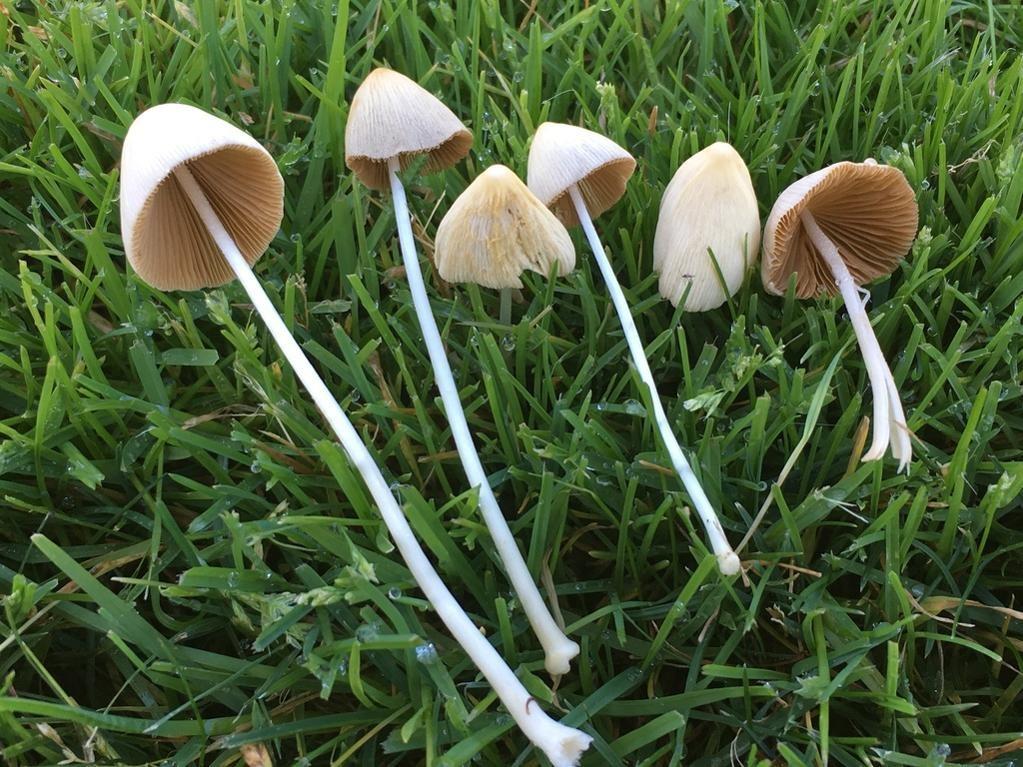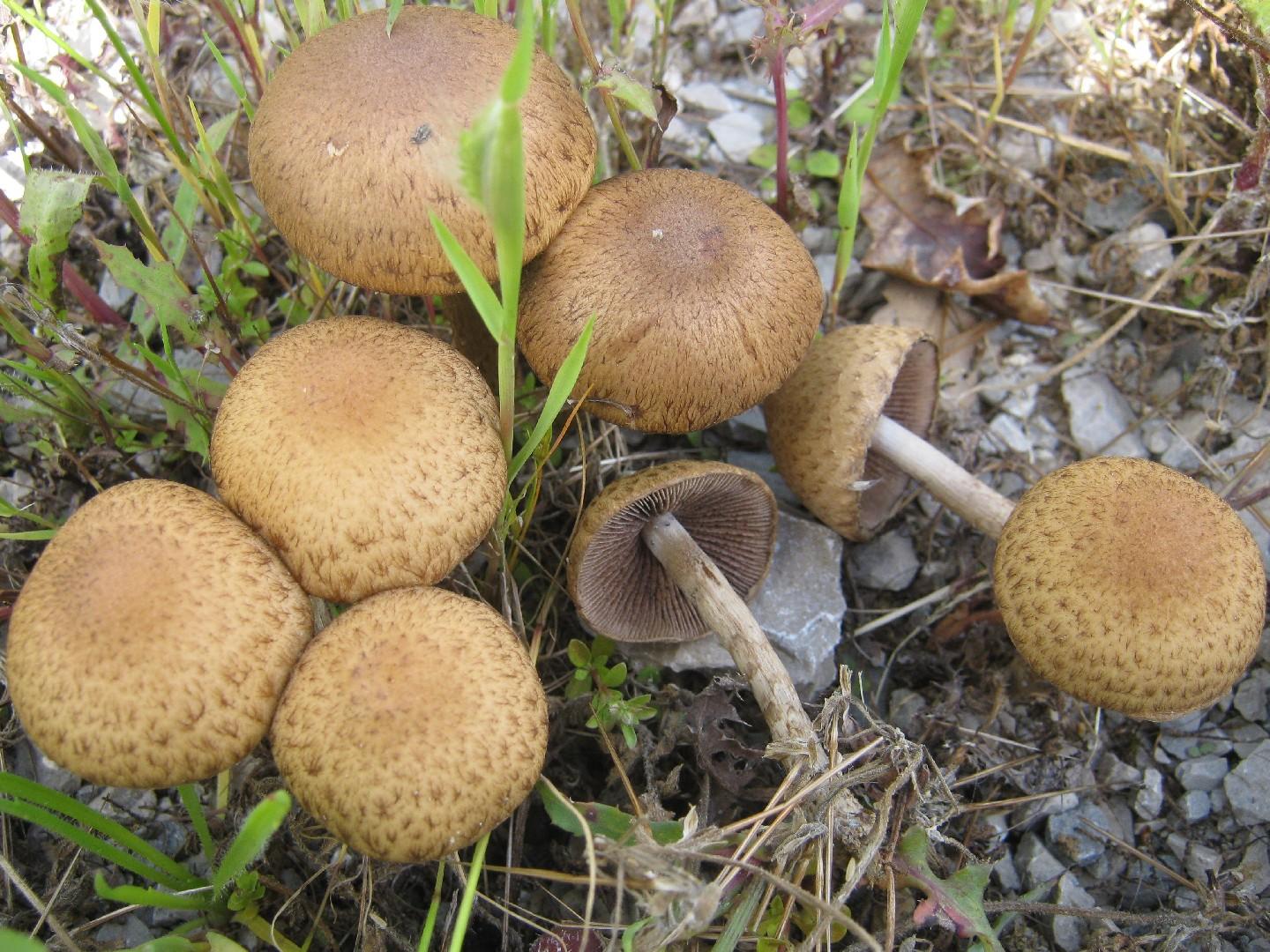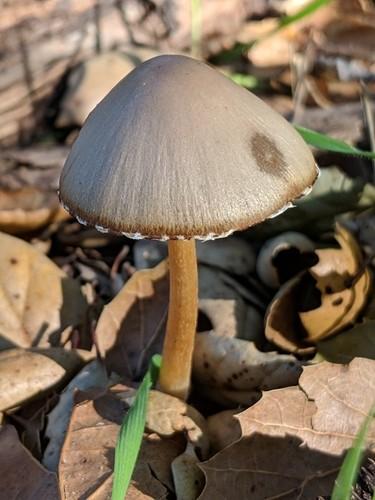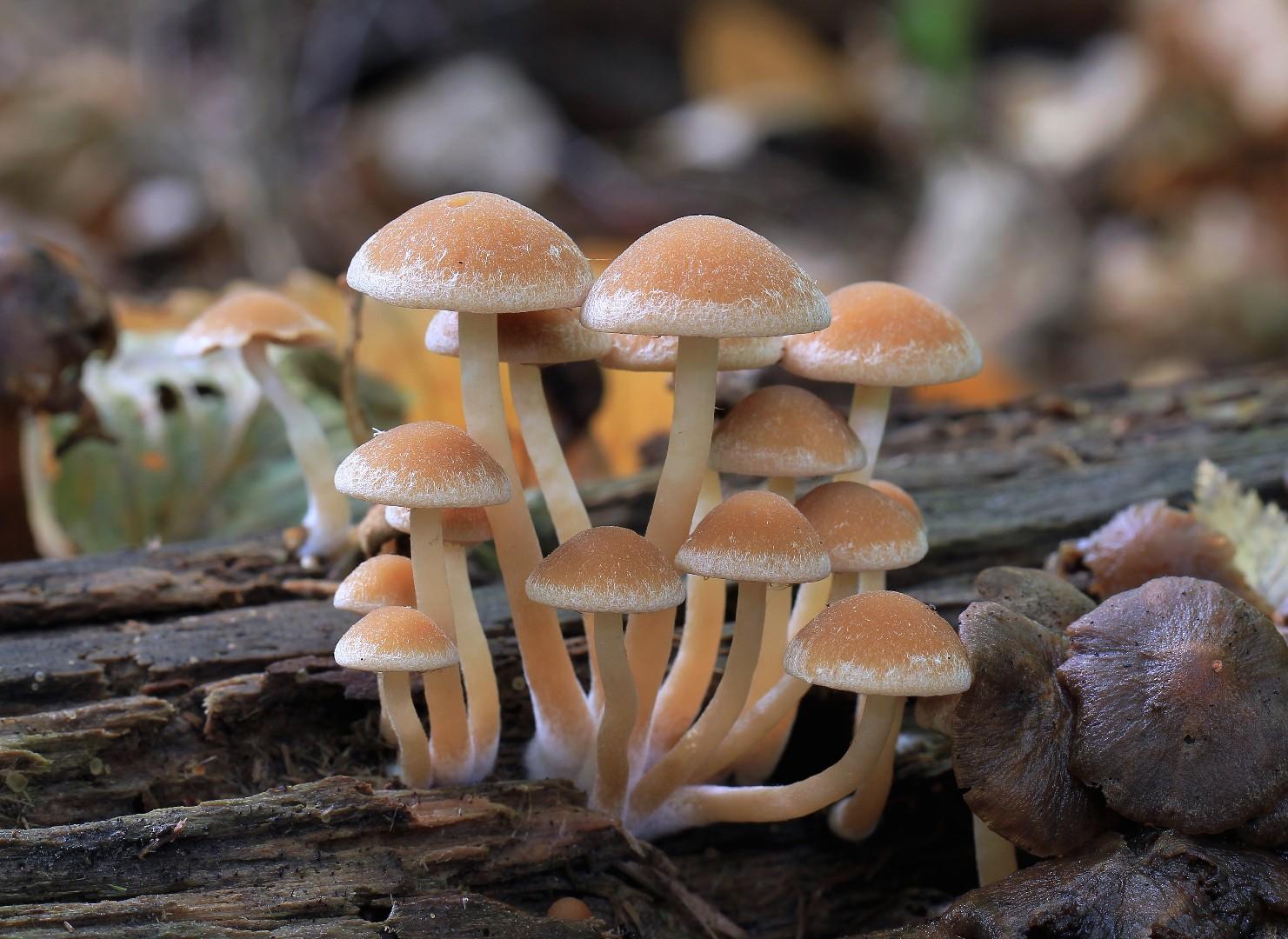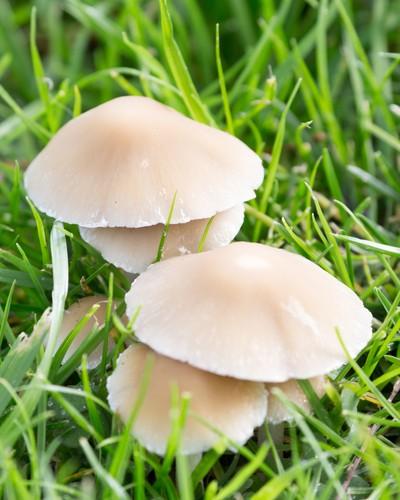


Pale brittlestem
Psathyrella candolleana
A species of Brittlestems. Also known as Suburban psathyrella.
This fragile small fungus is found throughout the northern hemisphere in forests, fields, and even gardens. Clusters of pale brittlestems emerge in shaded spots during the warmer months of summer and autumn. Their extreme delicacy is well-known—it's a challenge for foragers to transport an intact specimen home! Their caps transition from a youthful honey-brown hue to a pristine white as they mature.
In This Article
Attributes of Pale brittlestem
Cap Diameter
3 - 11 cm
Height
4 - 13 cm
Cap
3 - 11 cm; rounded-conical to broadly bell-shaped; honey yellow , pale brownish when dry; bald
Cap Shape
Convex, Bell-shaped, Flat, Central Bump
Cap Surfaces
Smooth, Visible lines or stripes
Gills
Adnexed; close or crowded; whitish to grayish, dark brown
Gill Attachment
Attached
Stem
4 - 13 cm long, 3 - 8 mm thick; equal, fragile, hollowing; white
Stem Shapes
Cylindrical
Stem Surfaces
Smooth
Flesh
Very thin; fragile; brownish to whitish
Ring
Ringless
Spore Print Color
Dark brown
Odor
Generally mild, not particularly distinctive.
Body Color
BrownYellowWhite
Flesh Bruises
The flesh or milk does not discolor when bruised or cut.
Growth Form
Solitary, Gregarious
Nutrient Gathering
Saprophytic
Substrate
On soil, Dead Woods
Occurence Habitats
Meadows, Deciduous Woodland
Species Status
Widespread and common
Endangered Species
No
Scientific Classification of Pale brittlestem
Phylum
Club fungi
Class
Mushroom-forming fungi
Order
Gilled fungi
Family
Coprinaceae
Genus
Brittlestems
Toxicity and Edibility of Pale brittlestem
Is Pale brittlestem Toxic?
Toxicity information is not available for this mushroom. Always consult with an expert before consuming any wild mushrooms.