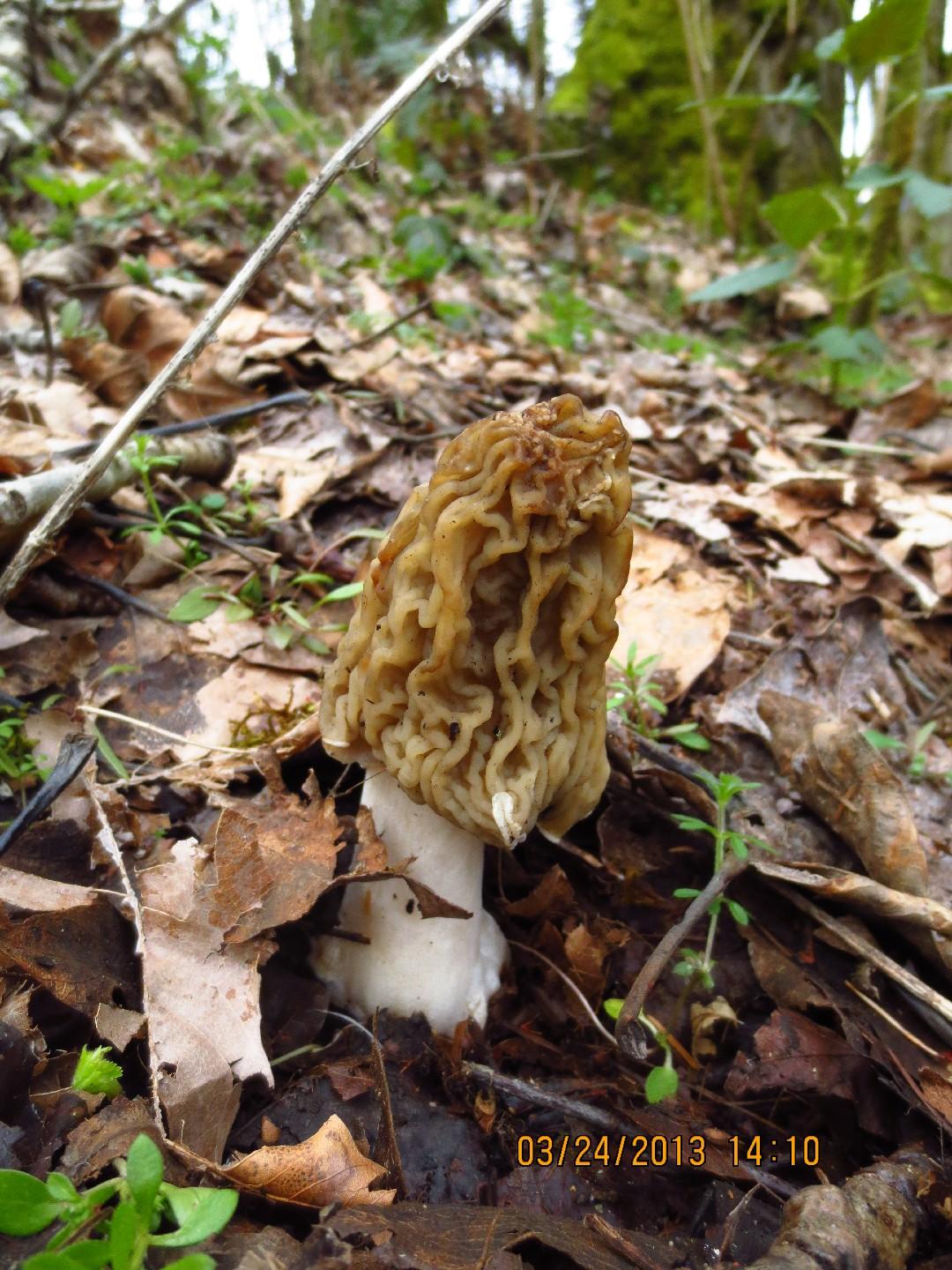
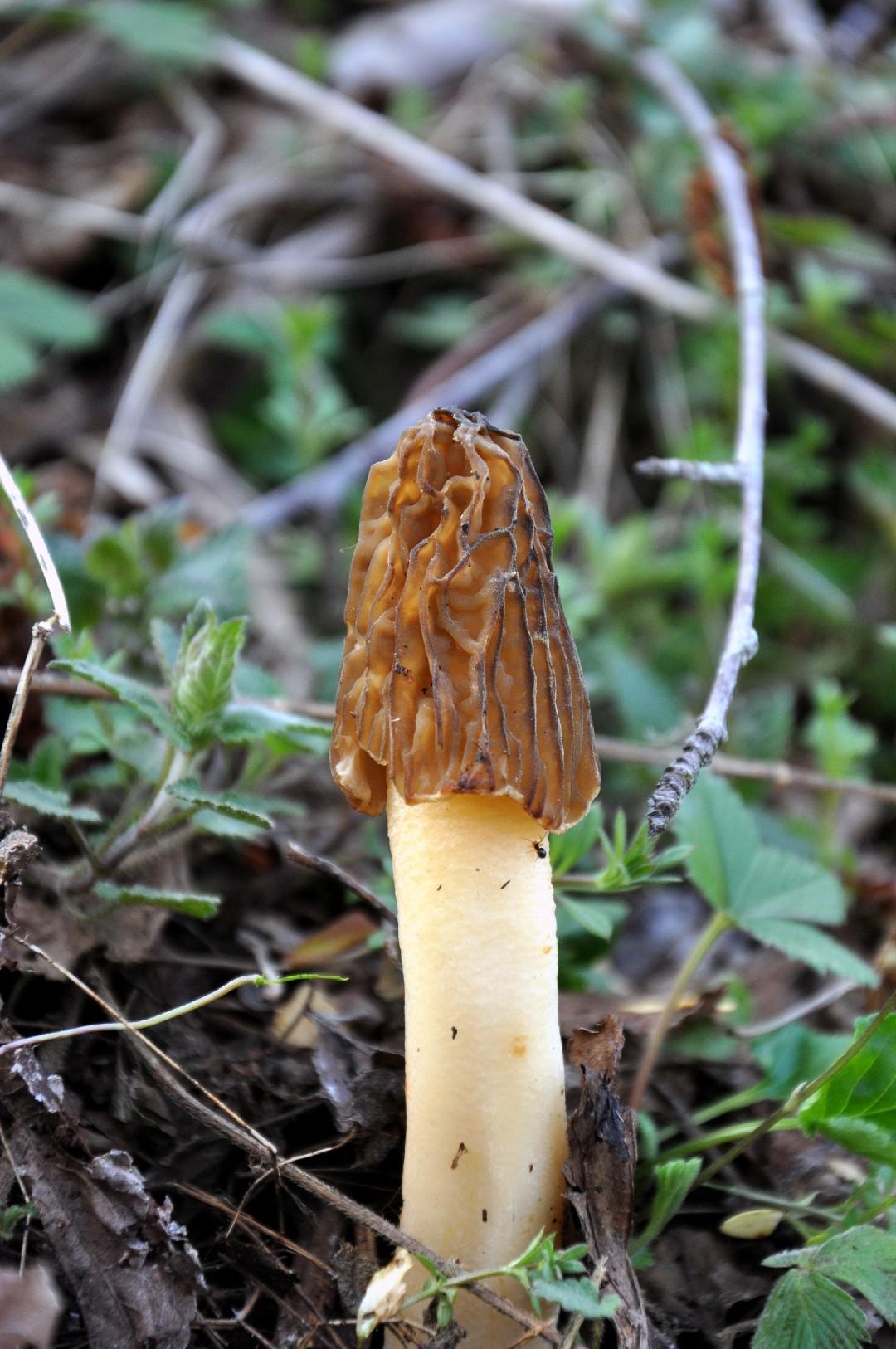
Early morel
Verpa bohemica
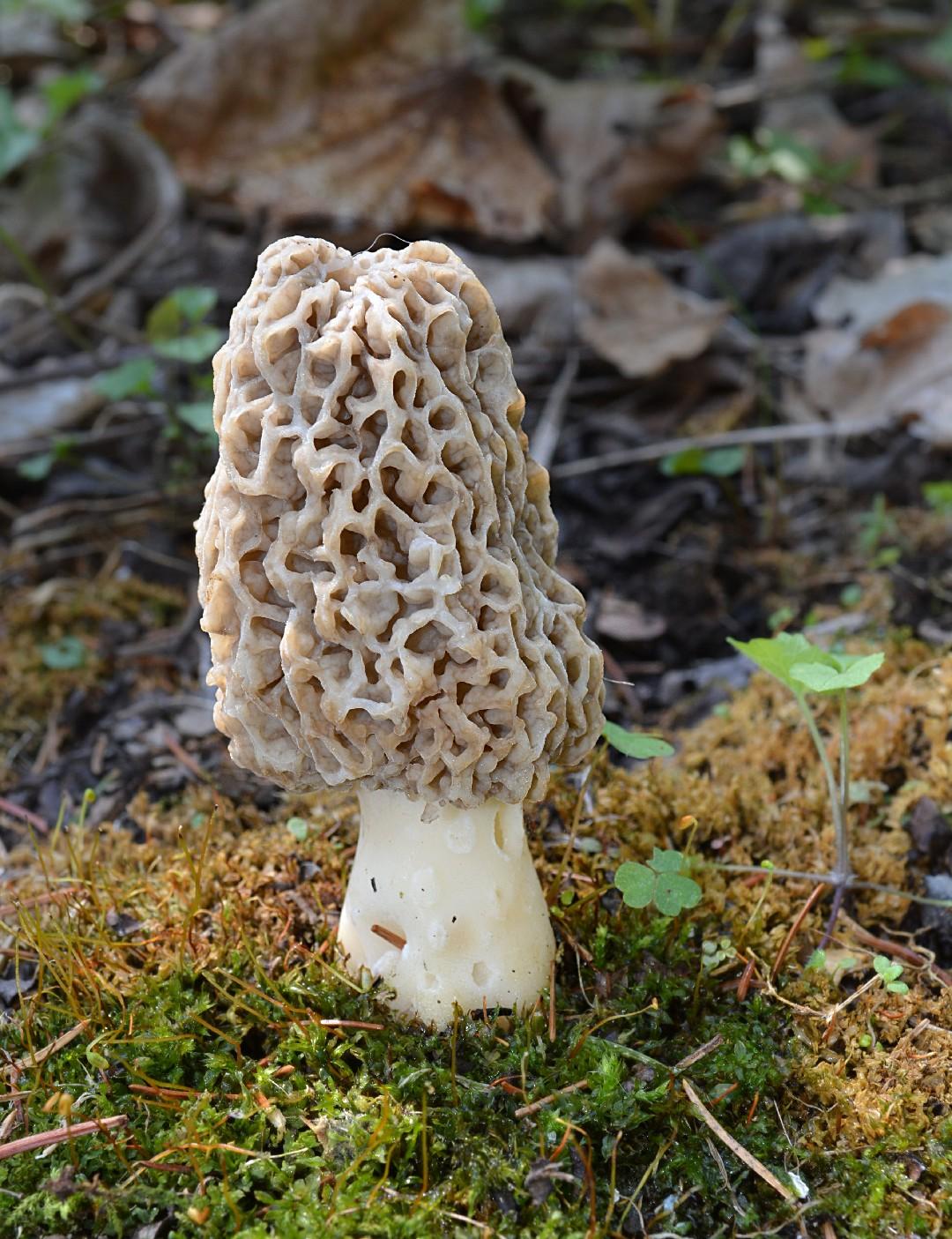
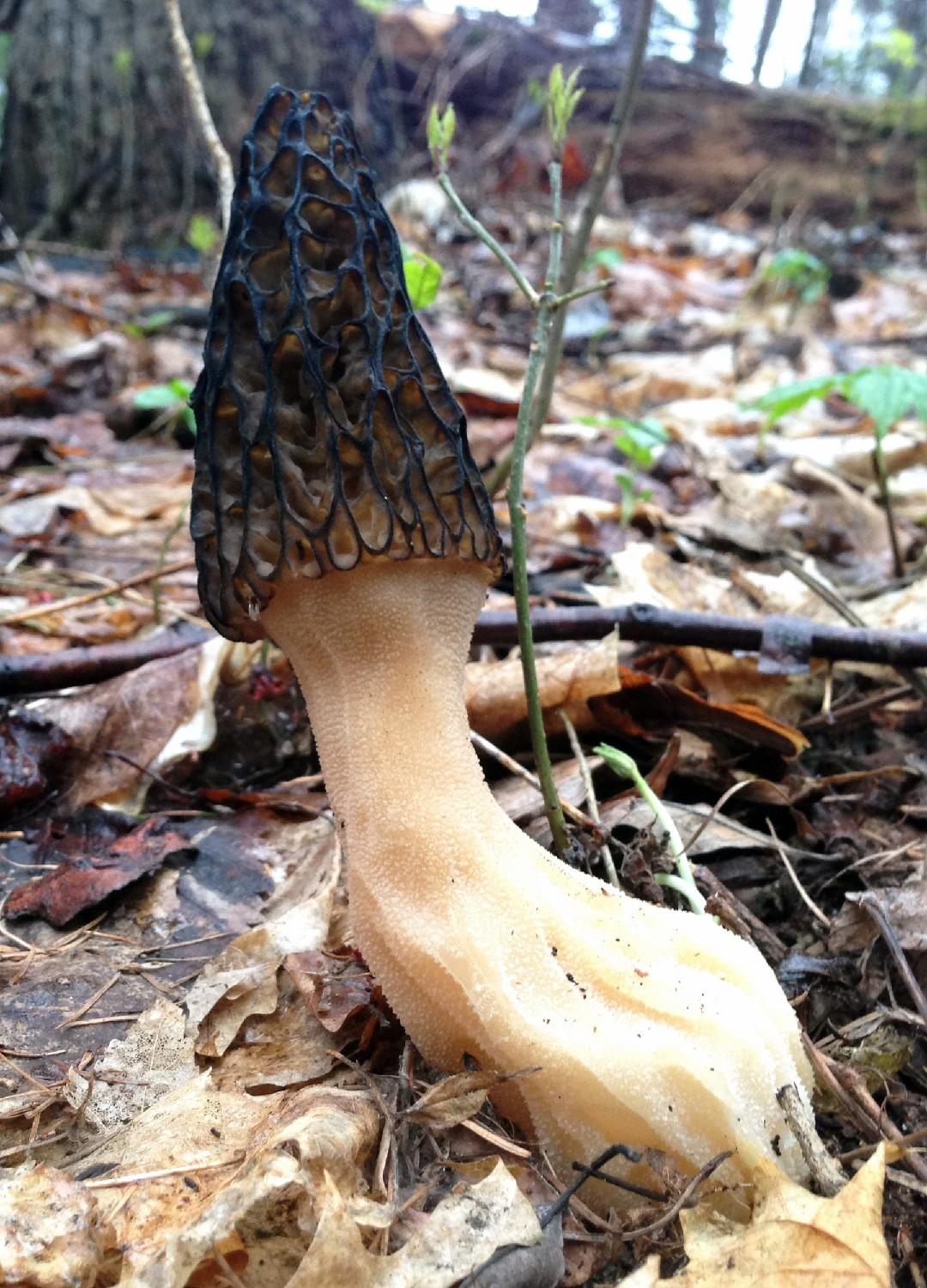
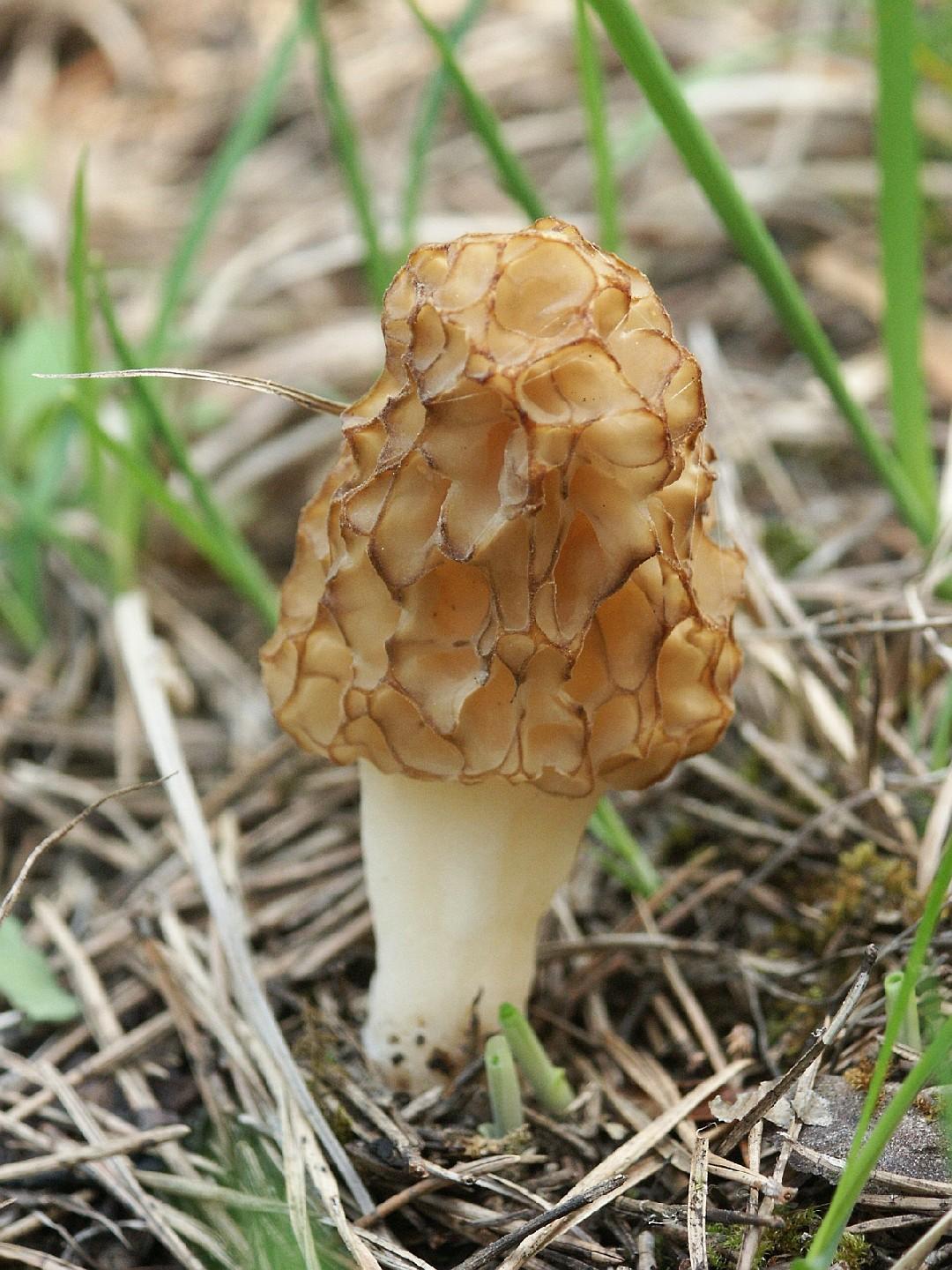
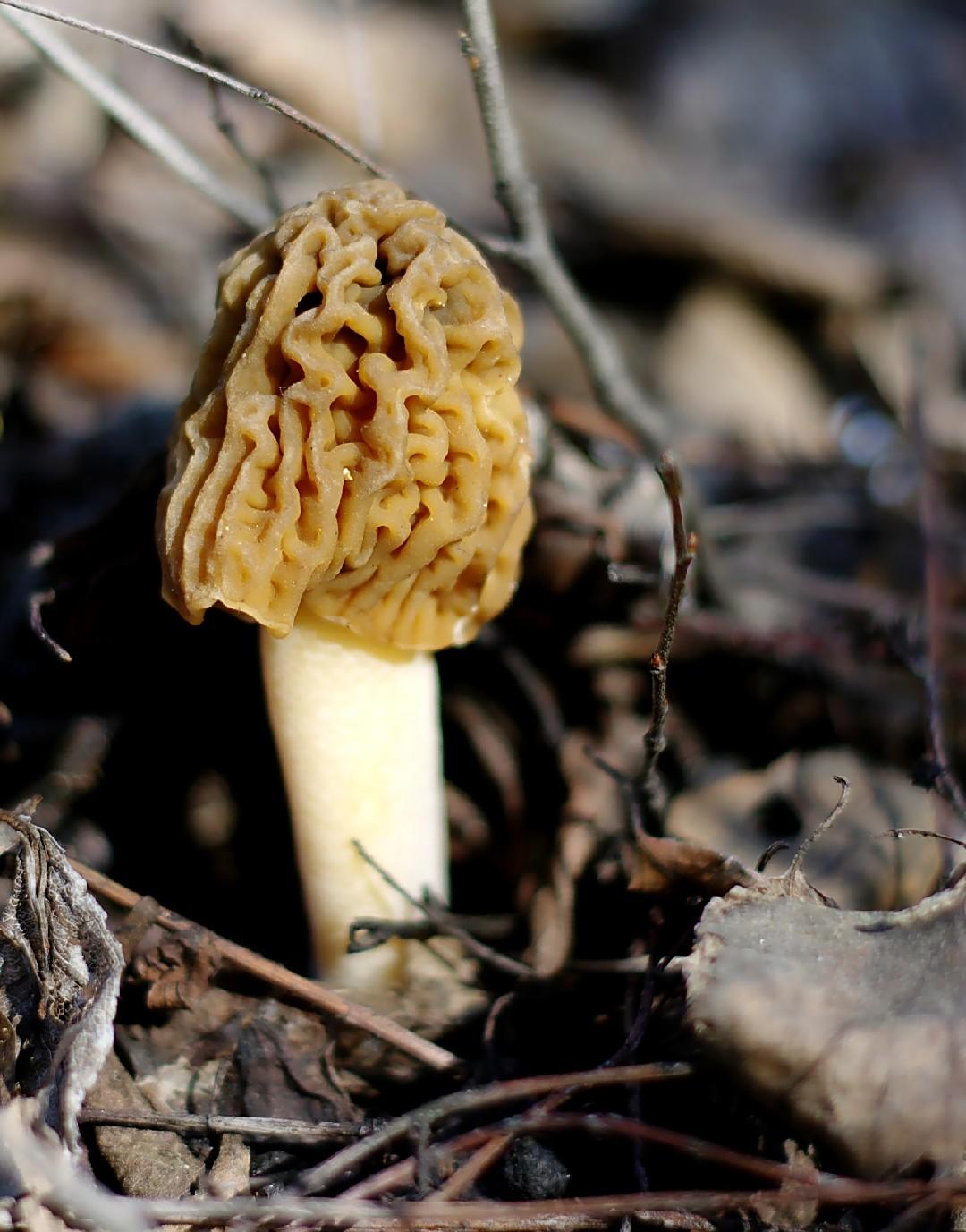
A species of Thimble morels. Also known as Wrinkled thimble morel.
The Verpa bohemica, a distinct early-spring mushroom, thrives across North America, Asia, and Europe's forested regions. Its name reflects its characteristic emergence as one of the initial fungal growths of the season. This particular species is easily recognizable by its unique crinkled, thimble-shaped cap.
In This Article
Attributes of Early morel
Cap Diameter
1 - 3 cm
Height
10 - 24 cm
Cap
Cap 2 - 4 cm high, 1.5 - 3 cm across; nearly conical, or bell-shaped; brown, undersurface whitish; wrinkled longitudinally
Cap Shape
Bell-shaped
Cap Surfaces
Visible lines or stripes
Stem
Stem 8 - 22 cm long, 1.5 - 3 cm thick; cylindrical, equal; creamy white to dull yellow; smooth to granular; sometimes discoloring orangish when handled
Stem Shapes
Cylindrical
Stem Surfaces
Smooth to slightly fibrous
Flesh
Thin; loosely stuffed with wispy fibers in the stem; whitish
Ring
Ringless
Spore Print Color
Yellowish
Odor
Mildly mushroomy but not distinctive.
Body Color
BrownYellowBronzeWhiteCream
Flesh Bruises
The flesh or milk does not discolor when bruised or cut.
Growth Form
Scattered, Gregarious
Nutrient Gathering
Mycorrhizal, Saprophytic
Substrate
On soil
You can find Early morel by these plants
Populus, Elms, European aspen
Occurence Habitats
Deciduous Woodland, Coniferous Woodland
Species Status
Widely distributed throughout northern North America
Endangered Species
No
Scientific Classification of Early morel
Phylum
Sac fungi
Class
Pezizomycetes
Order
Pezizales
Family
Morchellaceae\n
Genus
Thimble morels
Toxicity and Edibility of Early morel
Is Early morel Toxic?
Toxicity information is not available for this mushroom. Always consult with an expert before consuming any wild mushrooms.