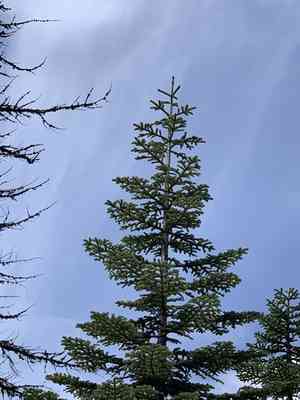
Noble fir (Abies procera)
Also known as: White fir
Acacia procera is a sizable evergreen tree, typically reaching heights of up to 70 meters and trunk diameters of about 2 meters, though in rare instances, it can grow as tall as 90 meters with a trunk diameter of 2.5 meters. The tree features a narrow conical crown. The bark of young A. procera trees is smooth and gray, often dotted with resin blisters. As the tree matures, the bark transitions to a rough and fissured texture, adopting a red-brown hue.
In This Article
Attributes of Noble fir
Lifespan
Perennial
Plant Type
Tree
Plant Height
30 m
Spread
8 m
Leaf Color
Green Blue
Flower Size
Not Applicable
Flower Color
Not Applicable
Images of Noble fir
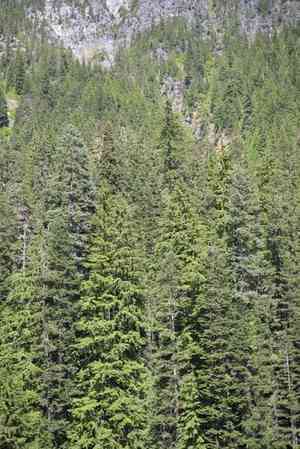
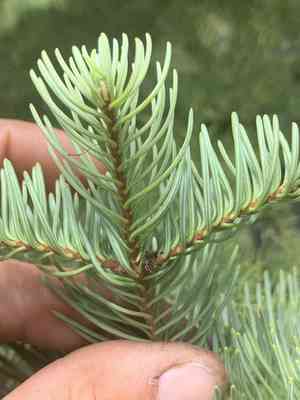
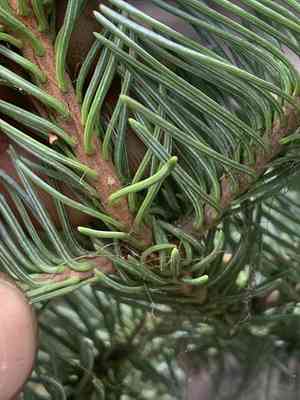
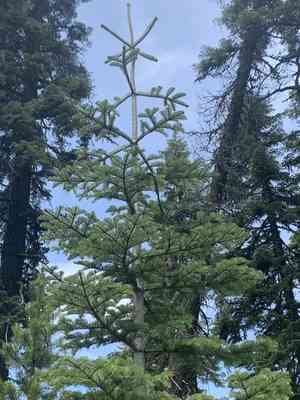
Quickly Identify Noble fir
1
Needles are blue-green with pale stripes, spirally arranged, giving a dense textured look.
2
Large cones with purple scales and brown hue, disintegrating to disperse winged seeds.
3
Leaves are blue-green needles with J-shaped attachment, spirally arranged with a slight twist.
4
Reddish-brown twigs with fine pubescence, round leaf scars, and clustered end buds.
5
Bark changes from smooth gray with resin blisters to rugged red-brown with deep fissures.
Scientific Classification of Noble fir
Phylum
Vascular plants
Class
Conifers
Order
Pinales
Family
Pine
Genus
Firs
Species
Noble fir
Planting and Growing of Noble fir
Care Difficulty
Hard
Watering Schedule
Every day
Sunlight Requirements
Partial sun
Sunshine Duration
6-12 hours
Ideal Temperature
45-75℉
Soil Type
Potting Mix, Peat Mix
Soil pH
5-6.5
Fertilizer Type
Balanced
Pruning Season
Spring, Summer
Pruning Area
Branches, Leaves
Pruning Frequency
2 times a year
Repotting Season
Spring
Pot Type
Plastic, Ceramic
 How to Water Noble fir?
For Abies procera, water should thoroughly soak the soil approximately 2000 milliliters. Watering is critical, especially in summer, to ensure deep soil moisture without waterlogging.
What are the symptoms of an underwatered Noble fir?
›
What should I do if my Noble fir is not getting enough water?
›
What are the symptoms of an overwatered Noble fir?
›
How to save an overwatered Noble fir?
›
 What Are the Sunlight Requirements for Noble fir?
Abies procera prefers partial sun to full sun exposure. This ideal range fosters strong needle formation, enhances photosynthetic efficiency, and supports robust, healthy plant development.
More About Sunlight Requirements Techniques→
How much sunlight does Abies procera need?
›
What are the solutions for achieving ideal light?
›
What are the benefits of ideal lighting?
›
 What Is the Ideal Temperature Range for Noble fir?
The noble fir, Abies procera, thrives best in a moderate climate with temperatures between 45°F to 75°F. These conditions mimic its native habitat in the Pacific Northwest, where cool, moist conditions prevail, ensuring optimal growth and development.
 What Soil is Best for Noble fir?
Noble fir (Abies procera) thrives best in well-drained soil. This prevents waterlogging, which can lead to root rot, ensuring healthy root development and overall plant health. The soil should be enriched with organic matter, which enhances nutrient availability and balances moisture levels. This promotes vigorous growth and a robust needle color in Abies procera. Moderately moisture-retentive soil is perfect for Abies procera, as it maintains adequate moisture without becoming soggy. It provides a steady supply of water necessary for sustained growth and resilience against drought.
 How to Fertilize Noble fir?
For Abies procera, apply a balanced fertilizer at half the recommended rate indicated on the package. Too much fertilizer can harm the tree, as it interferes with its natural growth processes. Typically, using a 10-10-10 or 16-16-16 NPK fertilizer is suitable. Distribute the granules evenly under the canopy of the tree in early spring.
 How to Prune Noble fir?
Before beginning the pruning process, familiarize yourself with the natural shape of Abies procera, which is pyramidal. The goal of pruning is to enhance this natural form by removing any branches that disrupt its silhouette. Use clean, sharp pruning shears or saws. It is crucial to disinfect your tools with a solution of bleach and water to prevent the spread of diseases. Wear protective gloves and glasses to ensure your safety during the process. Start by removing any dead or diseased branches to prevent disease spread. Cut at the branch collar where the branch meets another branch or the trunk to encourage healing and regrowth. Aim to maintain an even canopy by trimming overly long branches. Avoid cutting the main central leader unless it is damaged.
More About Pruning Techniques→
 How to Propagate Noble fir plant?
1
Collect mature cones from the tree and extract the seeds. Soak the seeds in water for 24 hours and then stratify them by placing them in a moist medium in a fridge for 4 to 6 weeks to break dormancy.
2
Select semi-hardwood cuttings from the current year’s growth. Trim them to about 4 to 6 inches in length, remove the bottom leaves, and dip the cut end in rooting hormone to enhance root development.
3
In late winter, prepare rootstock and scion material. Use techniques like cleft grafting for a successful union. Ensure the cambium layers are properly aligned and secure the graft with grafting tape.
 How to Repot Noble fir plant?
1
Abies procera signals the need for repotting when its roots start crowding the pot, peeking out through drainage holes, or when growth slows down significantly. Typically, early spring or summer offers the best conditions for successful repotting as the plant enters a new growth cycle, allowing roots to establish in their new environment effectively.
2
Select a pot that is slightly larger than the current one, providing enough room for root expansion. It should have ample drainage holes to prevent waterlogging, which can lead to root rot. A pot made of breathable materials like terracotta can help regulate soil moisture, ensuring a balanced water and air supply for the plant’s roots.
3
Opt for well-draining, slightly acidic soil, which mimics the plant's natural habitat. Such soil ensures the roots receive enough oxygen and prevents stagnant moisture, critical to the health of Abies procera. Amending the soil with organic matter like pine bark can improve its structure, providing essential nutrients and enhancing drainage.



